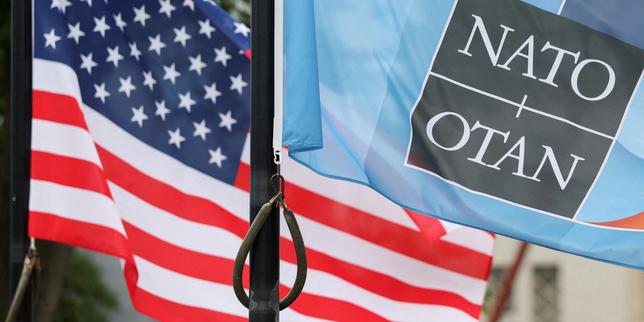
Joschka Fischer is wrong because he is nostalgic. The former German Foreign Minister looks at the cracks in the Atlantic Alliance and sees a funeral procession. He looks at the friction between Washington and Berlin and screams that the sky is falling. This is the classic mistake of the European political elite: mistaking a change in management for a business liquidation.
The "dissolution" of NATO isn't a geopolitical tragedy. It is a necessary shedding of skin. For decades, the alliance functioned as a subsidized security blanket for European states that wanted to play at being "civilian powers" while the United States paid the bills and took the heat. Now that the bill is due, the beneficiaries are calling it the end of the world. It isn't the end of the world. It is the end of the free ride.
The Myth of the American Retreat
The loudest argument from the Fischer camp is that the United States is "turning away" from Europe. This is a fundamental misunderstanding of American geography and math. The U.S. isn't leaving Europe; it is diversifying its portfolio. Since 2022, American troop presence in Europe has surged to over 100,000. Billions of dollars in American hardware are flowing into Poland and the Baltics.
If this is a "dissolution," it is the most well-funded breakup in human history.
The real friction isn't about America leaving. It is about America moving the center of gravity. Washington is tired of the Franco-German engine that stalls every time it needs to confront a real threat. The U.S. is shifting its focus to the "Eastern Flank"—nations like Poland and Romania—who actually understand that security is a commodity you buy, not a vibe you manifest through summits in Brussels.
Europe's Strategic Autonomy is a Ghost
We hear the phrase "Strategic Autonomy" echoed in the halls of the Élysée and the Bundestag as if it were a viable product. It isn't. It is a vaporware startup.
To have strategic autonomy, you need three things:
- Integrated command structures.
- A massive, unified defense industrial base.
- The political will to actually kill people in defense of interests.
Europe has none of these. When the chips went down in Ukraine, the "European response" was a chaotic scramble for American leftovers. Germany’s Zeitenwende—the supposed turning point in defense spending—has been a bureaucratic nightmare of slow-walking funds and protecting local industrial interests over actual combat readiness.
If NATO were to dissolve tomorrow, Europe wouldn't become a "third pole" in a tri-polar world. It would become a collection of defenseless museums. Fischer fears the end of the alliance because he knows that without the American nuclear umbrella and logistics backbone, Europe has no seat at the table. He isn't mourning NATO; he is mourning European relevance.
The Poland Pivot
While Berlin wrings its hands over the "loss of American leadership," Warsaw is busy becoming the new military heavyweight of the continent. Poland is on track to spend 4% of its GDP on defense. They aren't buying European "autonomy" projects; they are buying hundreds of American M1 Abrams tanks and Korean K2 Black Panthers.
This is the nuance Fischer misses. NATO isn't dissolving; it is rebalancing. The old guard (France and Germany) is losing its veto power over European security because they refused to invest in it. The "dissolution" Fischer senses is actually the sound of the power shift from the Rhine to the Vistula.
Imagine a scenario where the U.S. formally stays in NATO but treats Paris and Berlin as secondary stakeholders. That isn't a collapse. That is a hostile takeover by the people who actually care about the mission statement.
The China Distraction
The critics claim that America’s obsession with the Indo-Pacific means Europe is being abandoned. This is a false binary. The modern global economy is a single theater. If the South China Sea closes, the German car industry dies. The idea that Europe can stay "neutral" or "autonomous" while the U.S. manages the Pacific is a fantasy.
NATO's survival depends on its ability to evolve into a global security coordinator. The alliance isn't breaking; it is being forced to grow up. The "Atlantic" in North Atlantic Treaty Organization is becoming a legacy brand name, like "Nokia" or "IBM." The core product is now the protection of democratic supply chains, whether those chains run through the Baltics or the Strait of Malacca.
The Real Danger: Bureaucratic Inertia
The biggest threat to the alliance isn't Donald Trump or a resurgent Russia. It is the belief that NATO is a social club.
For years, being a NATO member was about attending meetings and issuing "strongly worded" statements. The "dissolution" Fischer observes is actually the re-imposition of standards. When you tell a tenant they finally have to pay rent, they usually complain that the building is falling apart.
I’ve seen this play out in corporate restructuring. The legacy departments—the ones who haven't innovated in thirty years—always claim the company is "losing its soul" when the new CEO demands ROI. Germany is the legacy department of NATO. It is terrified of a world where security is measured in combat-ready battalions instead of diplomatic "processes."
Stop Asking if NATO Will Survive
The question "Will NATO survive?" is the wrong question. It’s a distraction used by politicians to avoid talking about their own failures.
The right question is: "Who will lead the Western security architecture when the Franco-German era ends?"
The answer is already visible. It’s a coalition of the willing, led by Washington, anchored by Poland, and fueled by a realization that the post-1989 era of "peace dividends" was a historical fluke.
Fischer and his peers are looking at the sunset of their influence and calling it the end of the world. It’s not the end of the world. It’s just the end of their world. The alliance is moving on without them.
The Atlantic Alliance isn't dissolving. It's just leaving Germany behind.
If you want to stay relevant, stop mourning the 1990s and start buying ammunition.



