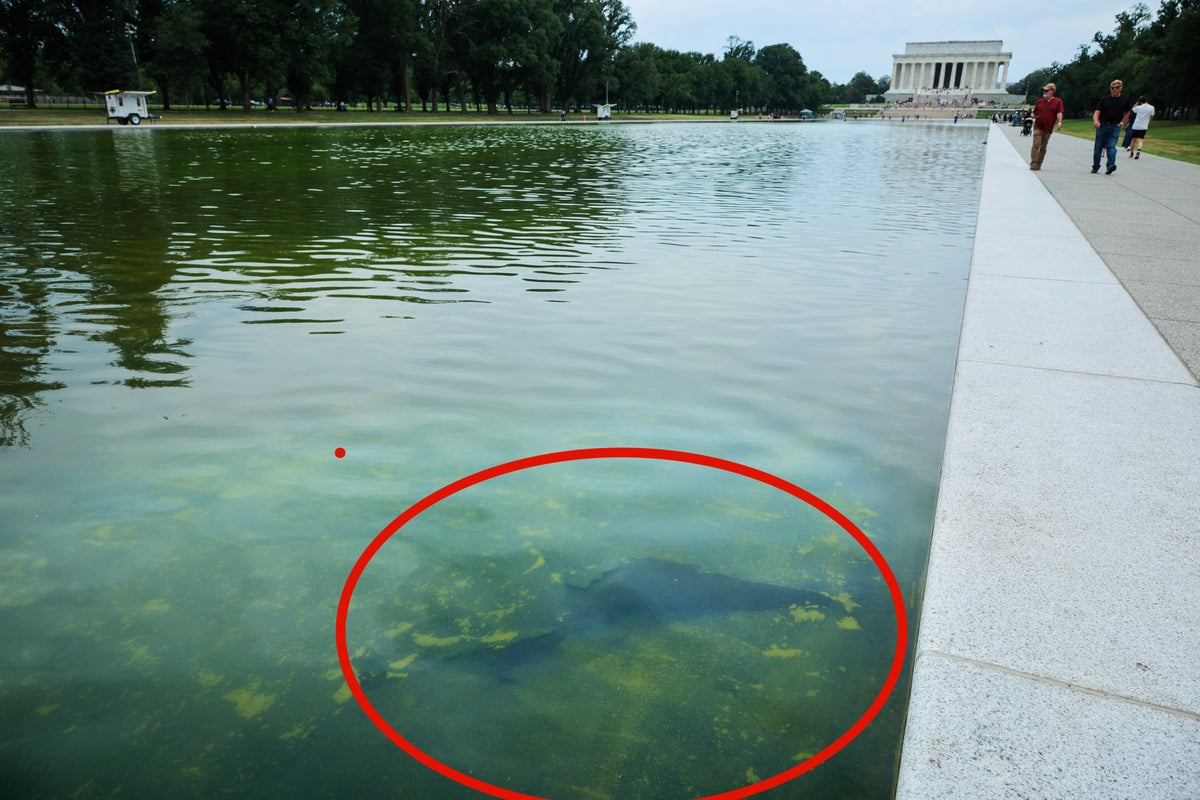
Donald Trump recently claimed that "vandals" poured chemicals into the Lincoln Memorial Reflecting Pool, but the actual crisis stems from a disastrous clash between aggressive algae growth and improvised maintenance decisions by his own team. The iconic water feature became a public relations battleground after an attempt to clear murky waters with industrial bleach sparked a chain reaction of environmental and political fallout. While political figures quickly blame bad actors for the unsightly, bubbling result, municipal records and water management science reveal a much more predictable breakdown in basic infrastructure maintenance.
The trouble with prominent public pools is that they are massive, shallow ecosystems exposed to intense sunlight and constant organic runoff. They are not self-cleaning monuments. When high temperatures hit the capital, algae blooms explode across the concrete floor. Managing this requires a delicate balance of filtration, circulation, and carefully metered chemical treatments.
Instead of following standard long-term protocols, workers attempted a rapid cosmetic fix by introducing heavy amounts of bleach into the system. The sudden chemical spike shocked the existing biological matter. It created a highly visible, foaming chemical reaction that looked less like a treated monument and more like an industrial accident. Rather than acknowledging a botched maintenance attempt, the immediate political response was to allege sabotage.
The Chemistry of a Stalled Monument
To understand how a reflection pool turns into a frothing public embarrassment, you have to look at the water chemistry. Algae relies on sunlight, stagnant water, and nutrients like nitrogen and phosphorus to thrive. The Lincoln Memorial Reflecting Pool holds roughly 6.75 million gallons of water, but it averages only about three feet in depth. This layout creates a massive surface area that absorbs solar heat rapidly, turning the pool into a giant petri dish during hot Washington summers.
When standard filtration systems fail to keep pace, maintenance crews often face immense pressure to fix the optics of the situation before major public events or television broadcasts. Bleach, or sodium hypochlorite, is a standard sanitizing agent. However, dumping massive quantities into an open, unregulated body of water without proper circulation creates immediate unintended consequences.
The bleach reacts violently with the organic biofilm coating the bottom of the pool. Instead of quietly dissolving the algae, the rapid oxidation releases gases that trap organic proteins, creating a thick, unsightly scum that floats to the surface. It looks terrible. Passersby notice it immediately, and the sudden transformation from a glassy mirror to a murky, bubbling marsh instantly invites suspicion from onlookers unfamiliar with water treatment blunders.
The Sabotage Narrative Meet Public Works Reality
Blaming phantom vandals is a time-tested strategy for distracting from operational incompetence. In this case, claiming that outside agitators snuck onto one of the most heavily monitored patches of land in the United States to dump commercial chemicals serves a specific political purpose. It shifts the conversation from a failure of basic park maintenance to a story of victimization and political warfare.
Consider the logistics required to genuinely sabotage a 6.75-million-gallon pool. A lone vandal with a few jugs of household cleaner cannot alter the chemical balance of a body of water that size. It would take flatbed trucks of chemicals, deployed openly, to recreate the scale of the reaction seen at the monument. The United States Park Police and various federal security agencies maintain 24-hour surveillance over the entire National Mall axis. The idea of a coordinated chemical attack occurring unnoticed under the nose of federal law enforcement stretches credulity past the breaking point.
What actually occurred fits a classic pattern of bureaucratic panic. When a high-profile asset looks bad, supervisors demand an overnight miracle. Workers use the strongest tools available without calculating the secondary reactions. When the quick fix creates a new, more visible problem, the leadership structure immediately looks for an external scapegoat to shield itself from accountability.
The Ongoing Cost of Neglecting Federal Infrastructure
This incident highlights a much larger, systemic issue facing national landmarks across the country. The infrastructure supporting these historic sites is aging, underfunded, and frequently pushed past its design limits. The Reflecting Pool underwent a major renovation over a decade ago, which was supposed to implement a sustainable water supply and a modern filtration loop.
Systems only work if they are maintained by trained personnel who understand the specific demands of the local environment. When budgets are squeezed or when political appointees prioritize optics over expertise, routine maintenance schedules fall apart. The filtration pumps clog, water circulation drops, and the algae takes over within days.
Using bleach as a primary management tool is a sign of desperation. Modern water management relies on continuous monitoring, UV sanitation systems, and biological controls that prevent algae from taking root in the first place. Relying on shock treatments indicates that the preventive systems were either offline or completely overwhelmed by neglect.
Environmental Fallout Beyond the Concrete Bank
The consequences of dumping heavy chemicals into public water features extend far beyond an ugly view for tourists. The National Mall is home to a complex web of urban wildlife, including migratory birds, waterfowl, and local aquatic species that rely on these water sources.
When high concentrations of chlorine compounds are introduced into an open system, they do not just stay in the pool. The chemicals evaporate into the air, creating a harsh odor that deters visitors and irritates the respiratory systems of nearby wildlife. Furthermore, when the pool eventually needs to be drained or cleaned properly, that highly chlorinated water must go somewhere. Discharging millions of gallons of chemically altered water into the local sewer system or directly into the Potomac River watershed presents significant environmental hazards.
Local regulatory bodies maintain strict guidelines on wastewater disposal. A massive, uncoordinated chemical treatment forces municipal water treatment plants to handle unexpected chemical loads, driving up costs and risking regulatory violations for the agencies involved. The short-term desire for a clean photo opportunity creates a long-term headache for regional environmental managers.
The Pattern of Bureaucracy and Blame
This is not the first time a routine municipal failure has been elevated to a national conspiracy theory, and it will not be the last. Public infrastructure requires quiet, consistent, and well-funded expertise to function smoothly. When that expertise is replaced by top-down demands for quick fixes, the physical world reacts according to the laws of chemistry, not political spin. The foam on the Reflecting Pool will eventually dissipate, but the underlying decay in infrastructure management and the instinct to blame invisible enemies remains fully visible. Genuine solutions require investing in the boring, unglamorous work of engineering and regular maintenance, rather than chasing headlines or inventing saboteurs to cover up a bad paint job. Emergency cleaning crews are now tasked with draining the entire basin to scrub away the chemical residue, a process that will cost taxpayers thousands of dollars and leave the monument empty for weeks during peak tourist season.