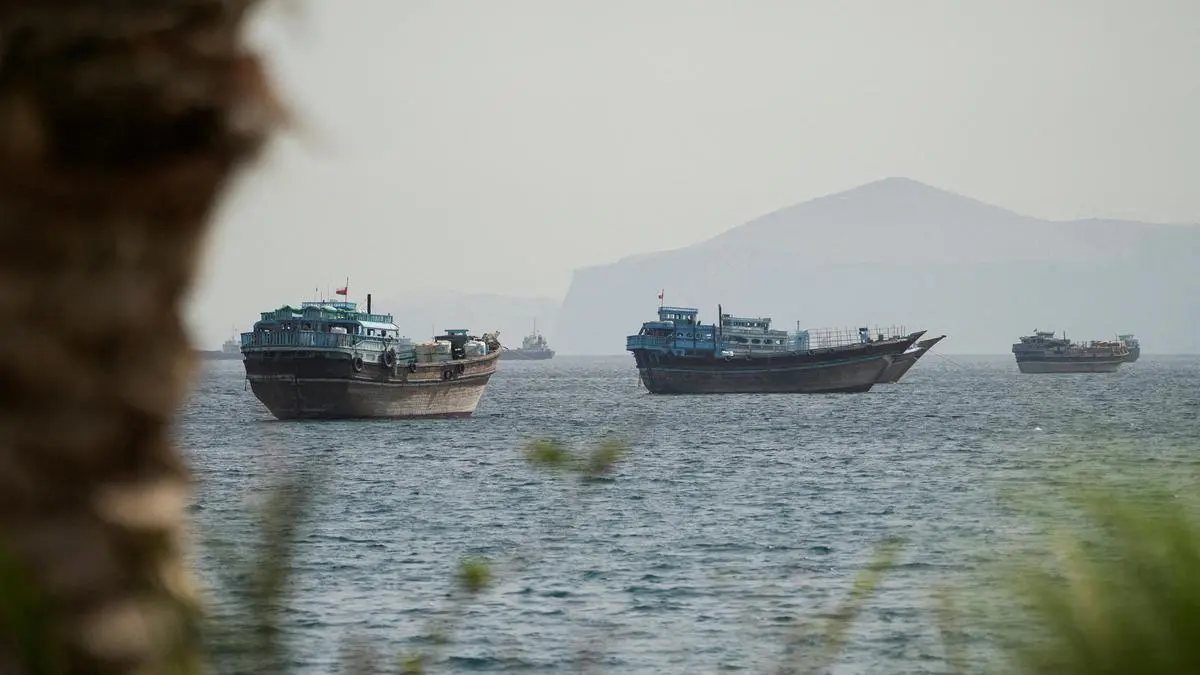
The water in the Strait of Hormuz does not look like geopolitical flashpoint water. In the heavy heat of the Persian Gulf, it looks like liquid lead. It moves thick and slow against the steel hull of a supertanker, a dull grey expanse that hides a terrifying truth. One-fifth of the world’s total petroleum liquids pass through this choke point. If you squeeze this ribbon of water, the lights go out in cities thousands of miles away. Factories freeze. Economies stumble.
But tonight, the water is quiet.
On the bridge of an liquefied natural gas (LNG) carrier, the air conditioning hums a low, desperate tune against the 104-degree exterior heat. The captain watches the radar screen. A cluster of green blips marks the Iranian coast to the north; another cluster marks Oman to the south. Between them lies a shipping lane just two miles wide. It is a tightrope.
This specific ship carries a cargo belonging to Abu Dhabi National Oil Company (Adnoc). It is not the first shipment, and it will not be the last. But this particular transit carries a weight that cannot be measured in metric tons. It is bound for India.
To understand why a single ship sliding through a dark channel matters, you have to look past the press releases. You have to look past the boardrooms in Abu Dhabi and the ministry offices in New Delhi. You have to look at a small kitchen in the suburbs of Mumbai.
The Chemistry of a Hot Meal
Meet Sunita. She is not a real person, but she represents millions who exist because of this specific trade route. It is 6:00 PM. The monsoon humidity is a physical weight in her small apartment. Her two children are arguing over a schoolbook. She turns a small plastic knob on her stove, holds a click-igniter to the burner, and a clean, blue ring of fire blossoms into life.
That blue flame is the end of a long, invisible chain.
For decades, families like Sunita’s cooked with firewood, kerosene, or dung cakes. The air inside their homes was thick with acrid smoke. Lung disease was a quiet, domestic killer. The shift to natural gas is not about corporate profits for people like her; it is about the simple dignity of breathing clean air while making dinner.
India’s hunger for energy is staggering. The nation is building roads, powering tech hubs, and trying to lift millions into the middle class simultaneously. They cannot do it on promises. They need molecules. Specifically, they need methane molecules, super-cooled to minus 162 degrees Celsius, shrunk to 1/600th of their gaseous volume, and loaded onto massive floating thermos flasks.
Adnoc’s latest shipment is part of a massive multi-billion-dollar puzzle. It is the physical manifestation of a trade deal that links the fortune of the United Arab Emirates to the growth of the world’s most populous nation.
When the news reports that "Adnoc exports another LNG shipment," it sounds like a ledger entry. But a ledger cannot tell you about the heat radiating off the stove in Mumbai, or the relief of a mother who no longer coughs while she cooks.
The Geography of Anxiety
Every captain who steers a vessel through Hormuz feels a slight tightening in their chest. Look at a map. The strait is a geographic bottleneck, a vulnerability painted in blue.
If you stand on the cliffs of Musandam, you can see the tankers passing in a slow, solemn parade. They look invincible from a distance. Up close, they are targets. The region has seen mines, drone attacks, and geopolitical posturing for decades. Every insurance underwriter in London watches this water with a sour stomach. Rates fluctuate with the daily news cycle.
Yet, the ships keep moving. Why? Because the alternative is systemic collapse.
The UAE has spent years positioning itself as the stable anchor in a turbulent neighborhood. By ensuring that LNG flows consistently through the strait, Adnoc is trying to prove something more valuable than the gas itself: reliability. In the energy world, predictability is the ultimate currency. Anyone can drill a hole in the ground. Not everyone can deliver the product when the world is holding its breath.
Consider the logistics. The gas is harvested from fields beneath the desert floor and the shallow waters of the Gulf. It travels through miles of pipeline to massive liquefaction plants on the coast. There, giant compressors scream day and night, stripping the heat from the gas until it turns into a clear, non-toxic liquid.
It is a triumph of engineering, but it is entirely dependent on that two-mile-wide lane of water. If a single tanker is delayed, the ripple effect moves through the global market like a shockwave. Prices spike in Europe. Power plants throttle down in Asia.
The Great Energy Pivot
There is a deeper tension at play here, one that the energy sector rarely discusses openly. The world is trying to sprint toward renewables while tied to the heavy anchor of fossil fuels. It is an uncomfortable dance.
We are told that natural gas is the "bridge fuel." It emits significantly less carbon dioxide than coal when burned, making it the preferred weapon for countries trying to clean up their skies quickly. India wants to increase the share of natural gas in its energy mix from roughly six percent to fifteen percent by the end of the decade.
That shift requires an ocean of gas.
But building a bridge is dangerous if you do not know where it lands. The transition is messy. It is full of contradictions. We watch satellites track methane leaks with alarm, even as we cheer the arrival of an LNG tanker that replaces a coal fired power plant. It is a game of triage.
The partnership between Adnoc and Indian buyers is not a casual fling. It is a long-term marriage sealed with concrete and steel. India is investing heavily in LNG import terminals—massive regasification facilities along its coastline that take the liquid from the ships and warm it back into gas. These facilities cost billions. You do not build them unless you are certain the ships will keep coming through the strait.
The Midnight Shift
Back on the vessel, the clock ticks past midnight. The lights of the Omani coast fade into the haze behind the stern. The captain relaxes his shoulders slightly. The narrowest part of the strait is behind them. Ahead lies the open expanse of the Arabian Sea, a straight shot to the western coast of India.
Down in the engine room, the heat is intense enough to melt the adhesive on a man’s boots. The crew members—mostly from India, the Philippines, and Eastern Europe—work in shifts. They are the invisible workforce of the modern world. They spend months away from their families, living on a floating island of steel, surrounded by cargo that could obliterate a small town if something went catastrophically wrong.
They do not think about geopolitics. They think about the vibration of the propeller shaft. They think about the temperature of the bearing oil. They think about the Skype call home when they finally get within range of a shoreside cell tower.
The cargo they guard will arrive at an Indian port in a few days. It will be unloaded, piped into the national grid, and distributed to factories, power stations, and kitchens. It will become electricity that illuminates a midnight study session for a student in Delhi. It will become the heat that molds a plastic part in a factory outside Chennai.
The dry corporate announcement says the shipment was successful.
The reality is that humanity just successfully performed another high-wire act. We transferred the ancient energy stored in the Arabian desert across a treacherous sea to fuel the frantic, hopeful rise of twenty-first-century India.
The ship moves onward into the dark, its wake a white, fading line on a black ocean. Behind it, the Strait of Hormuz remains, waiting for the next tanker, holding the balance of the world in its narrow, silent grip.