Politicians love a grandstanding denial. When reports surfaced that India walked away from a swift, limited trade pact with the United States, Commerce Minister Piyush Goyal rushed to the microphones to brand the news "completely false." He insisted that trade talks were active, that negotiations were progressing, and that a deal remained entirely on the table.
Everyone bought the optics. The mainstream financial press dutifully parroted the official narrative, focusing on the bureaucratic back-and-forth of tariffs, agricultural quotas, and medical device pricing. They missed the glaring, uncomfortable truth right in front of them.
India should reject a quick trade deal with Washington. In fact, if New Delhi’s trade negotiators are doing their jobs correctly, they are actively dragging their feet.
The lazy consensus in international trade reporting assumes that any trade deal is a good trade deal, and that speed equals economic success. This is a fundamental misunderstanding of bilateral economics between an asymmetric superpower and an emerging manufacturing giant. A "quick trade deal" is code for a bad trade deal. It means one side accepted the other’s pre-packaged terms to score a short-term political victory before an election cycle.
The Asymmetry Trap
Mainstream analysts look at US-India trade and see a massive, untapped goldmine. They ask flawed questions like, "How can India lower tariffs fast enough to attract American tech giants?"
That is the wrong question entirely. The right question is: Why would India trade its long-term domestic industrial policy for a temporary bump in export volumes?
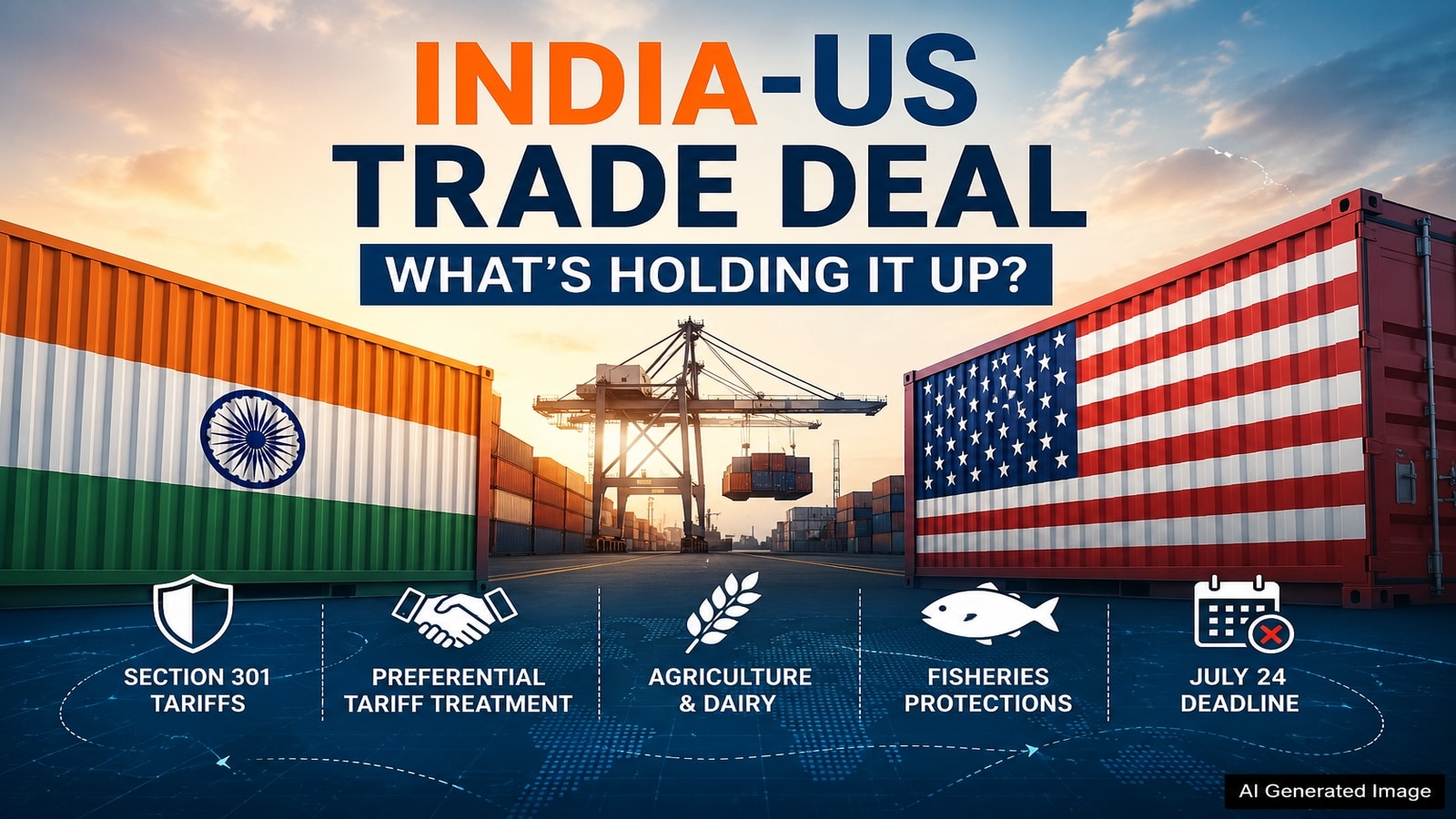
When a developing economy sits down with the world’s largest consumer market, the leverage is heavily skewed. Washington’s playbook for mini-deals is predictable. They want immediate market access for highly subsidized American agriculture, dairy, and medical technology. In exchange, they offer minor, easily reversible concessions on generalized systems of preferences or temporary visa quotas.
I have spent years watching corporate strategy teams miscalculate trade policy, assuming that a signed piece of paper between two heads of state magically opens markets. It doesn't.
- Subsidized Imports: Opening agricultural sectors to US dairy and grain sounds free-market on paper, but American farming is heavily backed by federal subsidies. Flooding the Indian market destroys local livelihoods.
- IP Strangleholds: Washington aggressively pushes for strict intellectual property protections that favor American pharmaceutical giants, threatening India’s massive generic drug industry—the very sector that keeps healthcare affordable across the Global South.
- Regulatory Surrender: Mini-deals frequently require alignment on regulatory standards that effectively lock out domestic players who cannot afford Western compliance structures.
Dismantling the "Free Trade" Illusion
Let's address the flawed premise that dominates the "People Also Ask" sections of every search engine: Why doesn't India just sign a free trade agreement with the US to counter China?
This logic is broken. Signing a rushed trade deal with the US does not insulate India from China; it merely replaces one form of economic vulnerability with another.
Imagine a scenario where India slashes tariffs on electronic components and medical devices to secure an American pact. American firms set up distribution networks, but the core manufacturing never shifts to Uttar Pradesh or Tamil Nadu. Instead, India becomes a consumption market for high-value US IP, while its own manufacturing sector remains stunted in infancy. This is the exact trap that structural economists like Ha-Joon Chang have documented for decades. Every major developed economy—including the United States in the 19th century—built its industrial backbone behind walls of targeted protectionism, not through early, unchecked free trade.
India’s high tariff structure is not a legacy of stubborn bureaucracy. It is a deliberate shield for the "Make in India" initiative. If you lower the drawbridge too early, the local ecosystem gets trampled.
The Cost of Saying No
Admitting the downside of this contrarian approach is necessary. Walking away from the negotiating table or dragging out talks for years has a tangible cost.
American capital is skittish. When trade friction persists, US multinationals look to more compliant jurisdictions like Vietnam or Mexico, where governments are willing to sign lopsided treaties in exchange for immediate foreign direct investment. India loses out on certain supply chain relocations in the short term. Foreign portfolio investment can fluctuate wildly based on a single pessimistic quote from a trade minister.
But that is a price worth paying. Securing structural autonomy over your own economy is infinitely more valuable than chasing quarterly FDI metrics to please Wall Street analysts.
Trade Realism Over Political Theater
The obsession with quick deals stems from political lifecycles, not economic strategy. Politicians think in four-year increments. They want the handshake ceremony, the joint press conference, and the immediate headline that proclaims a new era of strategic partnership.
True economic integration takes a generation.
Consider the reality of the bilateral friction points. The US wants India to lift price caps on coronary stents and knee implants. India wants the US to ease visa restrictions for its IT professionals and restore its duty-free export status under the Generalized System of Preferences. These are not minor details that can be ironed out over a long weekend in New Delhi. They represent fundamental clashes between India’s social welfare mandates and America’s corporate profit structures.
Forcing a resolution on these deeply entrenched issues just to claim a diplomatic win is a recipe for a bad treaty. A bad treaty locks a nation into commitments that take decades to unravel.
Stop asking when the US and India will finally sign a trade deal. Start hoping that India keeps finding reasons to say no until the terms actually reflect its future status as a global economic pole, rather than a secondary market for Western goods.
The next time a minister denies that a trade deal has been rejected, don't celebrate the survival of the talks. Worry that they might actually agree to something.