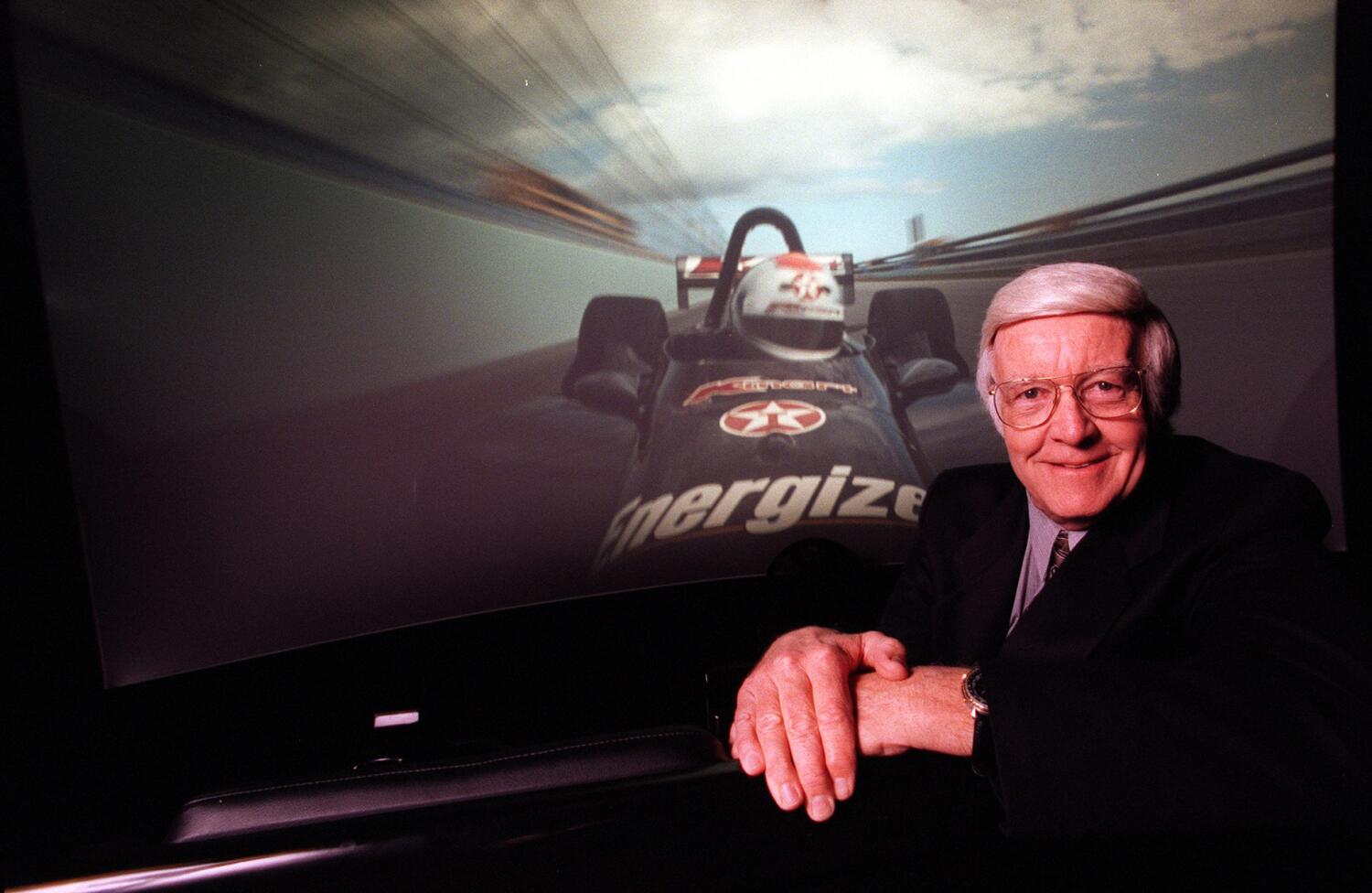
The media recently went into its standard, paint-by-numbers mourning routine for Don Iwerks, the legendary Disney engineer and Oscar-winning special effects pioneer who passed away at 96. Predictably, the retrospectives followed a tired, predictable script. They painted a picture of a singular, solitary genius who magically birthed the technological foundations of modern cinema and theme parks from a clean desk.
It is a beautiful narrative. It is also entirely wrong.
When the industry loses a titan like Iwerks—the man behind the camera systems for Circle-Vision 360, Star Tours, and the modern film print processors—the lazy consensus chooses to idolize the individual while completely ignoring the actual mechanics of industrial innovation. We treat these pioneers like wizards rather than what they actually were: highly effective systems engineers working within a specific, highly collaborative corporate ecosystem.
By flattening the reality of technical breakthroughs into a digestible "genius myth," Hollywood does a massive disservice to current and future engineers. Innovation is not an individual sport. It never has been.
The Disney Machine Was the Product, Not the Man
To understand why the standard obituaries miss the point, you have to look at how the Disney Studio and WED Enterprises (later Walt Disney Imagineering) actually operated.
Don Iwerks did not invent these technologies in a vacuum. He was the head of the Disney machine shop. Having spent decades analyzing how technical infrastructure scales in creative industries, I can tell you that the machine shop is where romantic ideas go to meet reality.
The media loves to credit Iwerks with the creation of the 360-degree motion picture camera system. But the physics of rigging nine cameras onto a single, stabilized platform required a massive, cross-disciplinary infrastructure. It required machinists, optical experts, film developers, and massive corporate capital.
When we attribute the breakthrough solely to the man whose name was on the department door, we ignore the reality of industrial R&D.
- The Individualist Illusion: The belief that a single engineer drafts a blueprint, builds a prototype, and changes the industry overnight.
- The Systemic Reality: A brilliant manager of mechanical engineering coordinates with optical suppliers, field technicians, and creative directors to iterate on a broken prototype until it works.
Iwerks' true brilliance was not isolated flashes of creative lightning. It was institutional knowledge. He understood how to bridge the massive gap between a director's wild imagination and the cold, unyielding laws of mechanical engineering.
The Disappearance of Mechanical Mastery
The modern film industry is obsessed with software. Every breakthrough is credited to a new rendering engine, a generative algorithm, or a digital compositing tool. The passing of an old-school titan like Iwerks exposes a massive, terrifying blind spot in how modern media is made: we have forgotten how to build physical things.
Iwerks won an Academy Scientific and Technical Award in 1997 for the creation of a linear loop film projection system. Think about the sheer mechanical precision required to move miles of fragile celluloid film at high speeds through a projector day after day without tearing, scratching, or burning. That is not a line of code you can patch over the cloud. That is hard physics.
Today's entertainment sector assumes that digital tools have made physical engineering obsolete. This is a profound error. The most immersive experiences still require a deep integration of the physical and the digital.
When you look at modern theme park rides that fail, freeze, or feel lifeless, it is rarely a software issue. It is a failure of mechanical execution. The industry has traded the robust, tactile reliability of the Iwerks era for the fragile complexity of pure digital systems.
The Cost of Glamorizing the Executive
There is a dark side to the way we celebrate figures like Iwerks. By focusing entirely on the leadership tier, the industry obscures the army of unnamed machinists, technicians, and operators who actually executed the vision.
Imagine a scenario where a modern studio tries to replicate the success of early Imagineering. They hire a brilliant, high-profile director or a celebrity engineer. They give them a massive budget and a blank check. Yet, the project stalls. Why? Because they forgot to build the machine shop. They forgot to hire the mid-level specialists who know how to calibrate a camera rig or weld a custom stabilizer.
I have seen media tech companies blow tens of millions of dollars trying to build the "next big thing" in immersive entertainment. They fail because they hire visionaries instead of mechanics. They want the glory of the Oscar-winning headline without investing in the boring, unglamorous foundational work of physical testing and hardware iteration.
The Flawed Premise of Special Effects History
If you look at the questions people ask about film history, the premise is almost always flawed. People ask: "Who invented the first 360-degree camera?" or "Who built the first flight simulator ride?"
The brutally honest answer is: nobody did it alone, and asking for a single name is the wrong way to look at history.
Don Iwerks inherited a legacy. His father, Ub Iwerks, was the creative powerhouse who co-created Mickey Mouse and revolutionized special effects animation. Don took that legacy and industrialized it. He turned art into a scalable, repeatable manufacturing process.
The question we should be asking is: How do you build an environment where mechanical innovation can survive alongside corporate bureaucracy?
That is the blueprint we should be studying, not the biography of a single man. Disney succeeded in the mid-20th century because they treated their machine shop with the same respect as their animation department. They understood that the art could only go as far as the machinery allowed.
The Trade-Off of the Modern Era
Let us be completely honest about the shift from the mechanical era to the digital era. The contrarian truth is that while digital tools have democratized filmmaking, they have also made the final output incredibly disposable.
A physical camera rig built by Iwerks' team had to be perfect because film was expensive. Every take mattered. The physical limits of the machinery forced discipline onto the filmmakers.
Now, with infinite digital tracks and virtual cameras, that discipline has vanished. Directors shoot millions of feet of digital garbage and expect the visual effects houses to fix it in post-production. The result is a homogenized visual style that lacks the weight, texture, and presence of the era Iwerks helped create.
The downside to championing this old-school mechanical rigor is obvious: it is slower, it requires massive upfront capital, and it demands a level of craftsmanship that is increasingly rare. You cannot download a mechanical film processor from a web repository. You have to build it with a lathe, a mill, and decades of experience.
Stop looking for the next lone genius to save the industry from its current creative stagnation. Start building the infrastructure that allows teams of disciplined, unglamorous engineers to build real things again. Turn off the software, open up the machine shop, and get your hands dirty. That is the only way to honor a legacy like Iwerks'.