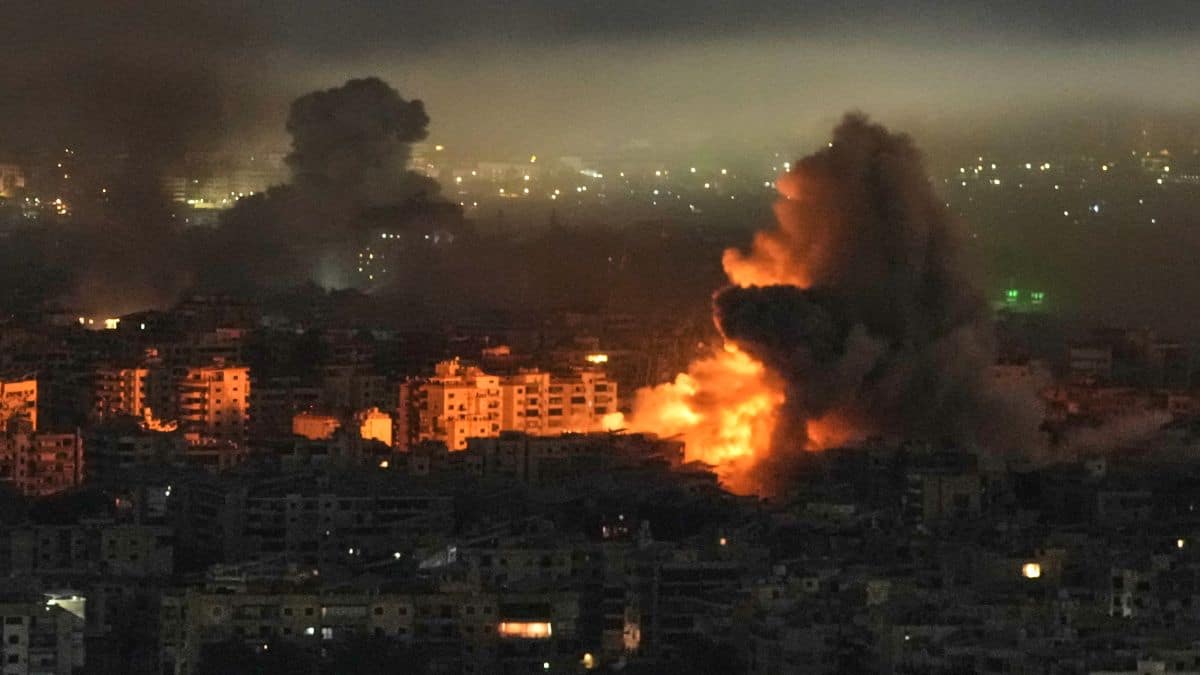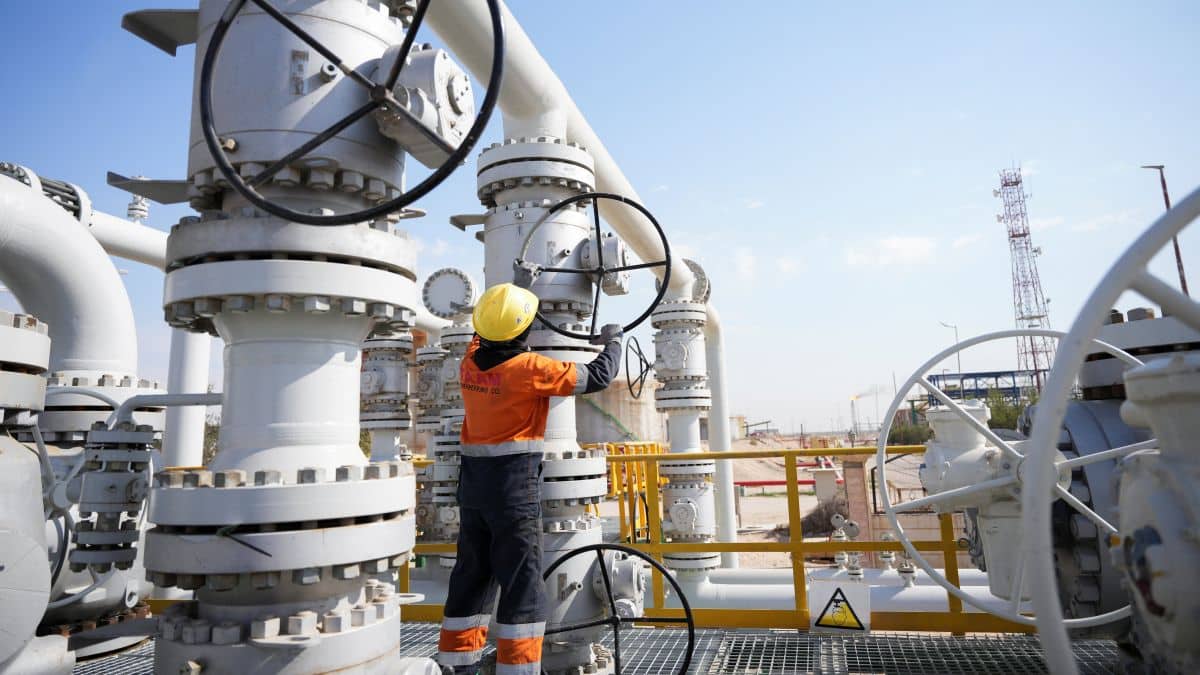
The headlines are screaming about a global energy apocalypse. They want you to believe that West Asia is on the verge of choking the world’s carotid artery. They cite "the largest oil supply disruptions in history" with the kind of breathless urgency usually reserved for alien invasions.
It is a lie. Not necessarily a lie of facts, but a lie of context.
If you are tracking the Brent crude price and waiting for the $150-a-barrel "black swan," you are playing a game that ended in 2008. The mainstream media is obsessed with the ghost of the 1973 oil embargo, but they are ignoring the reality of the 2026 energy map. We aren't seeing a disruption; we are seeing a massive, structural rerouting that the market has already digested, priced in, and—in many dark corners of the trading floor—welcomed.
The Volume Fallacy
Let’s start with the "largest disruption" claim. It’s a classic case of counting barrels without counting the map. When an oil tanker can’t go through the Red Sea and instead has to spend twelve extra days sailing around the Cape of Good Hope, that is a delay, not a disruption.
In the world of physical commodities, volume only matters if it disappears. It hasn't. The oil is still on the water. It’s just taking the scenic route.
The industry insiders I talk to aren't panicking about empty pumps; they are laughing at the shipping rates. The real story isn't "No Oil." It's "High Freight." By conflating the two, analysts are scaring the public into thinking we’re headed for 1970s-style gas lines. We aren't. We are just paying a premium for the world’s most expensive boat ride.
Why the Market Loves This War
The "lazy consensus" says war is bad for the economy. For the average person? Sure. For the energy complex? It’s a gift.
Volatility is the lifeblood of the modern trading desk. A stable, peaceful West Asia is a low-margin environment. When the Strait of Hormuz is "threatened"—but never actually closed—the risk premium pads the pockets of every major producer from Houston to Riyadh.
- Inventory Devaluation Hedge: Companies sitting on massive reserves see their balance sheets inflate overnight without lifting a single extra gallon of crude.
- The US Shale Trap: Every time tension spikes in West Asia, American shale producers get a green light to increase CAPEX. They aren't "saving" the West; they are seizing market share under the guise of energy security.
- Refining Arbitrage: Complex refineries in India and China are currently feasting on "distressed" or rerouted cargoes that the West is too politically sensitive to touch.
The chaos isn't breaking the system. The system is feeding on the chaos.
The Red Sea is a Distraction
Everyone is obsessed with the Houthis and the Suez Canal. It makes for great TV. It’s a localized tactical problem that serves as a massive smoke screen for the real tectonic shift: The Death of the Global Benchmark.
For decades, Brent and WTI (West Texas Intermediate) were the undisputed kings. But the friction in West Asia is accelerating a fractured market. We are moving toward a world of "Bespoke Crude."
- The Atlantic Basin Loop: The US, Brazil, and Guyana are forming a self-contained energy ecosystem.
- The Eurasian Bloc: Russia, Iran, and China are building a "Dark Fleet" infrastructure that operates entirely outside of Western insurance and banking oversight.
When you read that "supply is disrupted," what it actually means is that the Western-controlled portion of the supply is being challenged. The oil is still moving; it’s just moving through pipes and tankers that the US Treasury can’t see.
The $100 Barrel Boogeyman
"If the war escalates, oil goes to $120!"
I’ve heard this for twenty years. It rarely happens, and when it does, it doesn’t stay there. Why? Because the global economy has a "pain threshold" that triggers an immediate demand destruction.
In a scenario where West Asian supply actually dropped by 5 million barrels a day—a true disruption—the global economy would slide into a recession so fast that demand would plummet, bringing prices right back down. The market is self-correcting. The idea of a permanent, high-price plateau caused by regional conflict ignores the basic physics of economics: $150 oil carries the seeds of its own destruction.
The Green Energy Irony
Here is the twist that no one wants to admit: The more "unstable" West Asian oil becomes, the faster the capital flight toward renewables and nuclear becomes inevitable.
The very people screaming about oil disruptions are the ones ensuring oil's obsolescence. By weaponizing—or failing to protect—the supply chain, oil-producing regions are destroying their long-term value proposition. They are trading a $20-per-barrel "war premium" today for a total loss of relevance tomorrow.
If you want to understand the energy market, stop looking at the rockets in the sky. Look at the capital flows. Money is fleeing "geopolitical risk" and moving toward "sovereign certainty."
Stop Asking "When Will It End?"
The question is flawed. The friction in West Asia isn't a temporary glitch in the matrix. It is the new operating system.
The "status quo" of easy, safe, cheap transit through the Middle East was an anomaly of the post-Cold War era. We are returning to the historical norm of contested seas and expensive insurance.
If you are a business leader or an investor waiting for "peace" to bring back $60 oil and stability, you are going to go broke. You don't manage this by hoping for a ceasefire. You manage it by diversifying your supply chain so that no single chokepoint—be it Suez, Panama, or Hormuz—can sink your margin.
The West Asia war hasn't "disrupted" the oil market. It has unmasked it. It has shown us that the "global" market was always a fragile illusion held together by a US Navy that no longer wants to be the world’s unpaid security guard.
Accept the friction. Price in the chaos. Stop waiting for the "old normal." It’s at the bottom of the Red Sea.
Go find a new supplier.