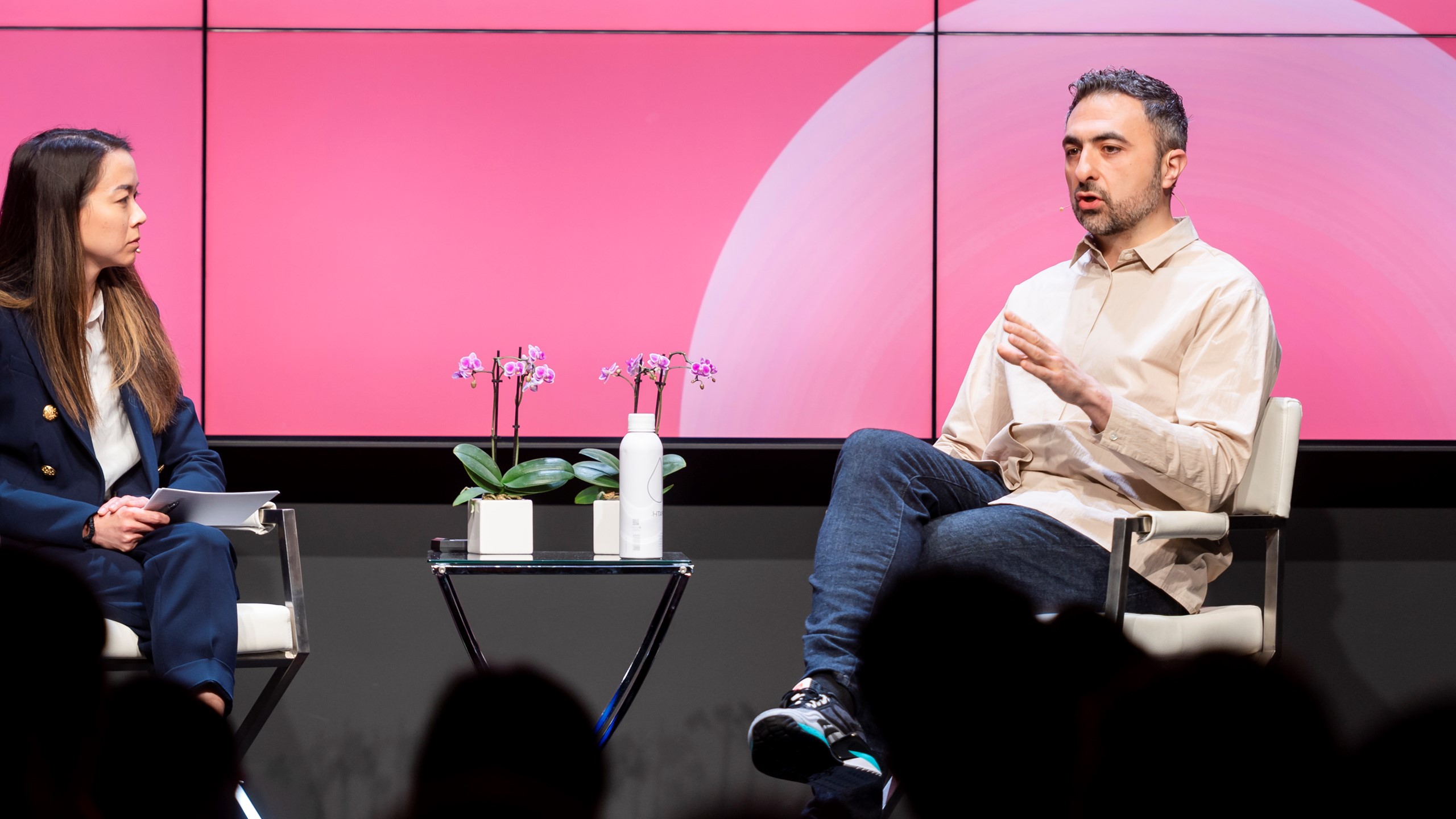
Microsoft is fundamentally altering the DNA of its artificial intelligence division. By shuffling the leadership around its Copilot brand and refocusing Mustafa Suleyman on model development, the company is signaling that the era of "packaging" AI is over. The era of raw, proprietary dominance has begun. This isn't just a corporate reorganization. It is a tactical retreat from the cluttered consumer interface market and a sprint toward the foundational technology that will determine the next decade of computing.
The core of the shift involves moving the day-to-day management of Copilot products away from Suleyman, the DeepMind co-founder brought in with much fanfare from Inflection AI. Instead, Suleyman is being tasked with overseeing the creation of Microsoft’s next generation of large language models. This move answers the burning question of why Microsoft spent billions to "acqui-hire" the Inflection team if they were just going to put them in charge of UI tweaks for a chatbot. They weren't. They were building a hedge against their own partner, OpenAI.
The Illusion of the Seamless Partnership
For two years, the narrative has been simple. Microsoft provides the compute and the cash, and OpenAI provides the brains. It was a symbiotic relationship that allowed Microsoft to leapfrog Google and Meta. But dependency is a dangerous long-term strategy for a company with a three-trillion-dollar market cap. Satya Nadella knows that as long as Microsoft relies on GPT-4 and its successors, it remains a glorified landlord.
By freeing Suleyman to build new models, Microsoft is constructing its own "sovereign" intelligence. This is about vertical integration. If Microsoft can produce a model that rivals OpenAI’s performance while being optimized specifically for Azure’s hardware, the profit margins shift from impressive to historic. The overhead of paying "API taxes" to an external partner—even one you partially own—is a weight Microsoft no longer wants to carry.
The industry often ignores the sheer friction involved in the current Copilot setup. Currently, every query goes through a complex series of handshakes between Microsoft’s interface and OpenAI’s black box. This latency is the silent killer of user experience. By bringing model development entirely in-house under a veteran like Suleyman, Microsoft aims to collapse that distance.
Why the Consumer Copilot Failed to Ignite
Copilot was marketed as a revolutionary assistant that would rewrite your emails and organize your life. The reality has been more terrestrial. Users found a tool that was often hallucination-prone, slow, and buried under layers of Windows menus. The "shake-up" is a tacit admission that the product side of the AI revolution has hit a plateau.
The leadership changes suggest a pivot toward utilitarian AI. Microsoft is moving away from the "chatbot" gimmick and toward "agentic" systems. These are models that don't just talk to you; they execute tasks within the operating system. To achieve this, you don't need a better UI designer. You need a better engine. Suleyman’s new mandate is to build that engine.
The move also addresses a growing talent crisis. High-level AI researchers don't want to spend their days figuring out where to place a button in Microsoft Word. They want to push the boundaries of neural scaling laws. By repositioning the AI division to focus on model creation, Microsoft is making its environment more attractive to the researchers who are currently fleeing to startups or staying at labs like Anthropic.
The Inflection Strategy Reaches Maturity
When Microsoft effectively gutted Inflection AI to bring Suleyman and his team onboard, critics called it a "regulatory bypass." It was a way to acquire a company without the Department of Justice blocking a traditional merger. However, the integration was messy. Suleyman’s aggressive, visionary style clashed with the institutional inertia of Microsoft’s legacy product teams.
By narrowing his focus, Nadella is isolating the "disruptor" element of Suleyman’s team from the "maintainer" element of the Windows and Office teams. This separation is vital. Innovation in model architecture moves at a weekly pace, while enterprise software moves at a quarterly pace. Trying to run both under one leader was a recipe for burnout and mediocre output.
The new structure places Pavan Davuluri, the head of Windows and Surface, in a position of greater influence over how AI is actually delivered to the end-user. This ensures that the hardware and the OS are ready for the models Suleyman is cooking up in the lab. It is a return to the classic Microsoft "platform" play. Build the foundation, then bake it into everything.
The Compute Arms Race
Beyond the personnel, this shift is about hardware efficiency. Microsoft is pouring billions into its own custom "Maia" AI chips. To get the most out of this silicon, they need models designed specifically for the architecture.
GPT-4 is a generalist. Microsoft needs specialists. By focusing Suleyman on model development, they can create "small-language models" (SLMs) and specialized "large-language models" (LLMs) that run leaner and faster on Azure. This isn't just about being smarter; it’s about being cheaper to operate at scale. In the world of enterprise AI, the winner isn't the one with the most "creative" bot, but the one who can provide intelligence at the lowest cost per token.
The Hidden Risks of Internal Competition
This move puts Microsoft on an inevitable collision course with Sam Altman and OpenAI. While both parties maintain a united front, the friction is palpable. If Suleyman succeeds in building a model that matches GPT-4’s utility, Microsoft’s incentive to continue the massive $13 billion partnership with OpenAI diminishes.
We are seeing the birth of a "Two-Model" strategy.
- External: Maintain the OpenAI partnership for high-end, general-purpose research and PR.
- Internal: Use Suleyman’s team to build the "workhorse" models that power the actual business.
This creates a precarious internal culture. Microsoft engineers are now essentially competing with their own partners. It’s a high-stakes game of "co-opetition" that could either result in the most powerful tech stack in history or a fractured ecosystem that confuses developers and customers alike.
Data Sovereignty and the Enterprise Wall
The most overlooked factor in this leadership shuffle is data security. High-value enterprise clients—think global banks and defense contractors—are inherently skeptical of sending their proprietary data to a third-party startup like OpenAI, even if it's via Microsoft’s pipes.
By developing its own models in-house, Microsoft can offer a "closed-loop" system. They can tell a CEO, "This model was built by Microsoft, runs on Microsoft chips, in a Microsoft data center, and is governed by Microsoft’s compliance standards." That is a much easier sell than a multi-party agreement. Suleyman’s team is effectively building the "Fort Knox" version of AI.
The transition also signals a move toward automated reasoning. The next frontier isn't just predicting the next word in a sentence, but "planning" complex workflows. Suleyman’s history with DeepMind—a lab that prioritized reinforcement learning and problem-solving over simple linguistic mimicry—is the key here. Microsoft wants a Copilot that can actually do your job, not just talk about it.
The Burden of the Legacy Business
The biggest hurdle for the new AI leadership isn't the technology, but the legacy. Microsoft is a company of layers. Every new AI feature must contend with thirty years of Windows code and the specific needs of a million different enterprise configurations.
Suleyman’s shift to model development is an attempt to leapfrog this "legacy tax." If the intelligence is powerful enough, it won't matter how clunky the interface is. The value will be in the background. We are moving toward a world of "headless AI," where the model lives deep in the system, quietly optimizing processes without ever needing a chat box.
This is the end of the "AI as a feature" era. By moving their most high-profile hire away from the product and into the lab, Microsoft is betting that the real money is in the foundation, not the facade. They are no longer content being the world’s biggest distributor of someone else’s intelligence. They are building their own.
Check your current Azure integration and identify where OpenAI API latency is impacting your internal tools.