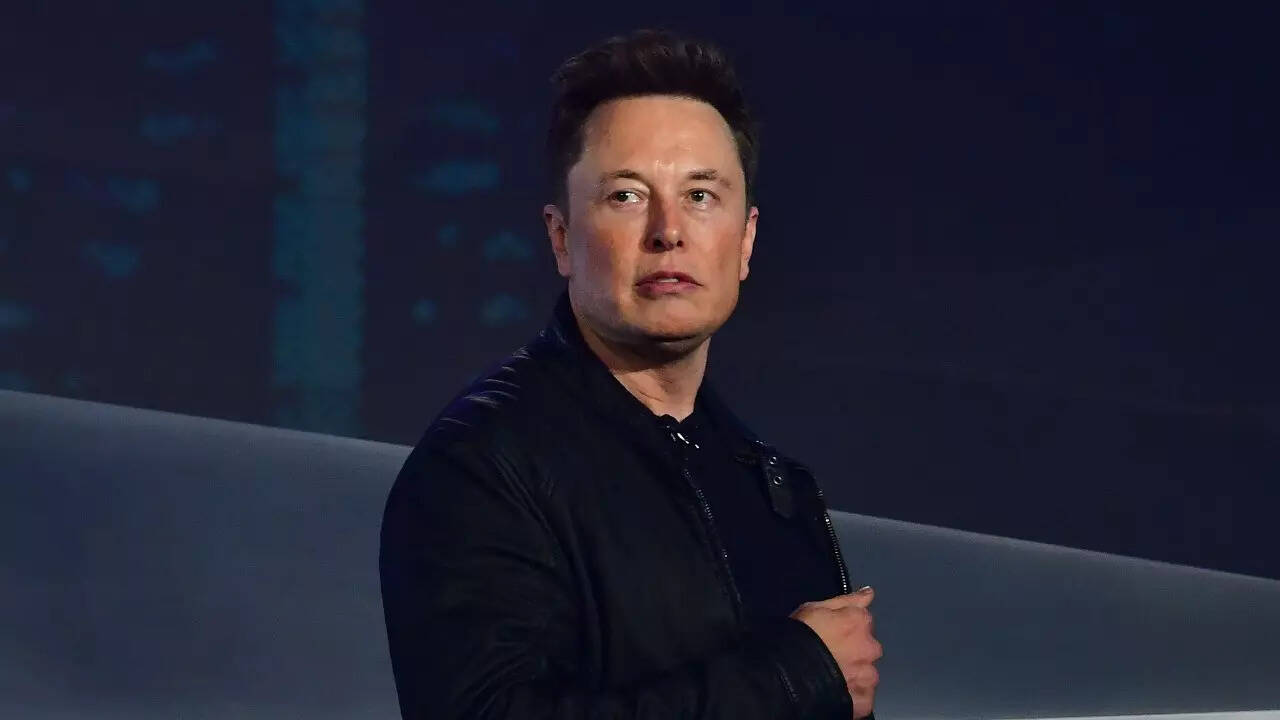
Elon Musk recently used his massive digital megaphone to recount a personal health scare, claiming a second COVID-19 booster shot left him feeling like he was "dying" for several days. By framing his experience as a cautionary tale while simultaneously dismissing the virus itself as "just a bad cold," the billionaire is not merely sharing an anecdote; he is actively reshaping the narrative around medical intervention. This shift marks a significant departure from his earlier stance as a man of science and engineering, highlighting a growing tension between individual anecdotal evidence and broad statistical data.
When a figure with Musk’s reach speaks, the impact ripples through markets and public policy. His comments feed into an existing skepticism that has been simmering since the start of the pandemic. By focusing on his specific adverse reaction, he provides a high-profile anchor for those who feel the risks of vaccination outweigh the benefits. However, the reality of public health is rarely found in the extremes of a single person's experience, no matter how influential that person might be.
The Weight of the Anecdotal Hammer
The danger of Musk’s commentary lies in its simplicity. It is easy to digest. A man felt sick, therefore the medicine is suspect. This logic ignores the fundamental nature of immunology, where a strong reaction to a vaccine often indicates a vigorous immune response rather than a failure of the product. Musk noted that his first two doses resulted in no issues, but the third caused a significant physical toll. In the world of clinical data, this is an expected, albeit unpleasant, possibility for a small percentage of the population.
In the world of social media, the nuance is lost. Musk’s description of feeling like he was "dying" becomes the headline, while the millions of successful, reaction-free vaccinations are relegated to the background. This is the availability heuristic in action. People judge the probability of an event based on how easily examples come to mind. Because Musk is ubiquitous, his example comes to mind first.
He also mentioned that his cousin, who was young and healthy, suffered from myocarditis after a shot. Myocarditis—inflammation of the heart muscle—is a documented rare side effect, particularly in young males. By highlighting this, Musk touches on a legitimate medical concern but strips away the context of its frequency compared to the cardiac risks associated with the virus itself.
Rebranding the Virus as a Bad Cold
Musk’s assertion that COVID-19 was ultimately a "bad cold" for him is a retrospective simplification that ignores the global mortality rate and the millions of cases of "long COVID." It reflects a survivor's bias. Because he emerged unscathed from the actual infection, he retroactively applies that experience to the virus as a whole.
This rhetoric is a sharp pivot from the early days of the pandemic when Musk’s companies were looking for ways to produce ventilators. It suggests a fatigue with public health mandates that has calcified into a broader ideological opposition. For an analyst, this looks less like a medical observation and more like a brand alignment. Musk is positioning himself as a champion of "personal freedom" and "common sense," often at the expense of established scientific consensus.
The "bad cold" narrative is particularly effective because it resonates with a public that is exhausted by years of restrictions and shifting guidelines. It offers a return to normalcy by downplaying the threat. Yet, for healthcare providers on the front lines, this narrative is a setback. It undermines the effort to protect vulnerable populations who do not have the luxury of viewing the virus through the lens of a mild respiratory irritant.
The Engineering Mindset vs Medical Reality
Elon Musk approaches problems like an engineer. He looks for direct cause and effect, seeks to optimize systems, and has little patience for bureaucracy. This mindset has served him well at SpaceX and Tesla, where physical laws are absolute. If a rocket explodes, there is a mechanical reason that can be identified and fixed.
Biology is different. It is messy, variable, and often unpredictable. The human body is not a closed system with a manual. A vaccine that works perfectly for 999 people might cause a reaction in the 1,000th due to a confluence of genetic and environmental factors that we are still working to understand. When Musk applies his "first principles" thinking to medicine, he often misses these biological nuances. He treats a rare side effect as a systemic flaw rather than a known variable in a complex equation of risk management.
The Polarization of Scientific Discourse
We are witnessing the fragmentation of truth based on political and social identity. Musk’s platform, X (formerly Twitter), has become a primary battleground for this conflict. By relaxing content moderation and personally weighing in on sensitive health topics, Musk has ensured that his personal views carry the weight of editorial policy.
This has created an environment where:
- Scientific papers are weaponized by picking out single sentences.
- Expertise is viewed as a form of elite signaling rather than earned knowledge.
- Contrarianism is mistaken for critical thinking.
The result is a public discourse that is loud but uninformative. When Musk claims the virus is a cold, he isn't inviting a debate on viral load or transmission rates; he is signaling to his base. He is reinforcing a tribal identity that views institutional expertise with deep suspicion.
Impact on Future Public Health Crises
The long-term consequence of this rhetoric isn't just about COVID-19. It’s about the next crisis. If the public is coached to view every adverse reaction as a sign of a "dying" system and every virus as a "bad cold," the ability of health authorities to coordinate a response in the future will be severely compromised.
Trust is a finite resource. Once it is spent, it is incredibly difficult to earn back. Musk’s comments contribute to a broader trend of institutional erosion. When people lose faith in the CDC or the FDA, they don't stop looking for answers; they just start looking for them in less reliable places. They turn to charismatic influencers and billionaires who promise "the truth" that the experts are allegedly hiding.
The Risk of the Platform
As the owner of a major social media platform, Musk holds a unique position of power. He is both the player and the referee. When he shares his personal medical experiences, they are boosted by the very algorithms he controls. This creates a feedback loop where his anecdotes become the dominant narrative on the platform, regardless of their scientific accuracy.
There is a fundamental difference between a private citizen sharing a story and the head of a global communications hub doing so. The latter carries a responsibility to the truth that transcends personal grievance. By blurring the lines between personal experience and professional expertise, Musk is setting a precedent that could have dire consequences for public literacy and health.
The reality of the situation is that medical science is built on the aggregate, not the individual. One man's "dying" feeling is another man's life-saving protection. To ignore the former is cold; to ignore the latter is dangerous. Musk is currently leaning heavily into the latter, prioritizing his personal narrative over the collective data that keeps society functioning.
The shift in tone from the world's richest man suggests that the era of the "technologist as savior" is ending, replaced by the "technologist as provocateur." This isn't about solving a problem; it's about challenging the people whose job it is to solve it. In this new landscape, the loudest voice often wins, even if that voice is shouting about a "bad cold" while the rest of the world is still trying to catch its breath.
Questioning authority is a hallmark of progress. But questioning a consensus without a foundation of data is simply noise. Musk has the power to be more than a noise machine. He chooses, instead, to use his experience as a weapon against the very institutions that make his technological feats possible.
The next time a major health crisis emerges, the ghost of this rhetoric will be there, haunting the hallways of hospitals and the feeds of millions. We are moving toward a world where your medical choices are determined by which billionaire you follow rather than which doctor you trust. That is a trajectory that no amount of engineering can easily correct.
If you want to understand the future of public health, stop looking at the labs. Start looking at the timelines. The battle for the next decade of human longevity isn't being fought with microscopes; it's being fought with memes and anecdotes. And right now, the anecdotes are winning.