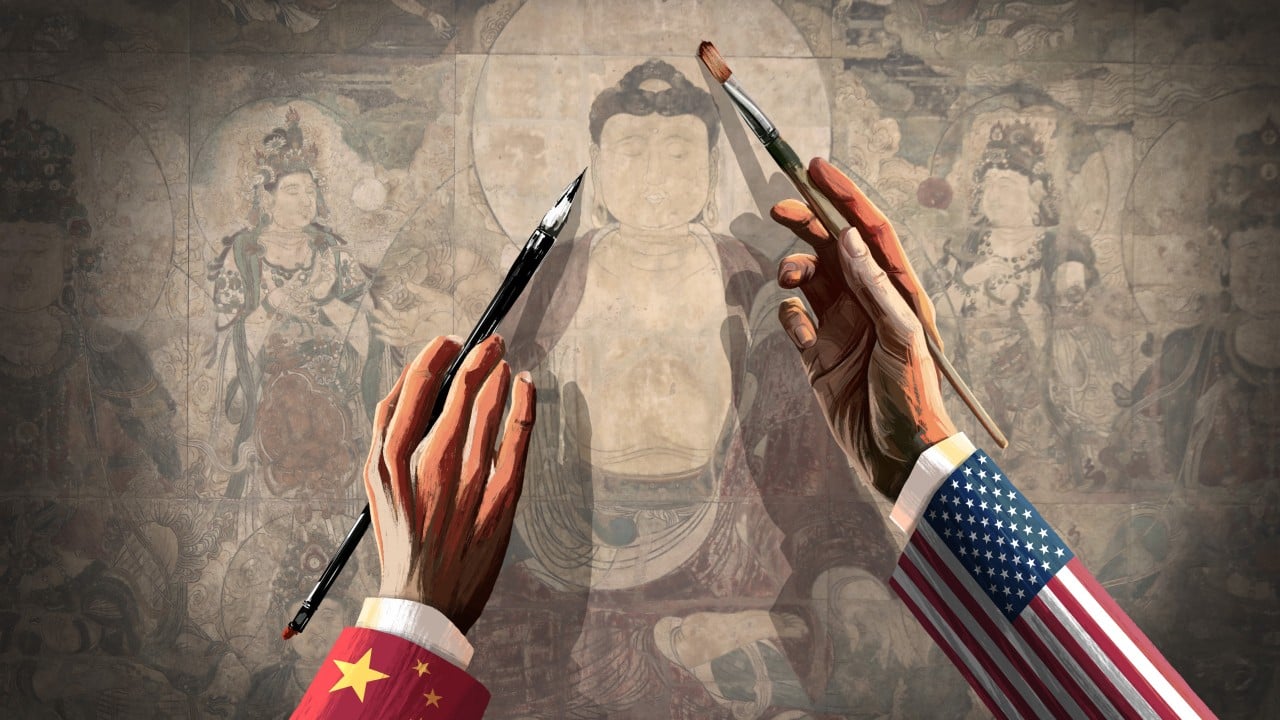
Geopolitical tensions usually dominate headlines between Washington and Beijing. Cultural preservation, however, occasionally cuts through the noise. A meticulous life-size replica of a 14th-century Yuan dynasty Chinese mural recently achieved what years of diplomatic summits struggled to accomplish. It sparked a genuine, hands-on technical collaboration between American and Chinese heritage experts.
Museum masterworks scattered across oceans often remain isolated by distance, red tape, and political friction. When modern reproduction technology meets rigorous historical scholarship, strange and wonderful things happen. This project proved that art can rebuild bridges where politics break them down. For a deeper dive into similar topics, we recommend: this related article.
The Story Behind the Yuan Dynasty Mural Replica
The core of this collaborative breakthrough centers on a monumental 14th-century Yuan dynasty mural. Original temple murals from this era represent peak Chinese artistic achievement. Many were fragmented, removed from their architectural contexts decades ago, and dispersed globally.
Recreating these masterpieces isn't just about printing a pretty picture. It requires forensic-level accuracy. Specialists in Beijing undertook an exhaustive reproduction project of the sacred wall art. Every brushstroke, pigment flaw, and centuries-old crack needed digital mapping down to the millimeter. For further context on the matter, in-depth coverage is available on BBC.
Instead of treating the reproduction as a cheap substitute, researchers treated it as a scientific instrument. This mindset shift unlocked doors that had stayed locked for generations.
How American Institutions Got Involved
Once the Beijing team finished their high-precision modeling, the ripple effects reached American museums. Major institutions in the United States—including collections holding matching fragments or related pieces from the same temple complex, such as museums in Missouri and Cincinnati—took notice.
Scholars realized that studying the life-size replica side-by-side with scattered fragments offered a rare window into history. You cannot easily pack up a fragile 700-year-old wall painting and fly it across the Pacific Ocean. Shipping original antiquities involves insurance nightmares, climate control risks, and bureaucratic gridlock.
A high-fidelity replica changes the rules. It allows curators, conservators, and historians to compare alignments, study pigment chemistry, and trace provenance without risking actual artifacts.
The Technical Breakthroughs Driving the Partnership
Replicating ancient art at scale demands serious technology. We aren't talking about standard commercial printing. Teams utilized advanced 3D surface scanning, spectral imaging, and custom mineral-based pigments to match the luster of aged clay and ink.
When American conservators examined the results, the accuracy blew them away. This technical excellence forced a professional vulnerability between the two sides. Chinese and American scientists began exchanging data freely, holding joint virtual seminars, and comparing notes on material degradation.
Museum directors often talk about international cooperation as a lofty ideal. Here, it looked like shared spreadsheets, microscope slide comparisons, and late-night video calls between Beijing and US curators arguing passionately over the exact hue of a Yuan dynasty robe.
Why Cultural Diplomacy Still Matters
It's easy to grow cynical about institutional partnerships. Budgets get slashed, political winds shift, and cultural exchanges become political footballs. Yet, heritage science operates on a different frequency.
When scientists and art historians collaborate, their shared language is physical evidence. They want to know how the ancient artists mixed their binders. They want to understand how smoke from incense burners altered the blues and reds over five centuries.
This narrow, highly specific focus creates a safe harbor. It bypasses grandstanding. Both sides want the truth about the artwork. In pursuit of that truth, national borders blur.
If you care about international relations, look past the trade tariffs and diplomatic briefings. Sometimes, the real diplomatic breakthroughs happen in dimly lit conservation labs where a fake wall triggers a very real dialogue.
Take time to visit specialty museum exhibitions featuring these advanced technological replicas when they tour near you. Pay attention to the invisible labor connecting international institutions. Support the museums and labs investing in digital repatriation and material science. Preserving our shared global history takes more than good intentions. It takes exact science, stubborn curiosity, and people willing to talk across borders.