Rain had turned the fields into a soup of gray mud. It soaked through leather boots, chilled bones, and clung to the hems of heavy woolen cloaks. If you stood in the middle of June, right at the cusp of summer, you expected warmth. Instead, history gave us damp, suffocating tension.
History is rarely made in clean, well-lit rooms. It happens when people are tired, angry, and pushed to the absolute edge. We look back at the grand dates on our calendars and see them as inevitable. We treat them like static museum exhibits. But the people who lived through the third week of June didn't know they were writing textbooks. They just wanted to survive the next ten minutes.
The Meadow Where a Tyrant Blinked
King John was sweating. It wasn't from the heat.
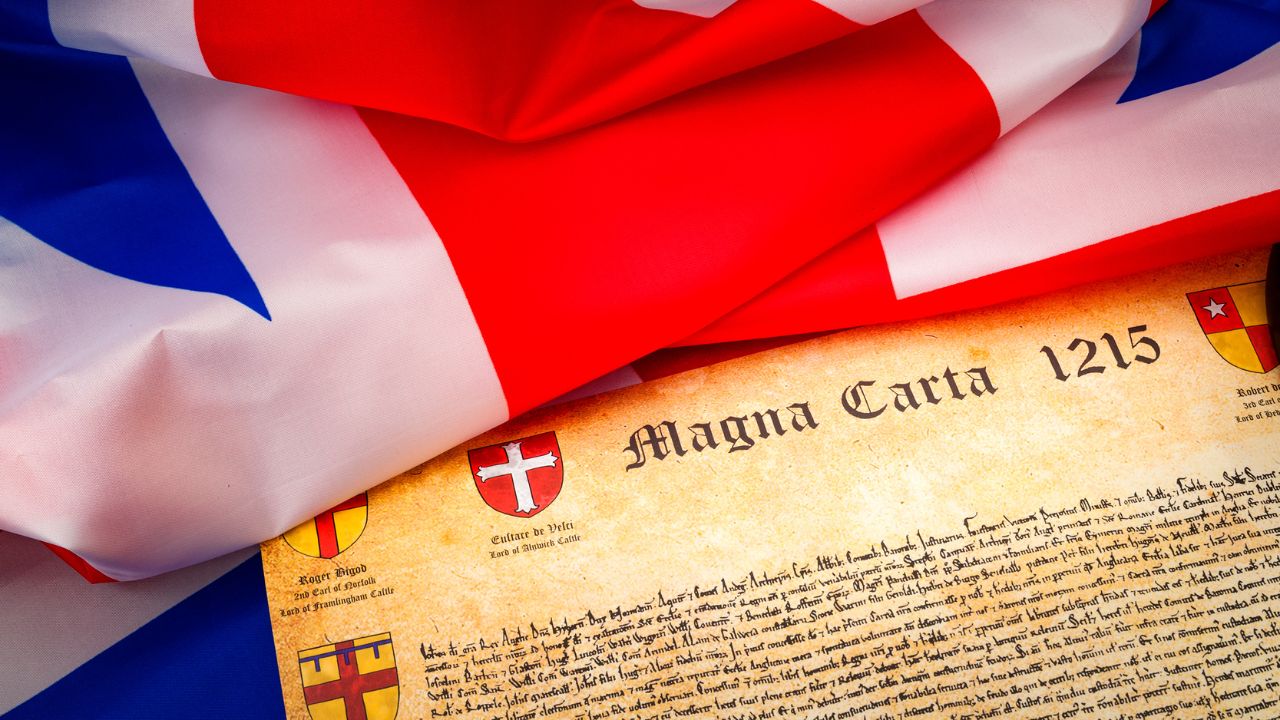
On June 15, 1215, a boggy meadow called Runnymede became the most important real estate in England. Imagine a negotiation where every single person in the room is holding a weapon. John was surrounded by forty-five rebellious barons who had reached their breaking point. For years, the king had treated the law like a personal plaything. He seized lands, forced widows into marriages for cash, and taxed his subjects until they had nothing left but their rage.
To understand the stakes, we have to look past the heavy gold crown and see the desperation. John wasn't just a bad king; he was a terrified man who realized his monopoly on violence had shattered. The barons weren't enlightened democracy advocates. They were wealthy landowners protecting their own interests. Yet, out of that clash of pure self-interest, something miraculous happened.
They forced him to sign a piece of sheepskin.
We call it the Magna Carta. The Great Charter.
If you read the original document today, much of it feels incredibly tedious. It babbles about fish weirs on the Thames, standard measurements for cloth, and the inheritance rights of medieval heirs. It is a hyper-local grievance list. But buried beneath the mundane legalities was a hidden detonation device.
"No free man shall be seized or imprisoned... except by the lawful judgment of his equals or by the law of the land."
The phrase changed everything.
Consider what happens next when a ruler is told "No." With those words, the absolute power of the monarchy died in the mud of Runnymede. The law became a separate entity, a shield that stood between the vulnerable and the powerful. It didn't create a perfect democracy overnight. It didn't free the serfs. But it established a baseline truth that we still rely on when we walk into a courtroom today: nobody is above the rules. Not even the person who wears the crown.
The Sound of Falling Empires
Six hundred years later, and only a short journey across the English Channel, the mud returned. It seems to be a recurring character in the human story.
By June 18, 1815, Napoleon Bonaparte had conquered Europe, lost it, gone into exile, and come back for one final, desperate gamble. The destination was a non-descript patch of high ground in Belgium. Waterloo.
Step into the boots of an ordinary French infantryman on that morning. You are exhausted. You have been marching for days through torrential downpours. The ground is so saturated that the French artillerymen cannot move their heavy cannons into position without them sinking up to the axles. Napoleon waits. He needs the ground to dry so his cannonballs can bounce across the turf, maximizing the carnage.
That delay changed the trajectory of the world.
Arthur Wellesley, the Duke of Wellington, stood on the opposite ridge. He was a man of cold logic, holding a fragile coalition of British, Dutch, and German troops together. He knew his men had to hold the line against the most brilliant military mind of the century.
The battle was not a series of elegant chess moves. It was a brutal, deafening meat grinder. The air grew thick with the acrid smoke of black powder, blinding the combatants. Men fought hand-to-hand in the orchards of Hougoumont farmhouse, the walls stained with sweat and blood.
Napoleon looked through his spyglass, waiting for his reinforcements under Marshal Grouchy. Instead, a cloud of dust appeared on his right flank. It wasn't Grouchy. It was the Prussians, led by the seventy-two-year-old Gebhard Leberecht von Blücher, who had ridden through the night to fulfill his promise to Wellington.
The French line snapped.
The man who had rewritten the map of Europe was suddenly a fugitive in a carriage, fleeing toward a second, permanent exile on a barren rock in the South Atlantic. Waterloo wasn't just a military defeat; it was the collapse of an ego that had consumed millions of lives. The silence that fell over that bloody Belgian field marked the end of an era. The dream of a unified European empire under a single dictator was buried in the mud alongside forty thousand casualties.
The Ghosts of June
When you look closely at this specific stretch of June, you begin to see a pattern. The universe seems to pick these days to test the limits of human authority.
Look at June 17, 1972. Five men broke into the Democratic National Committee headquarters at the Watergate complex in Washington, D.C. They wore surgical gloves and carried sophisticated wiretapping equipment. It looked like a minor, botched burglary. A footnote in the local news.
But the invisible stakes were massive. The threads of that break-in led directly back to the Oval Office, unraveling a web of paranoia, surveillance, and abuse of power that eventually forced a president to resign. Just like King John at Runnymede, Richard Nixon discovered that the law possesses a gravitational pull that cannot be ignored.
Or consider June 20, 1789. The Third Estate in France, locked out of their official meeting hall by a nervous Louis XVI, marched to a nearby indoor tennis court. They stood among the echo of bouncing balls and swore an oath not to disband until they had written a constitution. They were ordinary lawyers, doctors, and merchants, but their defiance set off a spark that burned down the ancient regime.
Why the Mud Matters
We live in a world of concrete, glass, and digital screens. It is easy to feel disconnected from men in heavy armor or soldiers fighting with muskets. Their world feels alien, painted in sepia tones.
But their fears were identical to ours. They worried about whether their children would be safe from predatory leaders. They worried about whether their sacrifices would mean anything. They stood in the rain, terrified, doubting their choices, and moved forward anyway.
The next time you walk through a park on a rainy June afternoon, look down at the wet earth. Remember that our freedom wasn't delivered via a clean, seamless transition. It was dragged, kicking and screaming, out of the mud by flawed people who simply refused to bend the knee any longer.