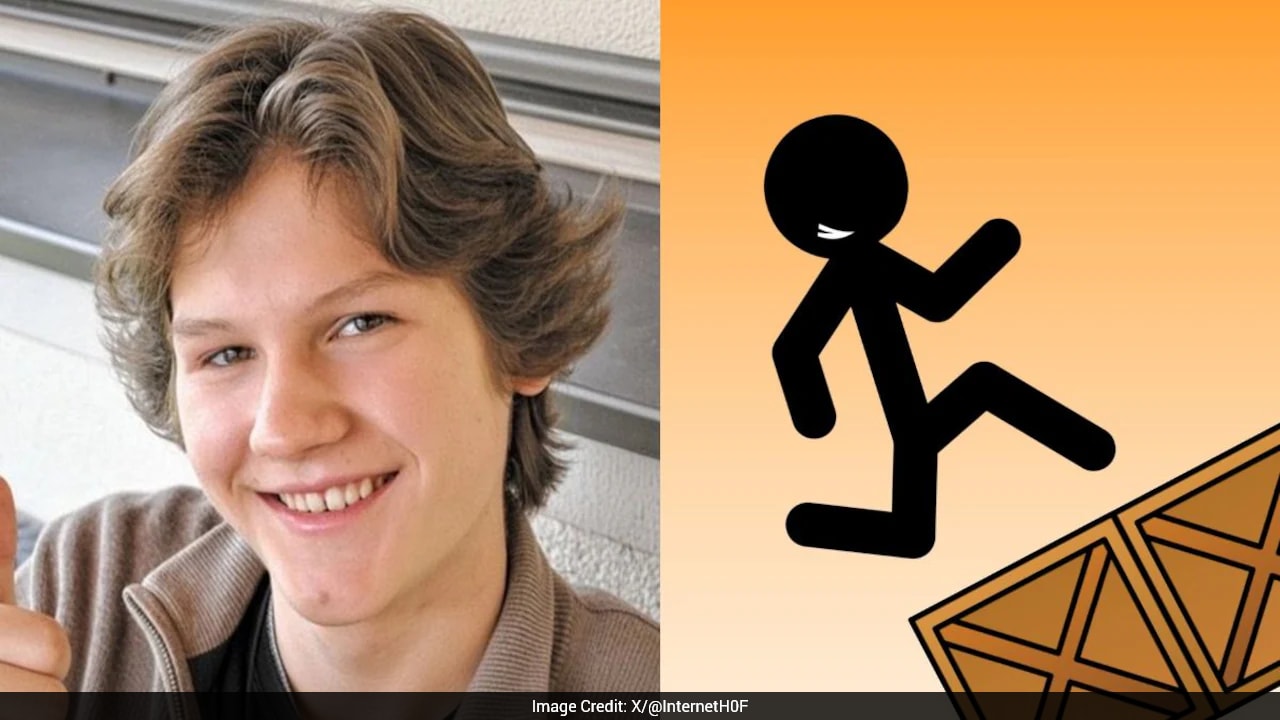
Tragedy hits indie gaming. Headlines swarm. Everyone asks the same shallow questions about Manuel Otto and the Stick Run livestream.
Wrong question. Wrong lens.
When a creator dies at 30 during a live broadcast, the industry reflex is predictable. Grief threads pile up. Clips circulate. Commenters type hollow tributes and blame "the grind" or "the internet" as if the internet were an unfeeling weather system rather than a set of engineered incentives. Competitor pieces rush out to recap Stick Run trivia, list Twitch metrics, and treat a human death like a content hook wrapped in sorrow.
That lazy consensus misses the real story. Worse, it protects the exact habits that hollow out creators long before a tragedy ever happens.
Let's be clear about what we know and what we do not know. We do not have a verified public medical cause of death from the headline alone, and guessing medical specifics without confirmed facts is irresponsible speculation. What we do have is an unmistakable industry pattern: solo and small-team developers building viral games, turning their own lives and broadcasts into perpetual promotion engines, and operating inside a creator economy that rewards visible exhaustion while penalizing stillness.
I have watched studios and indie teams burn through cash, health, and relationships chasing live-streamed authenticity. I have seen founders treat every waking hour on camera as "community building" until their sleep collapses, their blood pressure spikes, and their work turns brittle. Calling that "passion" is an insult to craft.
The Lazy Consensus Around Creator Tragedies
Read the standard coverage of a creator passing away mid-stream and you will spot the same three tropes every time.
First, the nostalgia trap. Writers reduce a builder's entire career to a single recognizable title—here, Stick Run—as if a game's popularity explains the person behind the keyboard. Stick Run had simple, kinetic appeal. Players remember the jump timing, the speed, the frictionless restarts. They rarely remember the months of unglamorous debugging, storefront policy headaches, or revenue volatility behind a minimalist runner.
Second, the platform scapegoat. People point at Twitch as a villain or a tragic stage. Platforms are distribution tools and attention markets; they do not force a thirty-year-old to sit in a chair for ten hours without a break. Yet platforms do design feedback loops—chat velocity, subscriber alerts, streak counters, algorithm visibility—that make stopping feel like losing ground.
Third, the hero-martyr myth. The industry loves romanticizing the lone developer grinding late into the night. We call it dedication. In reality, chronic sleep debt degrades executive function, emotional regulation, and risk judgment. Cognitive research from sleep scientists like Matthew Walker and circadian biologists has shown for years that sustained sleep restriction impairs attention and decision-making in ways that mirror intoxication. Nobody puts that on a motivational poster.
Grief is human. Turning grief into a justification for unsustainable creator habits is industry cowardice.
What People Also Ask (And Why the Premise Is Flawed)
When news like this breaks, search behavior follows a script. People type questions looking for neat closure. Most of those questions start from a broken premise.
"Did livestreaming cause his death?"
Unless verified medical authorities establish a direct link, asking "did livestreaming cause it" is the wrong starting point. Sudden medical events happen to people offline, in offices, on walks, and at home. Framing a live broadcast as the sole culprit turns correlation and dramatic timing into a convenient narrative.
The sharper question is structural: How does always-on streaming change what a creator notices about their own body?
On a live broadcast, you perform alertness. Chat expects reactions. Silence feels like dead air. Creators routinely ignore subtle warning signs—dizziness, chest tightness, jaw clenching, dehydration, skipped meals—because stepping away breaks momentum. That behavioral distortion is real, even when we refuse to invent medical causes we cannot verify.
"How hard was it to sustain success after a viral hit like Stick Run?"
Brutally hard. Ask any indie developer who has lived past a viral spike.
A breakout hit creates an asymmetrical curse. Millions of people know the name of the game; a tiny fraction pay enough to fund years of independent living; almost nobody cares about your next prototype until it clears the same impossibly high bar.
Imagine a scenario where a solo creator releases a snappy browser or mobile runner that catches fire. For six months, downloads soar, clips spread, and messages pour in. By month eighteen, novelty fades. Platform algorithms move on. The creator tries to recapture the spark by streaming development, playing with fans, and staying "visible" every single day. The audience loves the access. The creator's nervous system pays the bill.
"What can indie game creators learn from this?"
Most advice answers this with platitudes: "Take breaks," "Protect your mental health," "Don't compare yourself to others."
Generic wellness advice fails because it fights incentive design with willpower. Willpower loses every time against a live chat full of people cheering you on while you push past your limit.
The Mechanics of the Always-On Indie Trap
Why do smart, capable game makers walk straight into burnout? Look at the economics and psychology stacked against them.
- Unbounded labor vs. bounded output. Writing code or designing levels takes focused blocks of time, yet indie creators often treat "being online" as productive work. Streaming feels like marketing and hanging out and working all at once—which often means none of it gets clean boundaries.
- Parasocial gravity. Viewers show up for you, not just patch notes. Over time, stepping back feels like letting down people who know your username, your voice, and your routines. That social obligation is heavy even when viewers mean well.
- Income irregularity. Indie revenue spikes and troughs. When your bank balance fluctuates, saying no to an extra stream or an extra hour feels like leaving money on the table.
- Identity fusion. When your game and your broadcast become your primary social identity, taking a week off feels like disappearing.
I have seen teams spend fortunes on marketing campaigns while ignoring basic operational hygiene—no sleep schedules, no off-camera recovery days, no financial runway outside the next launch. They treated discipline as optional and hype as oxygen. It never ends cleanly.
A Brutal Comparison: Hype Culture vs. Sustainable Craft
| Dimension | Always-On Hype Model | Disciplined Craft Model |
|---|---|---|
| Primary Metric | Live concurrent viewers, chat speed, daily streaks | Shipped milestones, health stability, multi-year runway |
| Relationship to Audience | Constant availability; reactive to every chat prompt | Scheduled touchpoints; deliberate boundaries |
| Work Rhythm | Marathon sessions driven by adrenaline or guilt | Time-boxed deep work followed by real recovery |
| Failure Mode | Burnout, creative numbness, neglected health | Slower short-term visibility; quieter growth curves |
Where My Contrarian Stance Has Real Downsides
Honesty matters if this critique is going to hold water. Pushing back against constant streaming and hustle culture carries real trade-offs.
First, lower short-term visibility. In attention markets, stepping back can cost momentum. If an indie creator stops streaming daily or cuts back on constant social updates, discovery can dip. Ignoring that reality is naive.
Second, financial friction. Not every developer has savings, publisher backing, or steady contract income. Sometimes creators overextend because they are trying to keep lights on or pay rent. Telling someone to "just set boundaries" without acknowledging cash pressure is cheap talk.
Third, overcorrection into secrecy. If creators swing too far in the other direction and isolate completely, they can lose valuable playtesting feedback and peer support. Balance is harder than dogma.
Still, a real trade-off is infinitely better than a fatal illusion. You can recover from a slower launch quarter. You cannot negotiate with a body pushed past its limits.
Actionable Moves That Actually Change the Game
Forget vague self-care slogans. If you build games or stream to sustain a creative career, change the mechanics around your day:
- Hard-cap stream duration and set a hard stop alarm. Decide before you go live when the broadcast ends. Treat the closing bell like a shift ending at a real job, not a suggestion.
- Separate "building" from "performing." Do your hardest architecture, debugging, and design offline. Use live sessions for curated playtests, Q&A, or low-stakes polish—not high-stress crunch.
- Build a 90-day cash buffer before chasing growth spikes. Financial cushion is the single strongest antidote to panic-grinding.
- Audit your body before you check analytics. Water, real food, daylight, and sleep come first. If you are running on fumes, no clip going viral fixes the deficit.
- Measure career longevity in years, not clips. Ask yourself whether your current weekly routine is something you could tolerate five years from now without dreading your desk.
Manuel Otto's passing at 30 is a sobering reminder of how fragile life is and how quickly a name flashes across feeds. Honor the human being without turning the tragedy into another excuse for industry mythology.
Build things that last. Keep yourself intact while you build them.