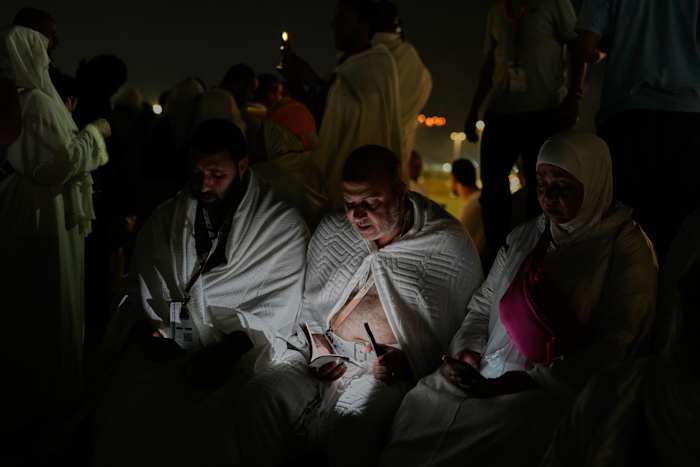
The heat in the desert isn't just a physical sensation. It's an overwhelming force. Imagine standing in 45-degree weather alongside nearly two million other people, all dressed in simple white cloth, eyes turned toward a single rocky hill. This is Mount Arafat. If you miss this day, you haven't performed Hajj. It's that simple. While the media often focuses on the logistics of the crowds or the sheer scale of the tents in Mina, the spiritual core of the entire pilgrimage happens right here, on this plain, under a blistering sun.
For many, this is the "Day of Reckoning" before the actual Day of Judgment. You see people from every corner of the globe—some who saved their entire lives for this one moment—standing in deep prayer. There’s no hierarchy here. A billionaire stands next to a laborer. They wear the same clothes. They chant the same prayers. It’s a raw, unfiltered display of human equality that you just don't find anywhere else on this planet.
The Day of Wuquf and the Weight of Standing
The climax of Hajj is technically called Wuquf, which translates to "standing." But it’s not just about being on your feet. It’s about being present. From noon until sunset, pilgrims stay within the boundaries of the Arafat plain. They believe this is the time when the gates of heaven are widest and every sincere prayer is answered.
I've seen people weeping so hard their shoulders shake. They aren't crying out of sadness. It’s a mix of relief, hope, and the sheer weight of their own history. They're asking for forgiveness for everything they've ever done wrong. In the Islamic tradition, this is where the Prophet Muhammad delivered his Farewell Sermon over 1,400 years ago. He spoke about property rights, racial equality, and the treatment of women. When you stand there today, you aren't just a tourist. You're part of a 14-century-long chain of people doing exactly the same thing.
Managing Two Million People in a Heatwave
Saudi Arabia has spent billions of dollars trying to make sure people don't die from heatstroke. It’s a massive task. In 2026, the timing of the lunar calendar means Hajj falls during the peak of the Arabian summer. The government has installed massive misting towers that spray cool water over the crowds, and the "Hajj Metro" or Mashaaer Al-Mugaddassah Metro line works overtime to shuffle hundreds of thousands between sites.
But even with the best tech, the physical toll is real. You'll see volunteers handing out millions of chilled water bottles and umbrellas. The Ministry of Health usually deploys thousands of practitioners specifically trained in heat-related illnesses. Despite the comfort of air-conditioned tents in Mina, Arafat is meant to be a bit tougher. It’s a sacrifice. You’re supposed to feel the intensity. It forces you to strip away the distractions of your normal, comfortable life and focus entirely on your spiritual state.
Moving to Muzdalifah and the Transition to Action
As soon as the sun dips below the horizon, the energy changes. The slow, meditative atmosphere of Arafat breaks into a massive, coordinated migration. Millions of people start moving toward Muzdalifah. This is an open plain located a few kilometers away where pilgrims spend the night under the stars.
There are no tents here. You grab a rug or a sleeping bag and find a patch of dirt. This is also where you collect pebbles. Why pebbles? For the Jamarat—the symbolic stoning of the devil that happens the following day. This transition is vital for the psyche of the pilgrim. You go from the internal, quiet prayer of Arafat to the physical, external action of rejecting "evil" or "temptation." It’s a shift from the soul to the body.
Common Misconceptions About the Arafat Gathering
- You have to climb the mountain: You don't. While many people try to get onto the "Mount of Mercy" (Jabal al-Rahmah), the entire plain is Arafat. Staying in your tent or standing anywhere within the marked boundaries counts.
- It’s a vacation: It’s exhausting. Even with luxury packages, the sheer volume of people and the heat make it a test of patience.
- It's only for the old: While many save up for years, there's a huge surge in younger pilgrims who want to experience the physical challenge while they're still fit.
The Logistic Miracle of the Saudi Vision 2030
Under the current Saudi Vision 2030, the capacity for Hajj is expanding. We’re talking about smart cards that track health data and digital apps that guide pilgrims through the rituals to avoid overcrowding. These aren't just gimmicks. In the past, "bottlenecks" during the movement from Arafat to Muzdalifah were dangerous. Today, AI-driven crowd management systems monitor every square inch of the path to ensure the flow doesn't stop.
The goal is to host 30 million Umrah and Hajj pilgrims annually. To do that, the infrastructure around Mount Arafat had to be completely redesigned. The roads are wider, the cooling systems are more efficient, and the communication networks are built to handle millions of simultaneous uploads. Everyone wants to livestream their Arafat moment, and honestly, the fact that the 5G networks don't crash is a feat of engineering in itself.
What Happens After the Peak
Once the sun sets on Arafat, the "peak" has passed, but the work isn't done. The next few days involve the Feast of Sacrifice (Eid al-Adha), the stoning of the pillars in Mina, and the final circling of the Kaaba in Makkah. But nothing matches the intensity of that afternoon in Arafat. It’s the spiritual "reset button."
If you’re planning to go or just watching from afar, understand that for a Muslim, this isn't just a religious obligation. It’s the most important day of their life. Everything they've done leads up to those few hours on the plain. When they leave Arafat, they believe they're starting over with a clean slate.
If you're following the news, don't just look at the drone shots of the crowds. Look at the faces. You’ll see people who have reached their limit and found something deeper on the other side. That’s the real story of Mount Arafat.
Check the official Ministry of Hajj and Umrah portals for updated health protocols if you're traveling. Ensure your "Nusuk" app is updated and your permits are digitalized to avoid delays at the checkpoints. Pack high-quality sunblock and a collapsible water bottle. The physical prep is just as vital as the spiritual one.