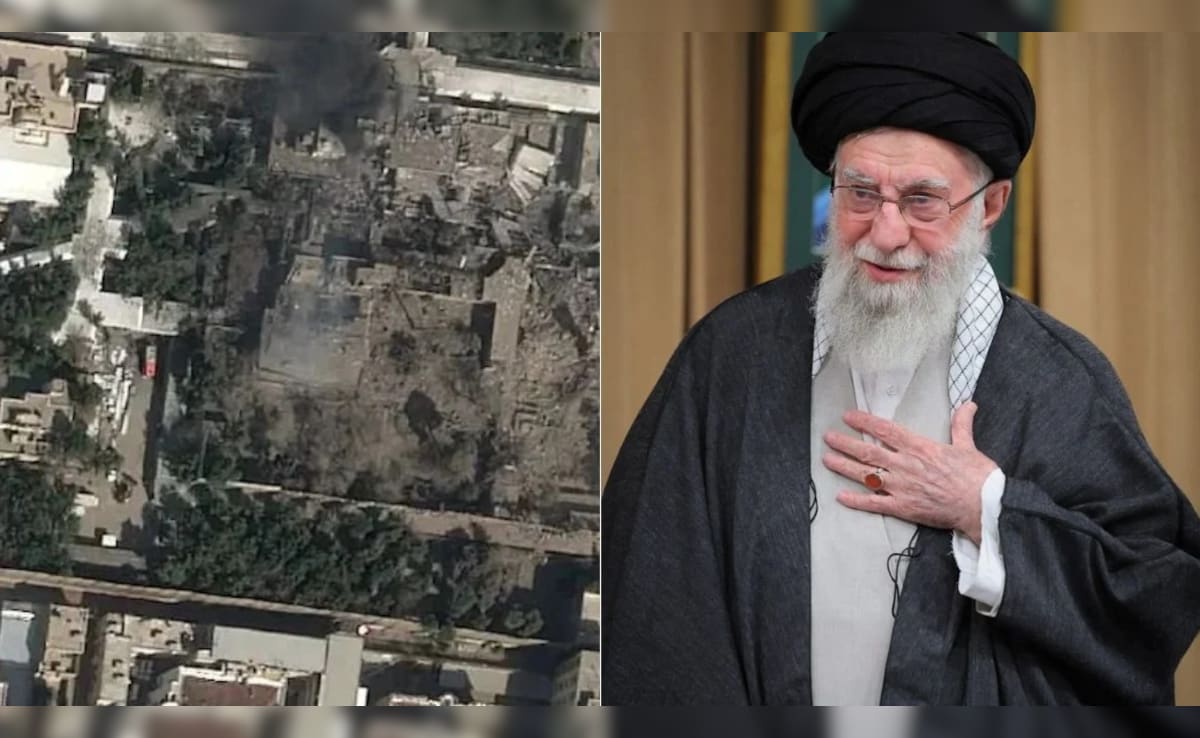
The intelligence community is currently obsessed with a campfire story. It’s a clean, cinematic tale where Israeli operatives sit in a darkened room in Tel Aviv, flicking through grainy feeds from Tehran’s traffic intersections to track a Supreme Leader’s motorcade. It’s the kind of narrative that sells spy novels and justifies bloated defense budgets for "smart city" surveillance. It is also, from a technical and operational standpoint, almost certainly a distraction.
To believe that Mossad "sealed Khamenei’s fate" primarily through the exploitation of urban infrastructure is to ignore the brutal reality of how high-level signals intelligence (SIGINT) and human intelligence (HUMINT) actually function in a hostile environment like Iran. The "Traffic Camera" theory is a convenient myth. It makes the hunter look omniscient and the prey look incompetent. But the truth is far more surgical, far more human, and significantly more terrifying for the Iranian regime than some hacked Hikvision firmware. Learn more on a related issue: this related article.
The Bandwidth Fallacy
The most glaring hole in the "hacked camera" theory is the sheer logistical nightmare of data exfiltration. Tehran is a sprawling metropolis of nearly 9 million people. Its traffic management system consists of thousands of cameras, many of which are air-gapped or run on isolated, proprietary government intranets.
To track a high-value target (HVT) in real-time using these assets, an intelligence agency would need to maintain a persistent, high-bandwidth connection to a foreign network that is under constant scrutiny by the Iranian Cyber Police (FATA). Streaming high-definition video out of a sovereign nation’s most sensitive zones without triggering a single anomaly detection alarm isn't just difficult; it’s a fairy tale. Additional analysis by Wired delves into related perspectives on this issue.
In the real world, you don't watch a motorcade through a 15-fps traffic cam that might be obscured by a passing bus or a dust storm. You track it through active beaconing or EMSEC (Emanations Security) exploits.
If Mossad knew where Khamenei was, it wasn't because they were watching him on a screen; it was because they had already compromised the physical space or the personal devices of his inner circle. The camera narrative is "the theater of the technical"—a way to explain away a successful strike without admitting that you have a mole sitting at the IRGC’s most private dinner tables.
The Myth of the Autonomous Hack
Everyone loves the idea of a "Stuxnet for cameras." The media portrays these operations as purely digital—a hooded hacker hitting "Enter" and gaining total control. This ignores the Physical Layer.
Most "smart" infrastructure in Iran isn't actually that smart. It’s a patchwork of Chinese-made hardware and locally developed software. Exploiting it requires more than just a zero-day exploit; it requires proximity. If cameras were indeed used, it wasn't through a remote hack from 1,000 miles away. It would have required the installation of physical hardware bridges—"taps"—on the fiber lines or at the local exchange points.
I’ve seen operations where millions were spent trying to crack a network remotely, only to realize the only way in was a $50 Raspberry Pi-style device clipped onto a wire in a basement by a paid asset. The competitor's focus on "spies and cameras" misses the crucial link: the Local Proxy.
- The Hardware Reality: You don't hack the cloud to see the street; you hack the street to see the street.
- The Latency Problem: Real-time kinetic strikes (drones, IEDs, or snipers) cannot rely on the 3-5 second lag inherent in redirected IP camera streams.
- The Evidence Trail: Digital footprints are permanent. A physical asset flipping a switch or providing a localized signal is much harder to trace back to a foreign capital.
SIGINT is the Real King, Not CCTV
If you want to know how an HVT dies in 2026, look at the spectrum, not the lens. The Iranian leadership is paranoid for a reason. They use "Mithaq" encrypted phones and localized mesh networks. But every electronic device, no matter how shielded, has a signature.
The focus on traffic cameras is a classic misdirection. It allows the public to focus on something they understand—surveillance—while hiding the true capability of modern Masint (Measurement and Signature Intelligence). This involves detecting the specific radio frequency (RF) "hum" of a specific vehicle or the unique heartbeat of a localized communication hub.
When a motorcade moves through Tehran, it’s a moving fortress of jammers and radio equipment. That very equipment creates a "hole" in the ambient noise of the city. To an advanced SIGINT platform, that hole is a giant neon sign. You don’t need a camera to see it. You just need to listen to the silence it creates.
The "Human in the Loop" is Irreplaceable
The competitor article suggests that technology "sealed the fate." This is a dangerous oversimplification that tech-evangelists love to push. Technology is a force multiplier, not a force.
The history of Mossad is not a history of superior coding; it’s a history of superior psychology. They find the disgruntled colonel, the underpaid technician, or the scientist with a sick relative in Europe. These people provide the context that a camera never can.
A camera tells you a car is at the corner of Valiasr Street. A human asset tells you that the person inside the car is actually the body double, and the real target is traveling in the nondescript ambulance two blocks behind.
By over-indexing on "Traffic Cameras," we ignore the terrifying reality of institutional rot within the Iranian security apparatus. If the Mossad is as deep inside the regime as the recent string of assassinations suggests, then "hacking cameras" is like using a magnifying glass when you already have the blueprints to the house.
Why We Should Stop Asking "How They Did It"
The "People Also Ask" section of your average search engine is filled with queries like:
- "How does Mossad hack Iranian cameras?"
- "Can Israel see everything in Tehran?"
These are the wrong questions. The premise is flawed because it assumes a level of centralized digital control that doesn't exist. Instead, we should be asking: "How did the Iranian counter-intelligence fail to detect the physical presence required to facilitate these strikes?"
The focus should be on the Infiltration of the Supply Chain. If I were looking for Khamenei, I wouldn't hack a camera. I would ensure that the next batch of replacement parts for his motorcade’s communication system was "pre-optimized" by my own engineers.
The Cost of the Tech Narrative
The danger in the "high-tech spy" narrative is that it breeds a false sense of security for some and an exaggerated sense of fear for others. For the Iranian regime, it’s a convenient excuse. "We were hacked by a superpower" sounds better than "Our deputy director of security sold us out for a Dutch passport."
For the West, it creates a "techno-fetishism" where we believe that if we just buy enough facial recognition software and AI-driven sensors, we can achieve total security. But sensors are brittle. They can be blinded by a laser pointer, fooled by a printed mask, or bypassed by simply knowing where they are.
True intelligence is about the anomalies.
The Logistics of a Modern Hit
Let’s look at the mechanics of a high-profile assassination in a denied environment. You have three phases:
- Pattern of Life (PoL) Acquisition: This takes months. You don't use cameras for this; you use satellite imagery and ground-level observation to see when the trash is taken out, when the shifts change, and which roads are never used.
- The Trigger: This is the moment of the strike. It requires zero-latency confirmation. This is usually done by a physical observer with a line of sight, perhaps using a laser designator that is invisible to the naked eye.
- The Exfiltration of Data: After the hit, you need to know it worked. This is where the "cameras" might actually come in—not as a tool for the hit, but as a tool for Battle Damage Assessment (BDA).
By the time the news reports on "hacked cameras," the operation is already over and the real methods—the human traitors and the hardware implants—have already been scrubbed or buried.
The Real Vulnerability is Not Digital
If you want to dismantle the "lazy consensus" of the competitor’s article, you have to look at the Energy Signature.
Every major command center or high-value residence has a massive power draw. They have backup generators that kick in during Tehran’s frequent brownouts. They have cooling systems for their server racks. These are physical, thermal, and acoustic signatures that cannot be masked by a firewall.
Modern intelligence uses Acoustic Thermography to map the inside of buildings from the outside. By analyzing the vibrations on a window pane or the heat dissipation from a vent, you can tell exactly how many people are in a room and where the servers are located.
This is a level of "seeing" that makes traffic cameras look like stone tools.
Stop Hunting for Phantoms
The obsession with "hacks" and "cyber-warfare" in the context of these assassinations is a distraction. It’s a way to keep the public—and the Iranian regime—looking at their screens while the real work is done in the shadows with grease, wires, and cold hard cash.
The "fate" of any leader isn't sealed by a camera. It’s sealed by the person who installs the camera, the person who monitors the feed, and the person who decides to look away at exactly the right moment.
If you're still looking for the "hacker" who took down the Iranian leadership, you're looking in the wrong place. Look for the person who has a new bank account in the Caymans and a sudden, inexplicable urge to move to South America.
The most "cutting-edge" tool in the Mossad’s arsenal isn't a computer program. It’s the human ego. And no amount of encryption can patch that.
Go back and look at the footage of the next "impossible" strike. Don't look at the explosion. Don't look at the wreckage. Look at the camera itself. If it’s still recording, it’s because someone wanted you to see it. And in the world of high-stakes intelligence, if you can see it, it’s already a lie.
The camera didn't catch the killer. The camera was the decoy.
Stop believing the tech-bro version of espionage. The reality is much dirtier, much more physical, and far more effective. The fate of the regime was sealed by the people inside it, not the pixels above it.