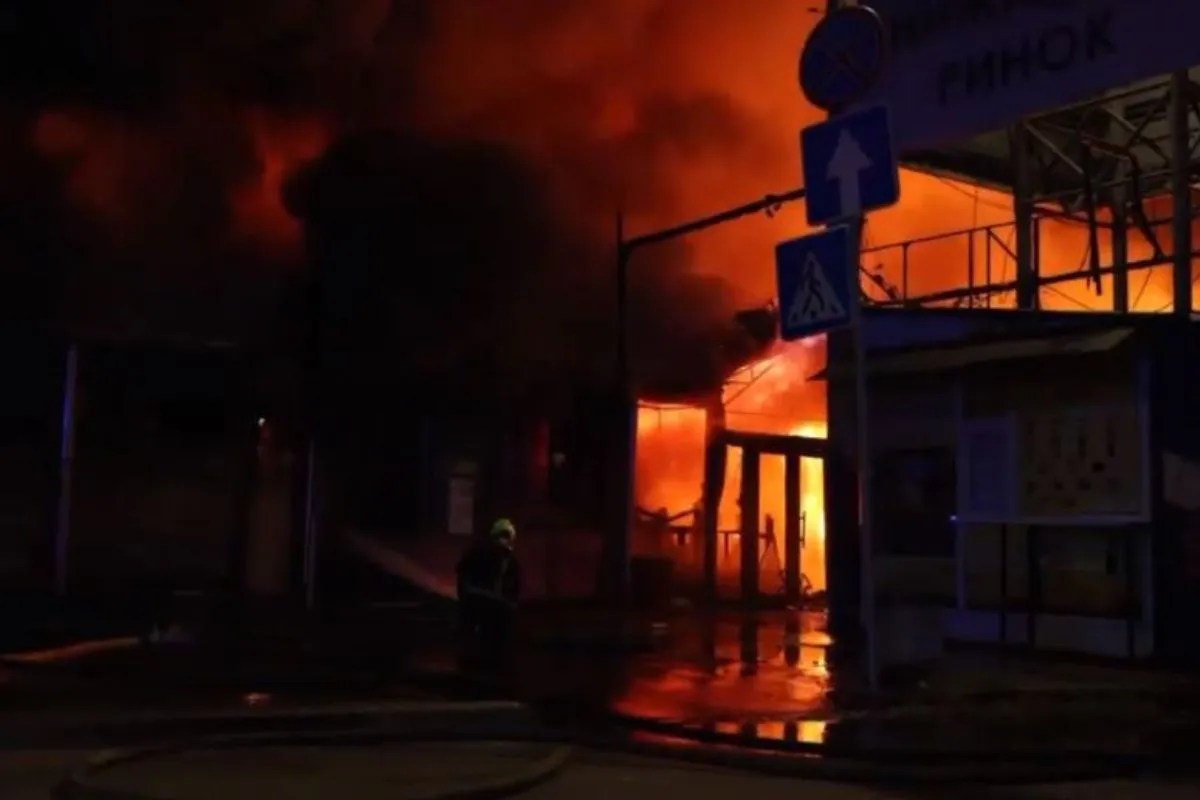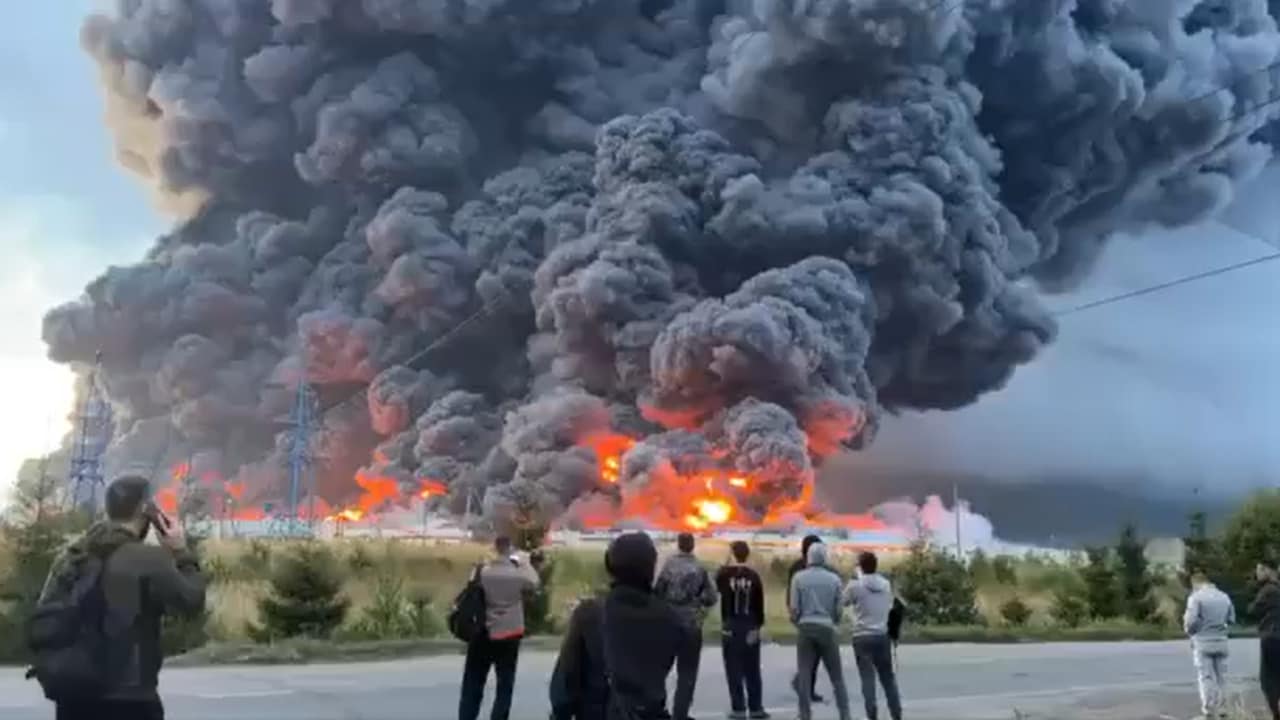
Thick black smoke filled the morning sky over the Moscow region after a massive overnight drone strike triggered an apocalyptic blaze at a major logistics hub. You can't ignore the tactical shift happening here. The war is no longer a distant headline for citizens living in the Russian capital. It's right outside their windows.
Early morning hours brought wave after wave of aerial vehicles targeting industrial and supply infrastructure deep inside Russian territory. Among the primary sites hit was a massive fulfillment center belonging to Wildberries, Russia's largest online retail giant, located in Koledino roughly 45 kilometers south of Moscow. Visuals captured by terrified locals showed soaring flames consuming the huge complex as emergency crews scrambled to contain the disaster.
The Logistics Blueprint Under Fire
Why target an e-commerce warehouse? It isn't random destruction. Ukraine's military strategy increasingly focuses on dismantling the supply chains and industrial infrastructure feeding the front lines. Ukrainian officials have repeatedly claimed that massive commercial distribution hubs are frequently utilized to store dual-use items, electronic components, and gear supporting the military.
When a facility like the Koledino complex burns down, the shockwaves hit the domestic economy immediately. Wildberries handles millions of packages daily, functioning essentially as Russia's homegrown equivalent to Amazon. Taking out these mega-warehouses creates severe bottlenecks. Operations get rerouted, deliveries stall, and civilian consumers feel the direct economic pinch of a war economy gone wrong.
Scaling Up Air Defenses and Capital Disruption
The scale of these operations keeps expanding. Regional officials and defense ministry reports noted that hundreds of unmanned aerial vehicles have been intercepted across various districts in recent waves. Moscow Mayor Sergei Sobyanin pointed out that massive flocks of drones have targeted the capital region simultaneously, forcing temporary closures at major local airports and overwhelming electronic-warfare systems.
Debris falling from intercepted targets causes widespread secondary damage. A second major logistics site near Domodedovo airport also sustained structural damage during the onslaught. Emergency services reported multiple casualties across the broader wave of strikes. Air defense batteries firing frantically into urban and suburban skies have become a normal, terrifying routine for millions of residents.
What This Means Moving Forward
We're watching a fundamental evolution in modern drone warfare. Long-range strikes are cheap to manufacture and hard to completely stop, even with dense air-defense networks surrounding a major global metropolis. As long as economic and logistical nodes remain viable targets, the physical reality of the conflict will keep creeping closer to the heart of Russia. Check out this APOCALYPTIC SCENES IN Russia video to see the massive scale of the smoke and destruction dominating the Moscow skyline.