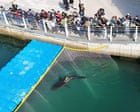
A trapped shark spent four agonizing weeks navigating the concrete maze of an Incheon canal before conservation crews finally coordinated its extraction. For thirty days, the marine predator survived in a brackish, highly restricted waterway far outside its natural coastal habitat, turning a routine wildlife rescue into a glaring spotlight on urban aquatic infrastructure.
People love a miracle animal story. Media outlets globally framed the extraction as a heartwarming triumph, a tale of stubborn survival against heavy concrete odds. Beneath the viral footage and the public sighs of relief, however, a much harsher reality persists. Marine animals do not wander into heavily urbanized stormwater channels by accident. They are pushed, lured, or disoriented by shifting marine temperatures, collapsing coastal ecosystems, and the relentless expansion of industrial waterfronts.
The Incheon Canal Enigma
Urban waterways designed for flood control and shipping act as ecological traps. When a marine apex predator swims miles inland past tidal gates and locks, municipal management systems face an unprecedented crisis.
Incheon features a complex network of coastal locks and commercial waterways designed to manage the massive tidal fluctuations of the Yellow Sea. These colossal engineering marvels prioritize shipping logistics and flood prevention, paying almost zero heed to migrating marine life. When tidal gates shift to regulate water levels, they create powerful artificial currents and sudden salinity shifts. A shark hunting near an estuary mouth can easily get swept past a barrier during a high tide surge. Once the gates close, the trap snaps shut.
For a full month, this particular animal circled a restricted urban basin. Local fishers spotted dorsal fins breaking the surface near industrial docks, initially prompting disbelief. Urban canals are choked with runoff, heavy metals, and plastic debris. The mere fact that the animal sustained its biological functions for thirty days speaks volumes about the sheer tenacity of marine biology, but it also indicts the silent degradation of the surrounding marine habitat.
Why Marine Predators End Up Where They Do Not Belong
Sharks swimming into shallow rivers or industrial channels are rarely looking for adventure. They are following prey.
Warming waters in East Asian coastal zones have fundamentally disrupted traditional migration routes. As pelagic fish stocks shift northward in search of cooler thermoclines, predatory species follow them closer to the shoreline. Incheon's coastal shelf experiences extreme temperature swings driven by climate shifts and industrial thermal discharge. When coastal food webs fracture, individual animals make high-risk decisions. They push into shallow estuaries where artificial structures concentrate disoriented baitfish.
Furthermore, noise pollution plays a devastating role. High-frequency sonar, commercial dredging, and heavy maritime traffic in the Yellow Sea disorient sharks, which rely heavily on mechanoreception and electroreception to map their environment. A disoriented animal navigating a noisy harbor can easily mistake a concrete canal mouth for a natural bay.
Municipal authorities in South Korea have historically treated wildlife in industrial zones as an anomaly rather than a systemic symptom. When a wild animal appears where it should not, the immediate reaction involves public safety containment followed by a quick release, treating the symptom while ignoring the structural disease.
The Bureaucratic Maze of Urban Wildlife Rescue
Rescuing a shark from a commercial canal requires cutting through layers of maritime bureaucracy. In South Korea, responsibilities overlap awkwardly between the Ministry of Oceans and Fisheries, local municipal governments, and regional coast guard divisions.
When the first sighting occurred, days vanished in jurisdictional arguments. Local officials debated whether the canal constituted inland municipal water or state-regulated maritime territory. While committees debated, the animal continued to metabolize toxins in a stagnant basin. Specialized marine rescue NGOs lack the legal authority to drop nets in commercial shipping lanes without explicit government sign-offs.
This bureaucratic friction exposes a dangerous gap in emergency wildlife protocols. Urban centers are expanding, and coastal engineering projects continue to encroach on natural marine nurseries. Yet, municipal emergency response plans routinely omit protocols for large marine megafauna trapped inland. Fire departments are trained for flash floods and structural collapses, not for extracting a stressed elasmobranch from a lock system.
What the Rescue Misses
The triumphant release of the Incheon shark back into open coastal waters offers a neat narrative arc for evening broadcasts. The cameras roll as the cage opens, the animal surges forward, and the crowd applauds.
The underlying systemic rot remains untouched.
Next week, another tidal gate will cycle. Next month, industrial runoff will continue to push coastal temperatures higher. Unless municipal authorities mandate ecological corridors, acoustic deterrence systems near industrial locks, and rapid-response wildlife protocols integrated directly into port management, these incidents will multiply.
Urban rivers were never meant to be wilderness preserves. By turning them into concrete funnels, modern cities have accidentally created lethal exhibits of ecological displacement. The month-long captivity of an Incheon shark is not a quirky news footnote. It is a loud, toothy warning from an ocean pushed to its absolute limits, trapped behind human walls, and waiting for someone to finally unlock the gate.