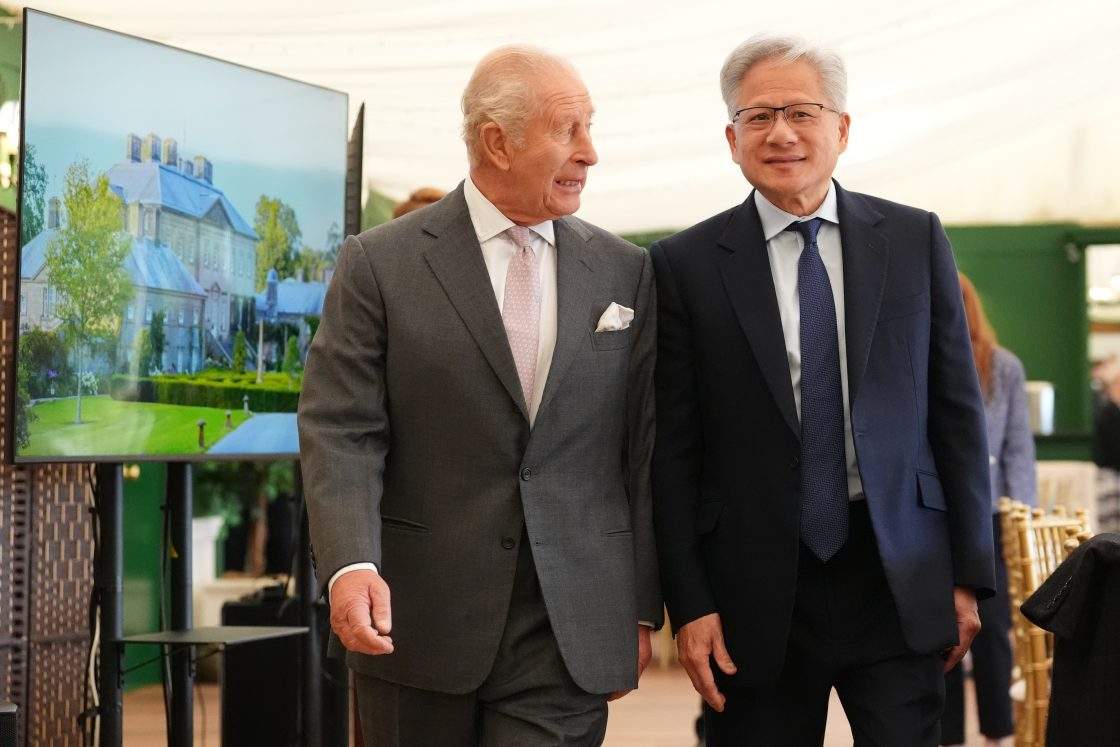
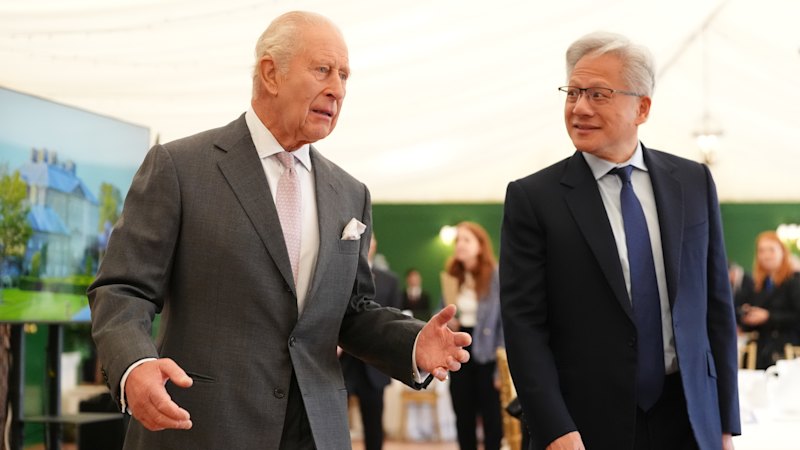
King Charles III sat across from some of the most powerful figures in the global artificial intelligence sector at St James's Palace, an encounter orchestrated to project national stewardship over a technology racing past regulatory guardrails. This private roundtable brought together corporate executives, academic researchers, and policy advisors to discuss artificial intelligence safety, societal disruption, and the moral obligations of automated systems. But beneath the polished veneer of royal diplomacy lies a sharper reality: a sovereign head of state convening tech titans not to legislate, but to extract voluntary pledges while governments struggle to keep pace with algorithmic velocity.
To understand why a constitutional monarch is holding court with software architects, you have to look at the vacuum left by traditional governance. When the British monarch met with artificial intelligence leaders, the underlying anxiety was simple. Lawmakers move at the speed of parliamentary committees while algorithms iterate at the speed of silicon. The monarchy, devoid of legislative power but rich in symbolic leverage, acts as an emergency circuit breaker. It draws public attention to risks that usually remain buried in technical whitepapers or corporate PR statements.
The core tension of this meeting centers on control. On one side are companies scaling models that can write code, generate synthetic media, and optimize supply chains with minimal human intervention. On the other side are societal institutions trying to figure out what happens to employment, copyright law, and electoral integrity when truth becomes a configurable parameter. Charles has long positioned himself as an environmental Cassandra, warning about climate degradation decades before it became mainstream political discourse. Now, he is attempting to apply that same precautionary framework to machine intelligence. Yet, royal concern does not equal regulatory muscle.
Corporate leaders participating in these high-level forums are caught in a delicate public relations ballet. They need the stamp of establishment approval to legitimize their narrative of responsible scaling. By engaging with the Crown, they signal to international markets and wary regulators that they are willing partners in risk mitigation. At the same time, they continue to pour billions into compute infrastructure, data acquisition, and autonomous agents. Voluntary safety commitments make for excellent press releases, but they rarely survive a competitive race for market dominance.
The Architecture of Silicon Influence
Modern artificial intelligence development is concentrated in remarkably few hands. A handful of private laboratories control the frontier models, wielding computational resources that rival small nation-states. When these entities sit down with the British head of state, the conversation is rarely about altruism. It is about positioning.
The industry argues that heavy regulation will stifle domestic innovation, driving talent and capital toward less scrupulous jurisdictions. They advocate for light-touch oversight, self-certification, and collaborative frameworks where researchers police themselves. Critics, however, point out that asking companies to govern their own creations is like asking oil conglomerates to design environmental protection laws. The incentives are fundamentally misaligned. Short-term market capture rewards speed over caution, meaning safety protocols are often treated as compliance checkboxes rather than hard limits.
King Charles represents an ancient form of institutional permanence confronting a modern technology that treats permanence as obsolete. His interventions are designed to force a pause in the narrative of inevitable disruption. When he questions the societal cost of automation, he is channeling a widespread public unease that Silicon Valley’s PR machines routinely dismiss as technophobia.
The Reality of Algorithmic Disruption
The conversation inside palace walls inevitably turns to labor displacement. Every major technological shift promises liberation from mundane tasks, but the transition period invariably punishes the workforce. Traditional white-collar professions—legal analysis, software development, copywriting, financial auditing—are facing unprecedented exposure to automated reasoning.
Unlike previous industrial revolutions that automated muscle, this wave automates cognition. That shift alters the economic calculus entirely. When a software model can draft a corporate contract or triage medical imaging in seconds, the value of specialized human labor drops precipitously. Companies do not need malicious intent to cause widespread disruption; they simply need a balance sheet that prioritizes efficiency over payroll.
Governments are scrambling to construct social safety nets and retraining programs, but these initiatives lag years behind the deployment cycle. By the time a workforce retraining grant is approved, the underlying technology has evolved twice over. This lag is precisely why figures outside the traditional legislative process are stepping into the fray. The monarchy provides a platform to voice anxieties that career politicians often gloss over in favor of economic growth metrics.
The Limits of Symbolic Diplomacy
Symposiums and royal audiences make for compelling headlines, but they do not alter the trajectory of capital. Artificial intelligence development is driven by geopolitical competition, venture capital returns, and military utility. A polite warning from a monarch over tea will not halt a venture-backed startup from deploying autonomous decision-making systems or stop a defense contractor from integrating machine learning into targeting software.
The global race for artificial intelligence supremacy is zero-sum. If one nation pauses to debate the ethical implications of autonomous systems, its geopolitical rivals will accelerate their own deployments. This prisoner's dilemma renders voluntary ethical frameworks toothless on the global stage. Without binding international treaties and enforceable domestic laws, safety discussions remain academic exercises conducted in gilded rooms while the actual technology races ahead unchecked.
We are left with a strange historical echo. An institution built on tradition attempting to tame a force that recognizes no tradition, no history, and no physical borders. The meeting at St James's Palace was not a turning point in technology regulation; it was a symptom of our collective helplessness. It demonstrated that while we can summon the architects of our automated future into the same room, we still have no idea how to make them listen.