Moldova is staring at a cold, dark reality. The parliament just greenlit an energy state of emergency, and if you think this is just some bureaucratic paperwork, you haven't been paying attention to the Balkan power grid. A critical power line went down. Now, the entire nation is scrambling to keep the lights on while the regional energy war heats up. It's a mess. It's predictable. And it's exactly what happens when your national security depends on a single wire.
This isn't just about a broken cable. It's about a tiny nation caught between a crumbling Soviet-era infrastructure and the brutal geopolitical chess match involving Russia and Ukraine. When that line snapped, it didn't just cut electricity; it exposed how thin the margin for error really is for the Sandu administration. They had to act fast.
The Anatomy of a Grid Failure
Let’s look at what actually happened. The high-voltage line connecting Moldova to the Romanian border—the lifeline that was supposed to offer some semblance of independence—was knocked out. While officials are still digging into the technical specifics, the immediate result was a massive drop in frequency across the national system.
The grid doesn't care about politics. It cares about balance. When you lose a major input source, the whole thing threatens to collapse. The state of emergency gives the government the power to bypass standard procurement rules. They can buy electricity on the spot market without waiting for three-week bidding cycles that nobody has time for when the heaters are going cold.
The Vulcanesti-Isaccea line is usually the star of the show here. It’s the primary conduit for power coming in from the West. When it fails, Moldova has to go hat-in-hand to the Cuciurgan power plant in Transnistria. That's the breakaway region backed by Moscow. It's a humiliating and dangerous position to be in. You're basically asking your biggest geopolitical headache to keep your refrigerators running.
Why a State of Emergency Is the Only Tool Left
Critics will say this is an overreach. They're wrong. In a normal market, you plan for winter in July. In Moldova, you plan for winter while the snow is already hitting the windshield. The parliament's move allows the state-owned energy trader, Energocom, to move money around with a level of agility that would usually be illegal.
- Rapid Procurement: They can strike deals with Romanian suppliers in minutes.
- Fund Allocation: Money can be diverted from other infrastructure projects to pay the skyrocketing spot prices.
- Grid Management: Major industrial users can be told to scale back to protect residential areas.
This isn't "business as usual." The global energy market is already tight. Prices in Europe fluctuate based on the latest headline out of Kyiv or the latest gas storage report from Germany. For a country with Moldova's GDP, a 20% spike in market prices isn't just a rounding error. It's a national catastrophe.
The Transnistria Dilemma
The elephant in the room is the MGRES power plant. It’s located in the Transnistrian region and runs on Russian gas. For decades, it provided cheap, dirty power. But that "cheap" price came with strings attached. Every kilowatt-hour bought from there is a vote for continued Russian influence.
The recent line failure forced the government's hand. If they can't get Romanian power because the physical infrastructure is broken, they have to buy from MGRES. It’s a bitter pill. It funds a separatist regime while trying to maintain a pro-European path. The irony is thick enough to choke on.
Building Resilience While the House Is on Fire
You can't fix thirty years of neglect in thirty days. The Moldovan government is currently building a new 400 kV overhead power line from Vulcanesti to Chisinau. This is the "Holy Grail" of their energy strategy. Once that’s done, they won't have to rely on the lines that pass through Transnistrian-controlled territory.
But that line isn't finished yet. Construction takes time. Steel, cables, and towers don't just appear because a parliament votes for them. Until that project is energized, Moldova remains in this high-stakes limbo.
What This Means for the Average Citizen
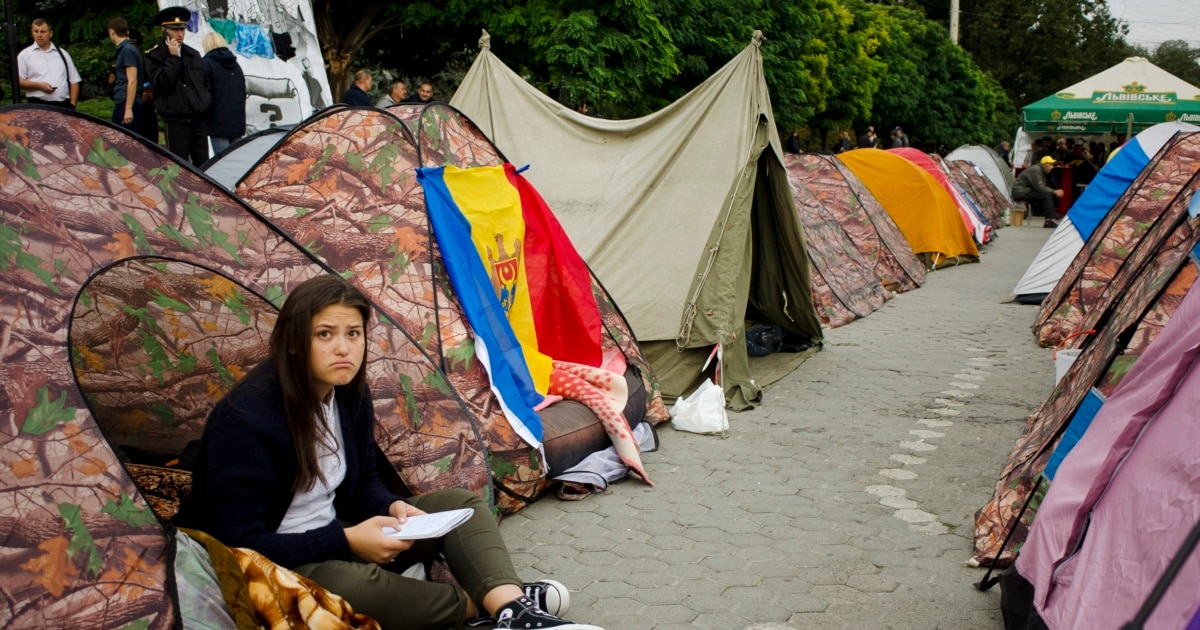
If you're living in Chisinau right now, your biggest worry isn't the 400 kV line. It's your monthly bill. The state of emergency often precedes price adjustments. Even with government subsidies, the cost of heating a standard two-bedroom apartment has eaten into the savings of the middle class.
The psychological toll is real too. People remember the blackouts from the early nineties. They remember the flickering lights and the uncertainty. Every time the government declares an emergency, those old ghosts come back. It’s a test of public trust in the European project. If the West can't help keep the lights on, the populist opposition has a very easy argument to make.
Navigating the Next Forty-Eight Hours
The immediate priority is stabilizing the frequency. The transmission system operator, Moldelectrica, has been working around the clock to synchronize with the ENTSO-E (the European Network of Transmission System Operators). This synchronization, achieved alongside Ukraine, was a massive technical feat, but it's not a magic wand. It requires constant monitoring and high-quality equipment that Moldova is still struggling to modernize.
The government needs to prove they can manage this without the lights actually going out. If they manage a "silent" emergency where the average person doesn't feel a flicker, it’s a win. If the grid drops, the political fallout will be worse than the technical one.
Stay updated on the official Energocom bulletins. If you're running a business in the region, ensure your backup generators are tested and fueled. The grid is stable for the moment, but the emergency status exists because the stability is artificial. It's held together by emergency funds and redirected power flows.
Check your local municipality's load-shedding schedule just in case. History shows that these "temporary" disruptions have a habit of lingering. Secure your own energy backups today because the national grid is currently operating on a prayer and a very stressed-out set of engineers.