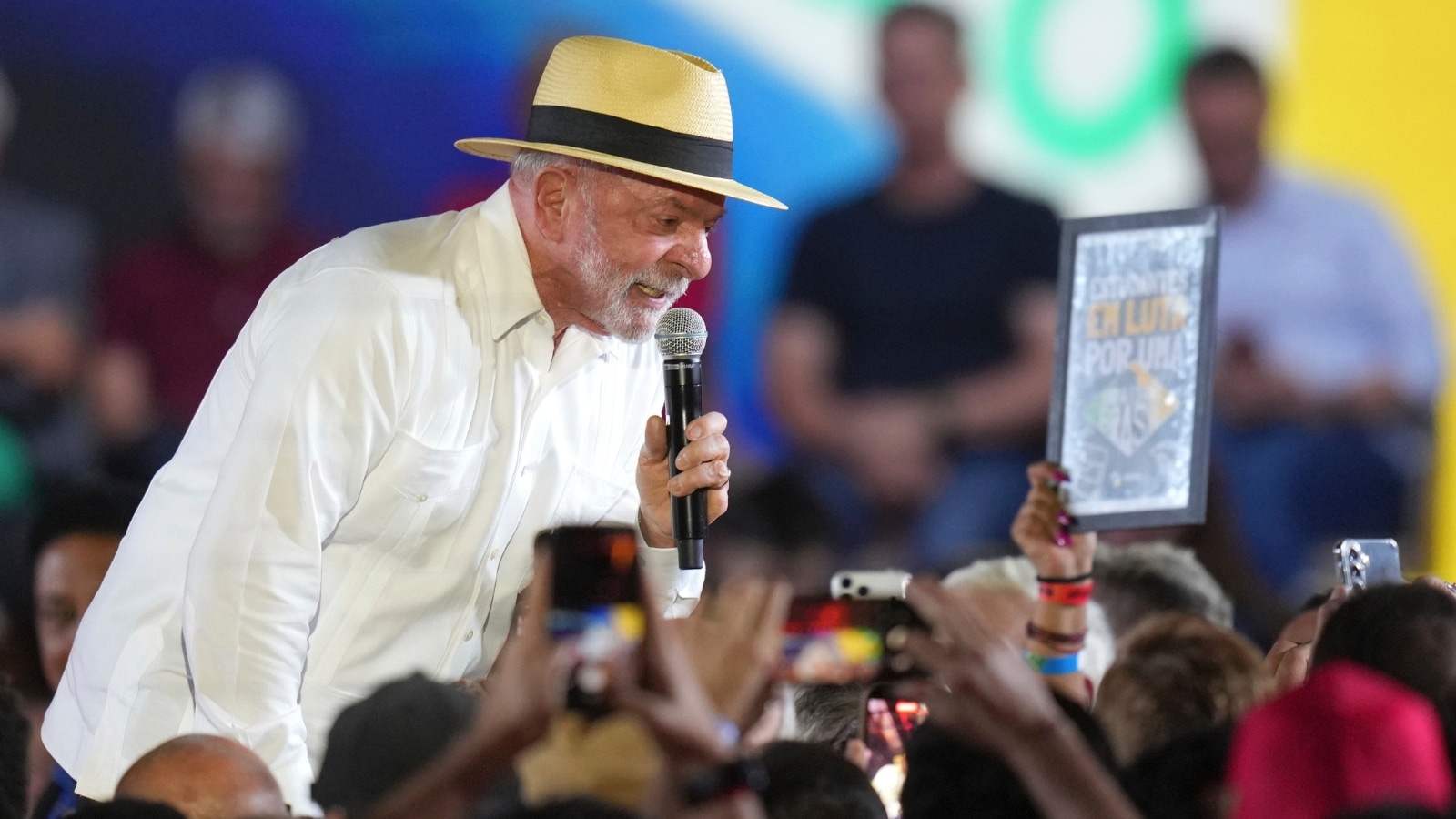
When Indian Prime Minister Narendra Modi congratulated Luiz Inácio Lula da Silva on his return to the Brazilian presidency, most wire reports and diplomatic commentators treated the exchange as routine statecraft—a predictable warm greeting between two leaders of large democracies. According to official statements from New Delhi and diplomatic readouts at the time, Modi emphasized deepening bilateral ties and mutual prosperity, while international media framed the moment as a straightforward continuation of South-South solidarity and BRICS cooperation.
Reading that exchange as simple geopolitical harmony misses the deeper structural friction beneath the handshake.
A congratulatory message between heads of state is a baseline diplomatic protocol, not proof of strategic alignment. In reality, India and Brazil under Narendra Modi and Lula da Silva represent two distinct economic models, diverging trade instincts, and competing visions for how the Global South should engage with major powers like the United States and China. Treating their diplomatic pleasantries as an automatic engine for trade and geopolitical unity obscures the real mechanics driving—and limiting—the India-Brazil relationship.
The Myth of Automatic BRICS Alignment
Mainstream foreign policy coverage routinely groups India and Brazil together under the BRICS banner as if shared membership equates to shared interests. Analysts at think tanks such as the Carnegie Endowment for International Peace and the Observer Research Foundation have repeatedly pointed out that BRICS is not a cohesive alliance, but a forum of states with overlapping yet frequently conflicting priorities.
Consider their posture toward Beijing. Under Lula, Brazil has prioritized restoring and expanding deep economic ties with China, its largest trading partner and a critical buyer of Brazilian soybeans, iron ore, and crude oil. Lula's foreign policy rhetoric has frequently questioned the dominance of the U.S. dollar in global trade and advocated for multipolar institutions that reduce Western financial influence.
India operates under an entirely different set of security imperatives. Following deadly border clashes in the Galwan Valley in 2020, New Delhi's strategic calculus shifted decisively toward countering Chinese territorial assertiveness and reducing economic dependence on Chinese supply chains. India has deepened security cooperation with the United States, Japan, and Australia through the Quad, while maintaining historic defense and energy ties with Russia.
When Modi and Lula stand on the same stage at a BRICS or G20 summit, they are not reading from the same playbook. Brazil seeks to balance between Washington and Beijing without a direct territorial threat on its border. India manages an active military standoff with China while pursuing high-tech manufacturing partnerships with Western economies. Polite diplomatic cables do not erase that divergence.
Ideological Friction Meets Pragmatic Statecraft
Another common simplification in political commentary is that ideological opposites cannot cooperate, or conversely, that pragmatism renders ideology irrelevant. Neither extreme holds up under scrutiny.
Narendra Modi leads the Bharatiya Janata Party (BJP), a nationalist movement focused on domestic infrastructure expansion, digital public infrastructure, and positioning India as a global manufacturing hub. Lula da Silva leads the Workers' Party (PT), rooted in labor unionism, state-led social welfare programs, and environmental diplomacy centered on Amazon conservation.
On domestic governance, their philosophies diverge sharply. Yet international relations rarely run on ideological purity. Both leaders share a strong commitment to strategic autonomy—the refusal to become a junior partner to any single superpower. Both view global governance institutions, particularly the United Nations Security Council, as outdated structures that unfairly exclude major developing nations from permanent decision-making power.
This overlap creates functional cooperation in specific arenas:
- Multilateral Reform: Both India and Brazil belong to the G4 nations (alongside Germany and Japan) advocating for permanent seats on the UN Security Council.
- Global South Advocacy: During consecutive G20 presidencies—India in 2023 and Brazil in 2024—both governments prioritized climate finance, multilateral development bank reform, and debt relief for developing countries.
- Biofuels and Energy Transition: Brazil's decades of experience in sugarcane ethanol production align directly with India's aggressive ethanol-blending targets aimed at reducing crude oil imports.
Understanding the relationship requires separating areas of genuine institutional overlap from areas where domestic politics pull them apart.
Why Bilateral Trade Still Punches Below Its Weight
If diplomatic warmth alone drove commerce, India and Brazil would be economic juggernauts in each other's markets. According to trade data from India's Ministry of Commerce and Industry and Brazil's Ministry of Development, Industry, Trade and Services, bilateral trade has grown substantially in recent years, crossing $15 billion in 2022 before fluctuating with global commodity prices.
For two of the world's ten largest economies, with a combined population exceeding 1.6 billion people, $15 billion is a modest figure.
The obstacles are structural rather than diplomatic:
- Tariff Barriers and Protectionism: Both countries maintain high import tariffs to shield domestic industries. Brazil's Mercosur trade bloc rules restrict bilateral tariff reductions unless negotiated across all member states, a process that has stalled major trade expansion for years.
- Geographic Distance and Logistics: Shipping goods between Indian ports and South American ports involves long transit times, high freight costs, and limited direct maritime routes compared to trade corridors linking Asia to North America or Europe.
- Competing Export Profiles: In several agricultural and industrial sectors, India and Brazil compete for the same global buyers rather than complementing each other. Both are major exporters of sugar, beef/buffalo meat, and generic pharmaceuticals, leading to periodic disputes at the World Trade Organization (WTO) over agricultural subsidies.
In fact, India and Brazil have clashed repeatedly at the WTO over sugar subsidies, with Brazil challenging India's domestic support programs for sugarcane farmers. A congratulatory phone call or social media post does not resolve a trade dispute rooted in domestic farm politics.
What Observers Often Misread About South-South Diplomacy
When evaluating diplomatic milestones between New Delhi and Brasília, analysts and business leaders often ask whether a leadership change in Brazil will trigger a sudden boom in bilateral investment. Experience across multiple administrations in both countries suggests otherwise.
Bilateral ties between India and Brazil have remained remarkably steady across vastly different Brazilian governments—from Lula's earlier terms to Dilma Rousseff, Michel Temer, and Jair Bolsonaro, whom Modi hosted as chief guest at India's Republic Day parade in 2020. That continuity proves that the relationship is anchored in institutional state interests rather than personal chemistry between leaders.
At the same time, institutional continuity cuts both ways. Just as a change in leadership rarely breaks the relationship, it rarely accelerates it overnight. Companies looking to expand between India and Brazil cannot rely on summit announcements to clear regulatory hurdles. Success in either market requires navigating complex local tax regimes, pharmaceutical licensing standards, and joint-venture requirements that remain intact regardless of who occupies the presidential palace in Brasília.
The Nuance Behind the Handshake
There is a downside to viewing international diplomacy exclusively through the lens of structural friction: it can underestimate how personal rapport among leaders breaks bureaucratic logjams during critical negotiations. During India's 2023 G20 presidency and Brazil's 2024 G20 presidency, direct communication between Modi and Lula helped sustain momentum on the Global Biofuels Alliance and ensured continuity on Global South priorities despite deep geopolitical divisions over conflicts in Ukraine and the Middle East.
Diplomatic signals matter. Modi's prompt congratulations to Lula signaled that New Delhi intended to maintain uninterrupted engagement with Brasília regardless of Brazil's internal political polarization.
Recognizing that signal for what it is—a calculated investment in multilateral leverage rather than an endorsement of shared ideology or a guarantee of frictionless trade—provides a far clearer picture of how modern multipolar diplomacy actually operates. Two major democracies do not need identical worldviews to work together, nor does a friendly greeting erase the hard economic and strategic realities separating them.