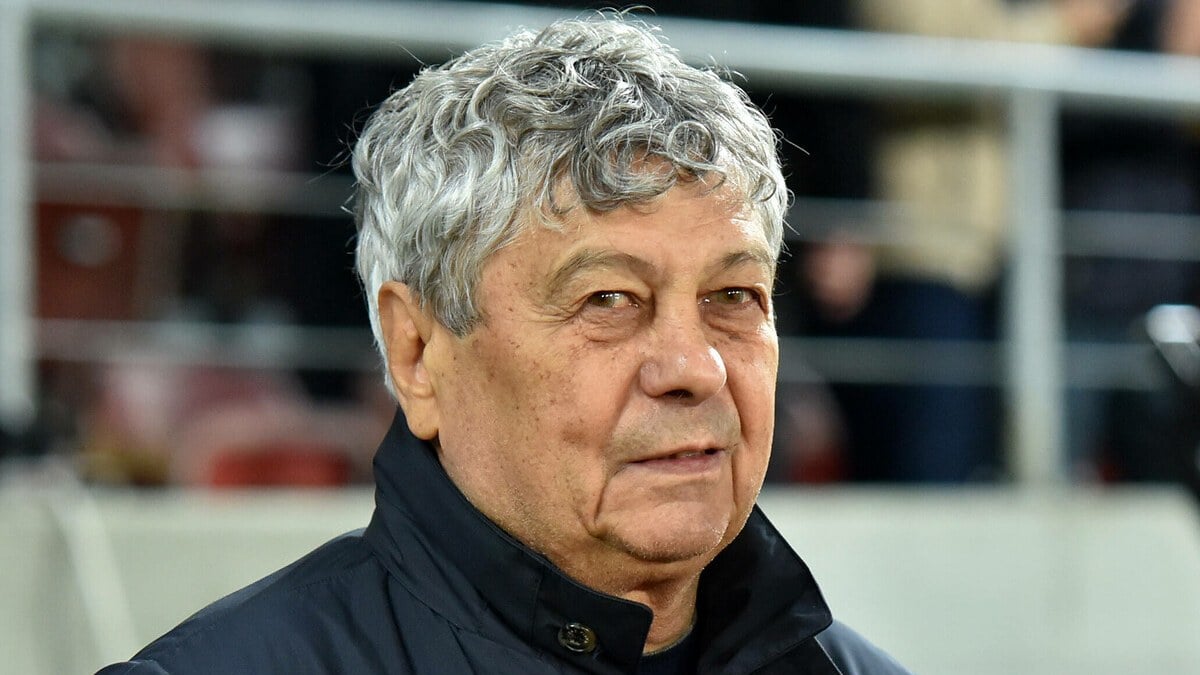
The obituary writers are already sharpening their pencils, ready to drown us in a sea of "end of an era" sentimentality. They’ll tell you Mircea Lucescu was the "architect of Eastern European football." They’ll point to his 35 trophies—a number surpassed only by Pep Guardiola and Sir Alex Ferguson—as if silverware is a perfect proxy for genius.
They are wrong.
Mircea Lucescu didn't just die at 80; he outlived the very system he spent four decades manipulating. To call him a "tactical great" is to fundamentally misunderstand how football functioned behind the former Iron Curtain and across the chaotic frontiers of the post-Soviet 1990s. Lucescu wasn't a tactician in the mold of Arrigo Sacchi or Johan Cruyff. He was a master of logistical hegemony.
If you think Lucescu’s success at Shakhtar Donetsk was down to 4-2-3-1 variations, you weren't paying attention. He was the chief executive of a talent-laundering machine that exploited the economic disparity between Brazil and Ukraine. His "greatness" was less about coaching and more about navigating the brutal intersection of oligarchic wealth and scouting monopolies.
The Trophy Count Fallacy
Let’s dismantle the biggest lie first: the idea that trophy quantity equals coaching quality.
In any other industry, we would recognize a monopoly for what it is. In football, we call it a "dynasty." Between 2004 and 2016, Lucescu’s Shakhtar operated with a budget that made the rest of the Ukrainian Premier League look like a bake sale.
When you have Rinat Akhmetov’s billions behind you and a direct pipeline to the best teenagers in Porto Alegre and Curitiba, winning the Ukrainian league isn't an achievement. It’s a requirement. The "lazy consensus" suggests Lucescu "built" Shakhtar. In reality, he managed the spending. He was the foreman of a construction site where the materials were gold-plated and the neighbors were living in shacks.
Compare his stint at Inter Milan in 1998-99. When stripped of a structural financial advantage and forced to manage actual egos in a competitive ecosystem, Lucescu lasted four months. He didn't even make it to Easter. The "mastermind" was found wanting the moment the playing field was level.
The Brazilian Pipeline: Talent Arbitrage, Not Coaching
The most cited "genius" move of Lucescu’s career was his recruitment of Brazilian players. Fernandinho, Willian, Douglas Costa, Alex Teixeira. The list is long.
But let’s be brutally honest about what this was: Economic Arbitrage.
Lucescu realized early on that he could buy high-ceiling Brazilian talent, provide them with a European "finishing school" in a low-pressure league, and flip them to the Premier League or Bundesliga for a 500% profit. This is a brilliant business model. It is not, however, a revolutionary tactical philosophy.
His strategy was simple:
- Buy Brazilian attackers for the flair.
- Use Eastern European defenders for the "grit."
- Hope the individual brilliance of the former outweighed the structural deficiencies of the latter.
This created a "Frankenstein’s Monster" style of football that worked in the Europa League (the 2009 UEFA Cup win being the peak) but repeatedly shattered against the organized discipline of the Champions League elite. Lucescu was a scout with a whistle, not a coach with a vision. He didn't teach Fernandinho how to play; he gave Fernandinho a platform to survive the Ukrainian winter until Manchester City called.
The Corrosive Cult of Longevity
We have a weird obsession with coaches who stick around forever. We mistake stubbornness for "passion" and staying power for "relevance."
Lucescu’s refusal to leave the dugout—culminating in his controversial move to Dynamo Kyiv in 2020—wasn't an act of love for the game. It was an act of ego that stifled the next generation of Romanian and Ukrainian coaches. By occupying the top seats for nearly half a century, he sucked the oxygen out of the room.
His move to Dynamo Kyiv was the ultimate "mask-off" moment. After years of framing himself as the heartbeat of Shakhtar, he jumped to their bitterest rivals. Fans of both clubs hated it. Why did he do it? Because he couldn't imagine a world where he wasn't the center of attention. He traded his legacy for three more years of hearing his own voice in a press conference.
The "People Also Ask" Delusion
When people ask, "Was Mircea Lucescu the greatest Eastern European manager?" they are asking the wrong question.
The real question is: "Did Mircea Lucescu make Eastern European football better?"
The answer is a resounding no. He made it more expensive. He accelerated the trend of "plastic" dominance, where a single club—backed by a single benefactor—obliterates domestic competition. Under his watch, the Romanian national team (the Tricolorii) withered. Why? Because the legendary coach of the 80s was too busy managing a colony of Brazilians in Donetsk to care about the grassroots of his own country.
He wasn't a teacher. He was a consumer.
The Legend is a Shield
We use the "Legend" tag to avoid criticizing the flaws of the past. Lucescu was notoriously prickly, often blaming referees and "conspiracies" when his expensive squads failed to perform. He pioneered the "us against the world" siege mentality that has since been perfected (and made obnoxious) by José Mourinho.
But while Mourinho actually reinvented defensive transition, Lucescu just complained louder.
I’ve seen this play out in boardrooms across the world. An executive stays ten years too long because they "know where the bodies are buried." They become indispensable not because they are productive, but because they have woven themselves into the fabric of the institution. Lucescu was the ultimate institutionalized man. He knew how to talk to oligarchs, how to charm the Romanian press, and how to stay in the news cycle.
The Brutal Truth of the 35 Trophies
If we actually weigh those 35 trophies, the "greatness" evaporates.
- 22 trophies were won in Ukraine during a period of near-total financial disparity.
- 6 trophies were won in Turkey with Galatasaray and Besiktas—massive clubs where anything less than a title is a firing offense.
- The 1980s Romanian titles with Dinamo Bucharest were won under the shadow of a regime where football results were often decided in government offices rather than on the pitch.
When you subtract the trophies won through systemic advantage, you are left with the 2009 UEFA Cup. A fine achievement, certainly. But is one European trophy in 40 years enough to justify the "Greatest of All Time" labels being slapped on his casket?
No.
Lucescu was a survivor. He survived the fall of Communism, the collapse of the Romanian economy, the rise of the oligarchs, and the shifting sands of modern football. Survival is a skill, but let’s stop pretending it’s a tactical innovation.
The Counter-Intuitive Reality
The "fresh perspective" that the mainstream media is too scared to publish is this: Mircea Lucescu was the first "Globalist" manager in an era that still valued "National" identity. He didn't care about the soul of the club; he cared about the efficiency of the asset.
He proved that you don't need a philosophy if you have a scouting network.
He proved that loyalty is a secondary concern to a paycheck.
He proved that if you stay in the game long enough, people will eventually stop checking your credentials and just assume you're a genius.
Stop mourning the "loss of a tactical giant." Start analyzing the blueprint he left behind—a blueprint for how to dominate weak leagues through financial scouting and political maneuvering.
Lucescu didn't change the game. He just knew how to play the people who owned the ball. The era of the "all-knowing" patriarch is over. Good riddance.
Don't buy the "Mastermind" narrative. If you want to honor the man, honor his ability to stay relevant in a world that should have passed him by in 1999. That is his real legacy. Everything else is just PR.
The funeral will be grand. The speeches will be long. And most of them will be lies.