Industrial consortia love a press release about collaboration. When Norwegian defense firms announced they were uniting to supply specialized gear for military boarding teams, the defense tech sector nodded along in predictable approval. The narrative is comforting. It suggests that by bundling tactical gear, communication systems, and rigid-hulled inflatable boats, industry giants are solving a critical operational bottleneck.
They are not. They are optimizing for a type of warfare that is rapidly becoming obsolete.
I have spent two decades watching procurement officers dump millions into specialized kit for high-risk VBSS (Visit, Board, Search, and Seizure) operations. The logic always sounds airtight in a boardroom. You bundle the tech, reduce interoperability friction, and hand the maritime commando a unified platform. But this approach ignores the brutal reality of modern naval conflict.
The defense industry is obsessed with perfecting the tactical insertion. Meanwhile, the actual threat environment has moved on.
The Myth of the Integrated Boarding Team
The standard industry premise argues that the primary vulnerability in maritime interdiction is equipment fragmentation. The theory goes that if Company A’s communication headset does not talk to Company B’s biometric scanner, the boarding team is compromised. Therefore, a unified corporate alliance is the solution.
This is a fundamental misunderstanding of why modern boarding operations fail.
They do not fail because a radio lacked a specific software patch. They fail because putting human beings on a hostile vessel in contested waters is becoming an unacceptable risk calculation. In an era dominated by anti-ship missiles, loitering munitions, and cheap asymmetric sea drones, deploying a twelve-person boarding team from a multi-million-dollar frigate is a massive tactical liability.
Consider the physics of a standard VBSS operation. A surface vessel must close the distance to the target. It launches a small craft. That craft is exposed, slow, and highly visible to thermal imaging. If the target vessel is hostile and equipped with basic commercial drones rigged with explosives, the entire boarding party can be neutralized before they even touch the hull.
The Norwegian consortium is building a highly sophisticated answer to a question from 2004. They are streamlining the procurement of legacy hardware when they should be automating the denial of access.
The Disconnect Between Procurement and Pier-Side Reality
When defense contractors bundle products, they create a captive ecosystem. For the corporate balance sheet, this is brilliant. For the operator on the water, it is a gilded cage.
- Vendor Lock-in Disguised as Interoperability: When a cluster of domestic firms standardizes a suite of boarding equipment, they make it incredibly difficult for the military to adopt superior, one-off technologies from external startups.
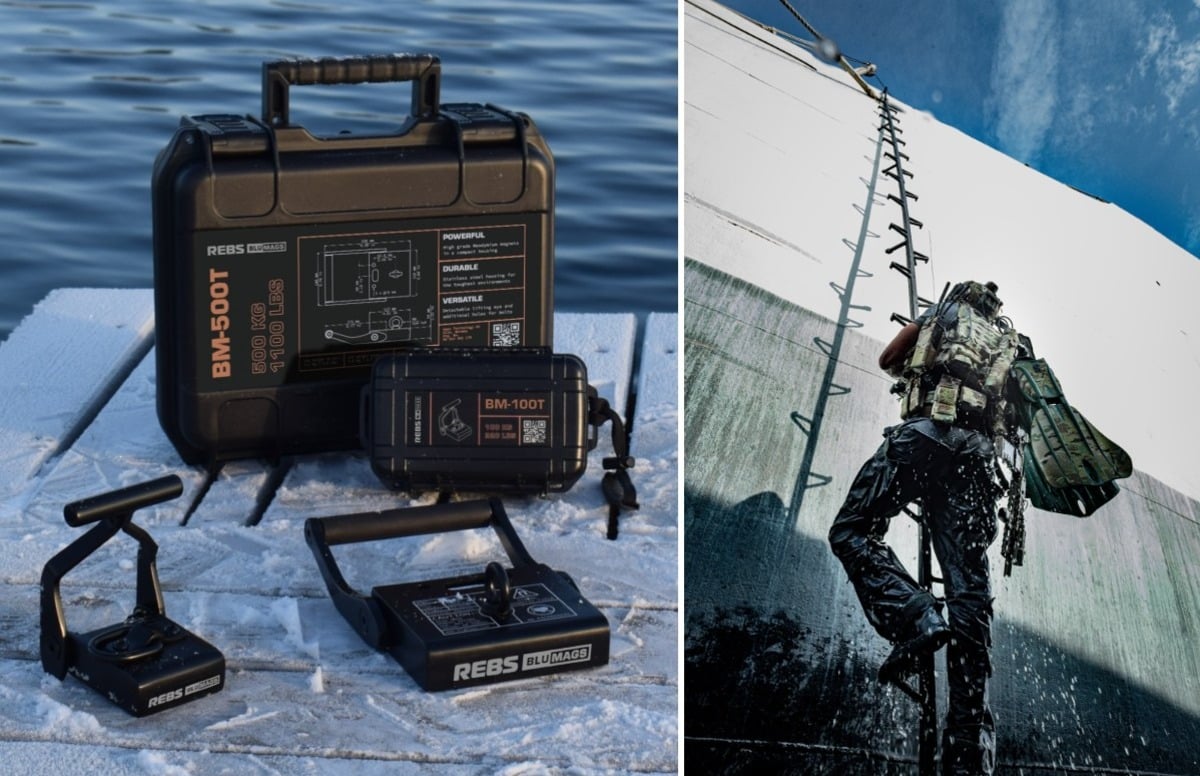
- The Weight Penalty: Integrated tactical suits and sensor arrays sound excellent until you realize they add dead weight to an operator who already needs to climb a pilot ladder in heavy seas while carrying body armor and a primary weapon.
- Sustained Maintenance Traps: Custom integrations require custom maintenance pipelines. If a proprietary component breaks in a remote theater of operations, the entire integrated system frequently becomes degraded or useless.
Smaller, agile defense tech firms routinely build better standalone sensors or communication tools. But because they are not part of the favored domestic industrial alliance, their innovations are locked out of the budget. The military gets a homogenized, acceptable-enough solution rather than the best solution available globally.
Why Autonomous Denial Beats Manual Boarding
People frequently ask: How else are we supposed to verify cargo or secure a non-compliant vessel without putting boots on deck?
The premise of the question is flawed. It assumes that physical control by human hands is the only way to achieve maritime interdiction.
In a high-intensity conflict, you do not need to search a vessel; you need to neutralize its ability to pose a threat. If a civilian cargo ship has been weaponized or is smuggling illicit material through a blockade, the solution is not a cinematic, Hollywood-style fast-rope insertion. The solution is remote disablement.
[Target Identification via Satellite]
               │
               ▼
[Deployment of Autonomous Surface Vessel]
               │
               ▼
[Electronic Warfare / Propeller Entanglement]
               │
               ▼
[Target Immobilized without Human Exposure]
Instead of funding expensive, localized boarding gear, defense spending should pivot heavily toward cyber-electromagnetic disruption and autonomous underwater mechanisms. If you can disable a vessel's steering gear or blind its radar remotely, you have won the engagement without risking a single life.
The downside to this contrarian approach? It requires a massive shift in rules of engagement and international maritime law. It also requires defense ministries to admit that traditional naval prestige symbols—like elite boarding units—are losing their utility in near-peer conflicts. That is a hard pill to swallow for traditionalists who view naval warfare through the lens of twentieth-century tactics.
The Financial Reality of the Defense Cluster
Look at the numbers behind these joint ventures. The goal is rarely pure tactical innovation. It is market protectionism. By forming an alliance, domestic companies present a united front to their national government, making it politically impossible for the Ministry of Defense to source equipment from international competitors.
I have sat in the rooms where these deals are structured. The conversation is about preserving manufacturing jobs and guaranteeing long-term service contracts. The tactical efficacy of the boarding team is a secondary marketing narrative used to push the proposal through parliament.
If Norway or any other maritime nation wants to secure its waters against modern threats, it needs to stop investing in the romanticized notion of the naval commando scaling a ship’s side. They need to invest in expendable, autonomous systems that can swarm, degrade, and disable targets from a distance.
Stop buying the boardroom hype of the unified boarding package. The future of maritime security is not an integrated soldier; it is an empty ocean managed by automated systems. Drop the legacy contracts and fund the tech that replaces the operator entirely.