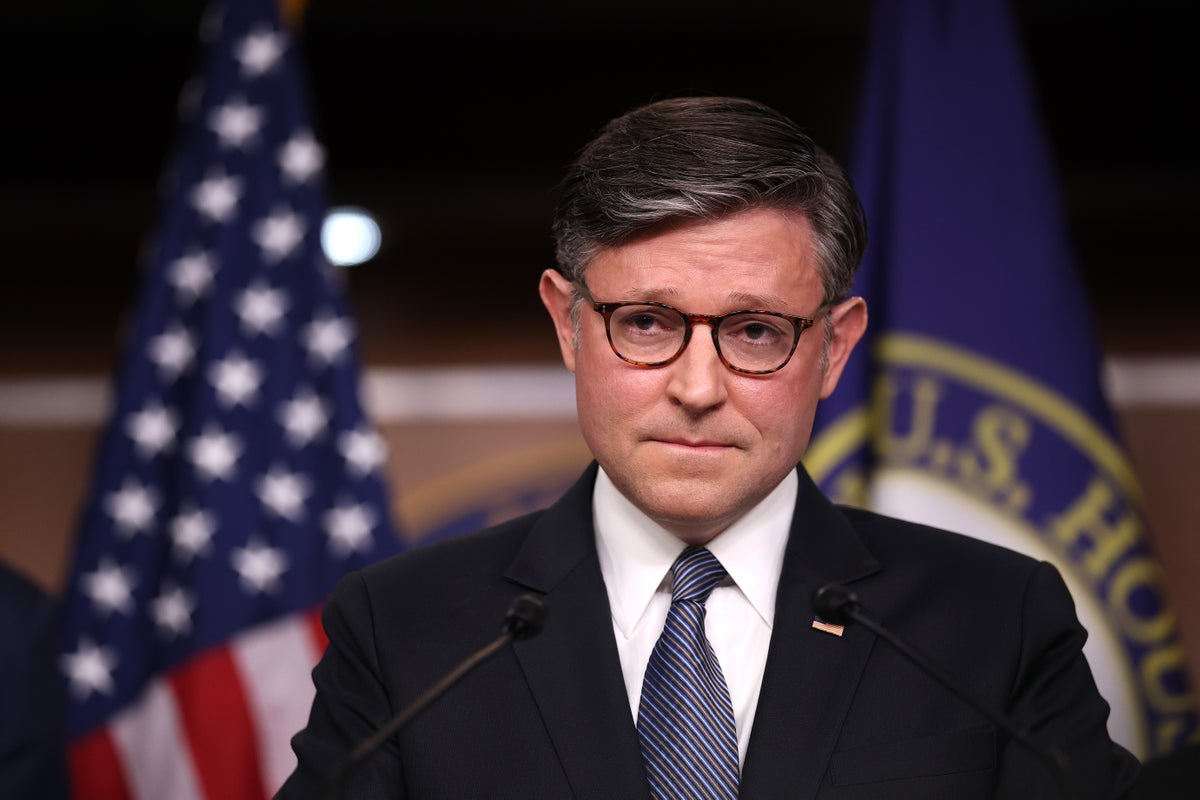
Artificial intelligence is moving faster than the politicians sworn to oversee it, and Capitol Hill is currently stuck in neutral. While tech executives warn about existential risks, House Speaker Mike Johnson has chosen a hands-off approach that mirrors Donald Trump's stance on the industry. Trump famously declared that the only guardrails artificial intelligence needs are a strong president, leaving lawmakers scrambling in a vacuum.
For critics inside and outside of government, this strategy feels like an abdication of duty. Some lawmakers have described the unchecked expansion of frontier technology using stark imagery, comparing the rush to open water without a compass to letting a massive mechanical titan roam free. Yet, the Republican-led House continues to prioritize scheduled recesses over passing meaningful safety guardrails, even as whistleblowers sound alarms.
The Party Line Versus Capitol Hill Reality
You would think that a technology capable of transforming warfare, displacing millions of workers, and rewriting the global economy would command bipartisan urgency. Instead, the debate has fractured along predictable partisan lines. Speaker Johnson has closely aligned his messaging with the administration, dismissing catastrophic warnings as overblown political theater or media-driven panics.
During recent press briefings, Johnson leaned into skepticism, arguing that apocalyptic predictions about machine intelligence mirror exaggerated talking points from past policy debates. He even suggested that intense public anxiety is being artificially stoked ahead of the midterms.
Meanwhile, rank-and-file members are sweating. Moderate Republicans and a vocal block of Democrats argue that relying entirely on the honor system for trillion-dollar tech conglomerates is a recipe for disaster. Lawmakers like Representative Lori Trahan have pushed for tiered regulatory systems and independent audits, pointing out that current accountability rests on nothing more than corporate goodwill.
The Geopolitical Trap
Why is leadership so hesitant to put the brakes on development? The answer comes down to one word: China.
Washington is gripped by a zero-sum mentality. The prevailing belief across the executive branch and congressional leadership is that any domestic restriction on research hands a direct victory to foreign competitors. Trump put it bluntly: whoever wins the race for advanced intelligence wins the global hierarchy.
This creates a dangerous regulatory paradox. On one hand, intelligence agency heads and industry whistleblowers warn that rapid scaling without safety testing could lead to catastrophic biological or cyber risks. On the other hand, economic hawks argue that slowing down domestic labs will only cede dominance to international adversaries who play by entirely different rules.
Speaker Johnson sits right at the intersection of this tension. By acting as a legislative roadblock against federal intervention, he ensures that the market dictates its own pace. Proponents call this pro-innovation policy. Detractors call it reckless neglect.
Where the Legislative Battlegrounds Stand
If you look past congressional leadership, policy is not entirely dead. Several targeted bills sit in committees, though none have a clear path to the floor under current leadership:
- The FRONTIER Act, co-authored by lawmakers like Trahan and Jay Obernolte, aims to establish mandatory safety assessments and tiered oversight for high-end models.
- The AI Kill Switch Act, proposed by representatives including Ted Lieu and Nathaniel Moran, would force developers to build hard throttling and emergency shutdown mechanisms into massive systems.
- Bipartisan letters from frustrated representatives continue to demand canceled recesses, arguing that Congress cannot justify taking extended breaks while an unregulated technological revolution unfolds.
Despite these efforts, the Senate remains the primary venue for serious hearings, while the House calendar stays locked tight. Lawmakers who want federal guardrails find themselves blocked by leadership that prefers zero federal intervention over any risk of slowing down progress.
The clock is ticking, and the models are scaling exponentially. Relying on voluntary corporate compliance while geopolitical rivals race ahead is a massive gamble, and the stakes involve the stability of the entire digital age.
Speaker Johnson calls for AI guardrails but won't set pre-election timetable
This video provides an inside look at Speaker Mike Johnson's balancing act regarding artificial intelligence policy and congressional timelines.