Donald Trump just threw a massive wrench into the Georgia Republican primary. By officially endorsing Representative Mike Collins in the June 16 Senate runoff, Trump didn't just pick a candidate. He reasserted total dominance over the state's Republican infrastructure, setting up a brutal proxy war with Georgia Governor Brian Kemp.
The move came early Sunday morning on Truth Social. Trump called Collins a "WARRIOR and WINNER" while completely dismissing his opponent, former college football coach Derek Dooley.
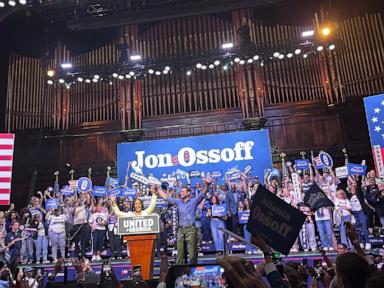
This isn't just about choosing a nominee to take on Democratic Senator Jon Ossoff in November. It's a high-stakes gamble on the identity of the modern Republican party. If you think the establishment still holds sway in traditional red states, you haven't been paying attention.
The Proxy War We All Saw Coming
The battle lines in Georgia are clear, and they look identical to the internal party fractures we've seen for years. On one side, you have the institutional, state-level power house built by Governor Brian Kemp. Kemp recruited Dooley, backed him with his formidable state political operation, and hoped to replicate the strategy that won him reelection in 2022.
Kemp’s theory is simple. He believes Republicans keep losing Georgia Senate seats because they nominate highly polarizing, deeply controversial figures. He points directly to the 2022 midterms, when Herschel Walker lost to Raphael Warnock despite a nationwide political environment that favored Republicans. For Kemp, Dooley represents a clean slate—a political outsider who can appeal to suburban moderates.
Trump clearly sees it differently.
By backing Collins, Trump is doubling down on loyalty. Collins has been a fierce defender of the MAGA movement since he arrived in Congress in 2023. He has championed hardline immigration policies, including sponsoring the Laken Riley Act, and has consistently echoed Trump’s grievances regarding past election results in the state.
This sets up a fascinating dynamic for Tuesday's vote. It's a direct test of whose endorsement carries more weight with Georgia primary voters: the popular sitting governor who built a dominant statewide machine, or the leader of the national party.
Why Dooley Fell Short of the Trump Standard
The primary results from May 19 left the field wide open. Collins finished first with roughly 41 percent of the vote, while Dooley secured around 30 percent. Because neither candidate cleared the 50 percent threshold, the race pushed into a runoff, leaving both men scrambling for the remaining votes.
Dooley tried to play a delicate game. He explicitly told voters he would "work with President Trump" while remaining an outsider who fights for everyday Georgians. He maintained that he respects Trump.
But respect isn't enough in today's GOP. Loyalty must be absolute.
Trump didn't pull any punches in his late-night post, bringing up reports that Dooley privately acknowledged Trump lost Georgia in the 2020 presidential election. Trump also criticized Dooley for living outside the state for long stretches of his coaching career and for failing to vote in the 2016 and 2020 cycles.
"I don't know Derek Dooley, and neither does anyone else, but he seems like a nice person," Trump wrote. He then pivoted directly to his familiar grievances, effectively tanking Dooley's chances of winning over the hard-core conservative base.
The National Playbook Is Clear
If this story feels familiar, it's because Trump has been running the exact same playbook across the country all spring. The Georgia endorsement mirrors what happened in Texas, where Trump successfully backed Attorney General Ken Paxton in a primary runoff that ousted establishment favorites. Trump has also notched recent primary wins against unaligned Republicans in Kentucky and Indiana.
The strategy is clear. Trump is systematically purging the remaining pockets of traditional Republican resistance. He wants a Senate conference filled with loyalists who won't hesitate to back his agenda.
National Republican leaders are desperate to flip Georgia in November. The GOP currently holds 53 seats in the Senate, and Georgia represents one of their premier pickup opportunities. Ossoff is a vulnerable incumbent running in a state that has trended purple but remains highly competitive.
The risk, as establishment Republicans see it, is that Collins might be too polarizing for a general election audience. He has a history of highly provocative social media posts and aggressive rhetoric. In a general election where suburban voters around Atlanta decide the outcome, that baggage can become a serious liability.
Actionable Next Steps for Georgia Voters
The runoff election takes place on Tuesday, June 16, 2026. If you're a registered voter in Georgia, the outcome of this race will shape the national political landscape for the rest of the year.
- Check your voting status: Confirm your polling location before heading out, as runoff voting sites can sometimes differ from general primary locations.
- Review the primary rules: If you voted in the Republican primary on May 19, you can vote in this runoff. If you didn't vote in May, you can still cast a ballot in this runoff, provided you were registered to vote by the state's deadline.
- Look past the noise: Evaluate whether you believe a staunch conservative loyalist like Collins or a self-described political outsider like Dooley has a better chance of defeating Jon Ossoff in November.
The talking points are over. Tuesday night will tell us exactly who runs the Georgia GOP.