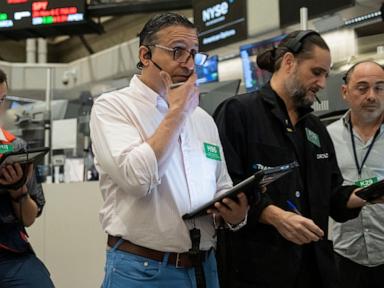
Midterm elections routinely trigger sharp, sudden sector rotations on Wall Street because legislative gridlock alters the probability of future tax, tariff, and regulatory policies overnight. When voters split control of Washington, traders immediately reprice companies most sensitive to executive branch action—such as international spirits makers exposed to trade wars—while recalculating the valuation multiples of high-growth technology and artificial intelligence firms facing antitrust scrutiny or shifts in federal spending.
Wall Street hates uncertainty more than it hates bad news. Once the ballots are counted and the legislative math becomes clear, institutional desks do not wait for bills to hit the floor. They reallocate billions of dollars within hours based on how the balance of power affects corporate cash flows, cross-border supply chains, and regulatory enforcement. Discover more on a connected issue: this related article.
The Anatomy of a Post-Election Repricing
Most retail investors watch the major indices after an election and assume nothing happened if the S&P 500 closes flat. That is a mistake. Beneath the surface of a calm index sits violent capital movement. Institutional algorithms and macro hedge funds execute pair trades—simultaneously buying sectors poised to benefit from legislative paralysis and shorting industries left exposed to unilateral White House authority.
Consider how divided government changes the rules of engagement in Washington. When one party holds the White House and the opposing party captures even a single chamber of Congress, sweeping statutory changes effectively die. Major tax overhauls, massive new entitlement programs, and broad industry deregulation stall in committee. For equity analysts, that gridlock removes tail risks. Markets historically rally in the twelve months following a midterm election precisely because Congress loses the ability to pass unpredictable legislation that could upend corporate tax rates. Additional journalism by Financial Times explores related views on the subject.
Yet legislative gridlock does not neutralize the executive branch. Presidents retain immense unilateral power over trade policy, tariffs, export controls, and regulatory agency appointments. When a president is blocked from passing domestic legislation through Congress, they frequently pivot toward executive actions where they still hold leverage. Wall Street knows this pattern well, and trading desks punish sectors caught in the crosshairs of executive authority.
Why Tariff-Exposed Alcohol and Consumer Goods Take the First Hit
Global beverage and spirits companies sit on the front lines of trade disputes. Unlike software firms that sell intangible code across borders, distillers, brewers, and agricultural exporters ship physical goods subject to immediate customs duties.
Alcohol has long functioned as a political bargaining chip in international trade disputes. Because iconic spirits like American bourbon, French wine, Scottish whisky, and Mexican tequila carry deep regional symbolism and political clout in specific voting districts, foreign governments routinely target them with retaliatory tariffs when Washington imposes duties on steel, aluminum, or manufactured goods.
The Margin Compression Trap
When post-midterm political calculus points toward escalated trade friction, institutional investors look directly at gross margin compression across multinational consumer staples. A hypothetical European spirits conglomerate deriving a third of its operating profit from North American imports faces an immediate valuation problem if tariff threats resurface.
The company has only two bad options:
- Absorb the tariff cost: The company keeps retail prices steady to protect market share, which directly erodes net earnings per share and forces analysts to downgrade price targets.
- Pass the cost to consumers: The company raises shelf prices at liquor stores and bars, risking volume declines as inflation-weary shoppers trade down to cheaper domestic alternatives.
Neither choice appeals to portfolio managers. Worse still, supply chains for aged spirits cannot be relocated overnight. You cannot legally make Kentucky bourbon in Germany or Champagne in California. Geographic origin rules lock production facilities in place, leaving beverage giants completely exposed to border taxes. When midterm results signal a more confrontational trade posture from the executive branch, money flows out of import-heavy consumer brands before a single new tariff is officially signed.
High-Flying AI Stocks and the Regulatory Crosscurrents
At the opposite end of the market sit high-valuation artificial intelligence and mega-cap technology stocks. Their post-election volatility stems from a completely different set of pressures: discount rates, antitrust enforcement, and export restrictions.
Growth stocks derive most of their theoretical value from cash flows projected years into the future. Consequently, their stock prices react violently to movements in the 10-year Treasury yield. If a midterm outcome suggests Congress will curtail massive federal deficit spending, bond yields often drift lower as traders anticipate reduced Treasury issuance. Lower yields reduce the discount rate applied to future earnings, which mechanically inflates the present value of long-duration assets like AI software and semiconductor designers.
Conversely, if the election results point toward continued fiscal expansion or inflationary tariff policies, bond yields spike. High-multiple tech stocks immediately sell off as institutional funds rotate into value stocks, energy producers, and financials that benefit from higher interest rates.
The Semiconductor Choke Point
Beyond interest rates, the artificial intelligence boom relies on a fragile global hardware supply chain. Chipmakers and hyperscale cloud providers depend on uninterrupted access to advanced lithography equipment, rare earth minerals, and global customer markets.
A split Congress rarely stops the executive branch from tightening national security export controls. Agencies like the Department of Commerce can restrict which advanced AI processors American chipmakers are allowed to sell abroad without needing a single vote from lawmakers. At the same time, congressional committees under new leadership frequently launch high-profile investigative hearings into big tech market dominance, data privacy, and AI safety.
Even when hearings produce no new laws, the headline risk alone forces momentum traders to lock in profits. After an extended run-up where AI equities trade at thirty or forty times forward earnings, any friction in revenue growth or regulatory clarity triggers rapid multiple contraction. Institutional investors sell first and ask questions during the next earnings call.
The Myth of the Unified Market Reaction
Financial media loves clean narratives. Anchors routinely claim that a specific party winning the House or Senate is universally bullish or bearish for Wall Street. Decades of market history prove that narrative false.
Sector performance after midterms rarely follows simple partisan lines. During administrations perceived as hostile to fossil fuels, traditional energy stocks have frequently outperformed clean energy funds due to capital discipline and constrained supply. Similarly, defense contractors often rally regardless of which party wins Congress, driven instead by geopolitical realities and bipartisan consensus on military modernization.
What actually moves capital is the delta between expectations and reality. Markets are forward-looking discounting mechanisms. In the weeks leading up to Election Day, prediction markets, polling aggregates, and institutional strategists price in a consensus outcome. Options traders buy volatility protection around specific sectors based on that consensus.
When actual precinct returns deviate from the consensus—even by a handful of seats in the House or a razor-thin margin in the Senate—those hedges unwind simultaneously. That mechanical unwinding of options positions, known as a gamma squeeze or volatility crush, accelerates price swings in both directions. Stocks that were heavily shorted ahead of the vote suddenly surge as funds cover their bets, while crowded long positions stumble as traders take profits.
Overlooked Factors Driving Post-Midterm Volatility
While cable news focuses on campaign rhetoric, institutional desks track far quieter indicators in the days immediately following an election.
Committee Chairmanships and Subpoena Power
Control of a legislative chamber hands the winning party control over committee gavels. A change in leadership on the Senate Banking Committee, the House Financial Services Committee, or the House Ways and Means Committee shifts the regulatory weather for specific industries.
New committee chairs decide which CEOs get hauled before cameras, which mergers face public political pressure, and which agency budgets get scrutinized. For regional banks, pharmaceutical manufacturers, and defense primes, the identity of a committee chair matters far more than a floor speech.
The Debt Ceiling and Appropriations Calendar
Midterm elections often set the stage for high-stakes fiscal standoffs in the following year. When opposing parties control the White House and the House of Representatives, routine governance tasks like funding the federal government and raising the statutory debt ceiling become leverage points.
Institutional fixed-income desks monitor these dynamics closely. Prolonged brinkmanship over federal spending caps threatens government contractors, healthcare providers reliant on Medicare reimbursement rates, and defense firms waiting on appropriations bills. Equity analysts quietly trim exposure to companies with high percentages of federal revenue whenever divided government points toward protracted budget battles.
Currency Fluctuations and Multinational Earnings
Political shifts in Washington immediately ripple through foreign exchange markets. If post-election expectations favor aggressive tariffs and wider budget deficits, the U.S. dollar typically strengthens against major currencies like the euro, yen, and pound.
A surging dollar acts as a hidden tax on American multinational corporations. Roughly forty percent of S&P 500 revenues originate outside the United States. When the dollar strengthens, foreign sales translate back into fewer dollars on corporate income statements. For consumer packaged goods companies, global alcohol distributors, and enterprise software vendors, currency headwinds compound whatever tariff pressures they already face.
How Institutional Desks Position for the Aftermath
Seasoned portfolio managers do not try to guess election outcomes with binary all-or-nothing bets. Instead, they structure portfolios around asymmetric risk and liquidity.
First, they separate secular trends from cyclical noise. Artificial intelligence infrastructure spending by the world's largest cloud providers is driven by intense commercial competition, not congressional appropriations. While regulatory headlines or bond yield spikes can knock twenty percent off an AI stock in a bad week, the underlying capital expenditure cycle remains intact until corporate customers stop buying compute capacity. Institutional buyers use post-election sell-offs in high-conviction secular winners to accumulate shares at lower multiples.
Second, they ruthlessly audit supply chain vulnerability. Companies with domestic manufacturing footprints, pricing power, and minimal reliance on cross-border tariff exemptions command a valuation premium when trade policy turns unpredictable. Conversely, businesses caught between rising import duties and price-sensitive consumers face persistent multiple compression until trade negotiations stabilize.
Third, they watch the bond market rather than the podium. Politicians make promises on election night, but the Treasury market enforces reality. If 10-year yields remain stable and credit spreads stay tight, corporate borrowing costs remain manageable and equity pullbacks tend to be shallow. If yields spike aggressively on fears of fiscal indiscipline or tariff-induced inflation, no sector escapes unscathed.
Election nights create dramatic television, but markets ultimately answer to earnings, interest rates, and capital flows. When the dust settles in Washington, the real winners and losers on Wall Street are decided not by who won the podium, but by which balance sheets can survive the policy friction left behind.