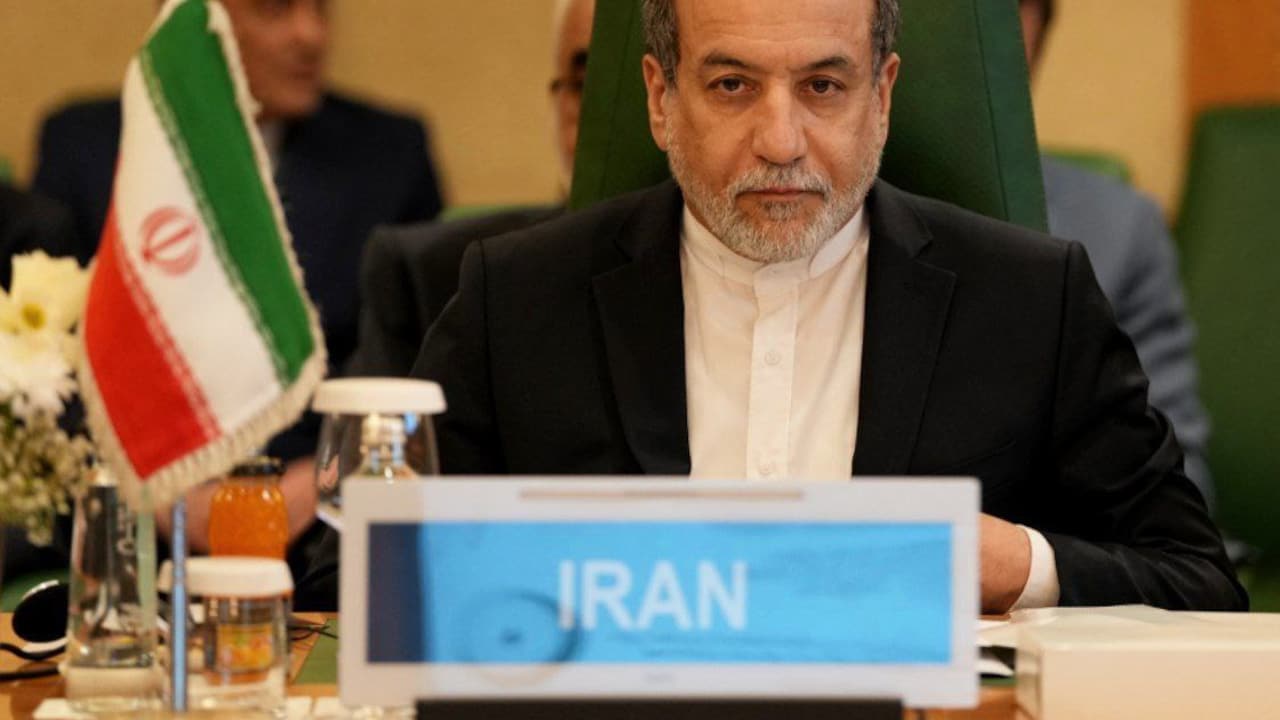
The standard foreign policy consensus is broken. Every time a bomb drops in the Middle East, the talking heads trot out the same tired script. The headline writes itself: Iran issues a blistering warning, demands total US withdrawal, and threatens a regional conflagration.
It is high-drama theater. It is also entirely wrong.
The lazy assumption embedded in every mainstream analysis of recent US-Iran clashes is that Iran genuinely wants a complete American military exit from its borders. This narrative treats public rhetoric as geopolitical strategy. In reality, Tehran’s loudest threats are designed to maintain a fragile, highly predictable status quo—not shatter it.
If the United States actually packed up and left tomorrow, Iran’s regional strategy would collapse under its own weight.
The Symbiotic Theater of Controlled Escalation
Geopolitics is rarely about winning; it is about managing leverage.
The current cycle of kinetic exchanges between US forces and Iranian-backed proxies follows a script that both sides understand perfectly. The US conducts precision strikes on warehouse facilities or command nodes. Iran issues a fiery press release warning that the region is a powder keg. Both sides claim victory. Both sides avoid direct conflict.
This is not a march to war. It is a carefully calibrated dance.
Consider the mechanics of deterrence. For the Iranian clerical establishment, an active, contained American military presence is the ultimate political insurance policy. It provides an permanent, external threat to justify economic austerity, suppress domestic dissent, and unite disparate regional proxies under the banner of "Resistance."
Without the American specter lurking across the border in Iraq and Syria, the narrative dissolves. The glue holding the proxy network together dries up.
- The Foreign Bogeyman: Dictating terms to foreign powers is easy when they are visible. A US base is a fixed target for rhetoric; regional instability is much harder to manage when you own it completely.
- The Cost of Governance: If the US leaves, Iran becomes the undisputed hegemon responsible for the economic stability and security of a fractured region. Tehran cannot afford that bill.
The Illusion of the Shia Crescent Hegemony
Mainstream commentators love the phrase "Shia Crescent" to describe Iran's arc of influence from Tehran to the Mediterranean. They treat it as a monolithic empire in waiting.
I have spent years analyzing regional supply chains, local militia funding structures, and the granular realities of cross-border governance. The reality on the ground is messy, expensive, and fundamentally unsustainable without an external enemy.
Iran does not exert seamless control over its proxies. Groups like the Houthis in Yemen, various Mobilization Forces in Iraq, and Hezbollah in Lebanon have localized agendas that frequently clash with Tehran’s long-term goals.
Imagine a scenario where the US military vanishes from the theater. Suddenly, the unifying resentment against Washington disappears. Local populations in Baghdad, Damascus, and Beirut—already suffering from catastrophic economic mismanagement—will stop blaming the West. They will look directly at the local ruling elites backed by Iran.
We saw flashes of this during the anti-corruption protests in Iraq and Lebanon in recent years, where demonstrators torched Iranian consulates and chanted against foreign interference—meaning Iranian interference. The American presence acts as a lightning rod, drawing anger away from the profound failures of Iranian regional governance.
Dismantling the Punditry: Why the Conventional Questions are Flawed
Look at any major news network and you will find variations of the same two questions. Let us dismantle them with basic logic.
Is the Middle East on the Verge of a Total Regional War?
No. A full-scale regional war requires at least one party to believe they can win a decisive victory at an acceptable cost. Neither side believes this. Iran knows a direct conventional war with the United States would result in the destruction of its state infrastructure and the likely end of the regime. The United States knows a ground invasion of Iran would make the 2003 Iraq war look like a minor skirmish. Therefore, both actors utilize proxy skirmishes to signal boundaries without crossing the red line of total mobilization.
Do US Strikes Deter Iranian Ambitions?
They do not deter ambitions, but they do recalibrate boundaries. The consensus view argues that if strikes do not stop all proxy attacks, they have failed. This misses the point of kinetic signaling. The goal of US strikes is to establish the maximum price Iran has to pay for its asymmetric operations. It is an economic calculation, not a moral one. The strikes ensure that Iran’s expansion remains slow, expensive, and cautious.
The Hard Truth of Asymmetric Economics
Let us talk about the math, because the math does not lie.
The Western defense establishment frequently panics over the cost asymmetry of modern warfare. A proxy group fires a drone that costs $20,000 to manufacture. The US Navy intercepts it with a missile that costs $2 million. The pundit class screams that the West is losing the financial war of attrition.
This is a surface-level critique that ignores macroeconomics.
The United States operates a $28 trillion economy with a defense budget approaching a trillion dollars. It can absorb the cost of interceptor missiles indefinitely. Iran, hamstrung by decades of sanctions, inflation, and structural corruption, operates on a razor-thin margin.
Every time a US strike destroys a command center, a sophisticated radar array, or a specialized weapons depot, Iran has to dip into its limited hard currency reserves to replace it. It cannot manufacture advanced components domestically without expensive smuggling routes.
The asymmetry does not favor the insurgent; it favors the actor with the deeper capital markets. The current strategy of targeted US retaliation forces Iran to spend its scarce resources just to maintain its current position, preventing it from ever scaling its regional projects to a destabilizing level.
The Risk of the Contrarian Stance
To be absolutely transparent, treating this conflict as a stable system carries a massive caveat.
The entire dynamic relies on perfect rationality and flawless communication. It assumes that a low-level proxy commander will not miscalculate and kill dozens of US servicemen in a single strike, forcing an overwhelming American political response that skips past the established script.
It also assumes that the internal political pressures within Iran will not force the regime into a desperate, high-stakes gamble to distract from domestic instability. When you play chicken at this scale, a blown tire kills both drivers.
But recognizing the risk of miscalculation is entirely different from buying into the naive narrative that Iran is actively trying to kick the US out.
Stop Misreading the Theater
The next time a major news outlet publishes a headline screaming about Iran’s final warning to American forces, ignore the noise.
Iran needs the US in the Middle East. It needs the targets. It needs the rhetoric. It needs the excuse.
The real threat to Iranian regional ambitions is not American steel; it is American absence. If the US military ever truly leaves the theater, the illusion of the Resistance dies, the bills for regional governance come due, and the spotlight turns squarely on a regime that knows how to fight, but has absolutely no idea how to build.