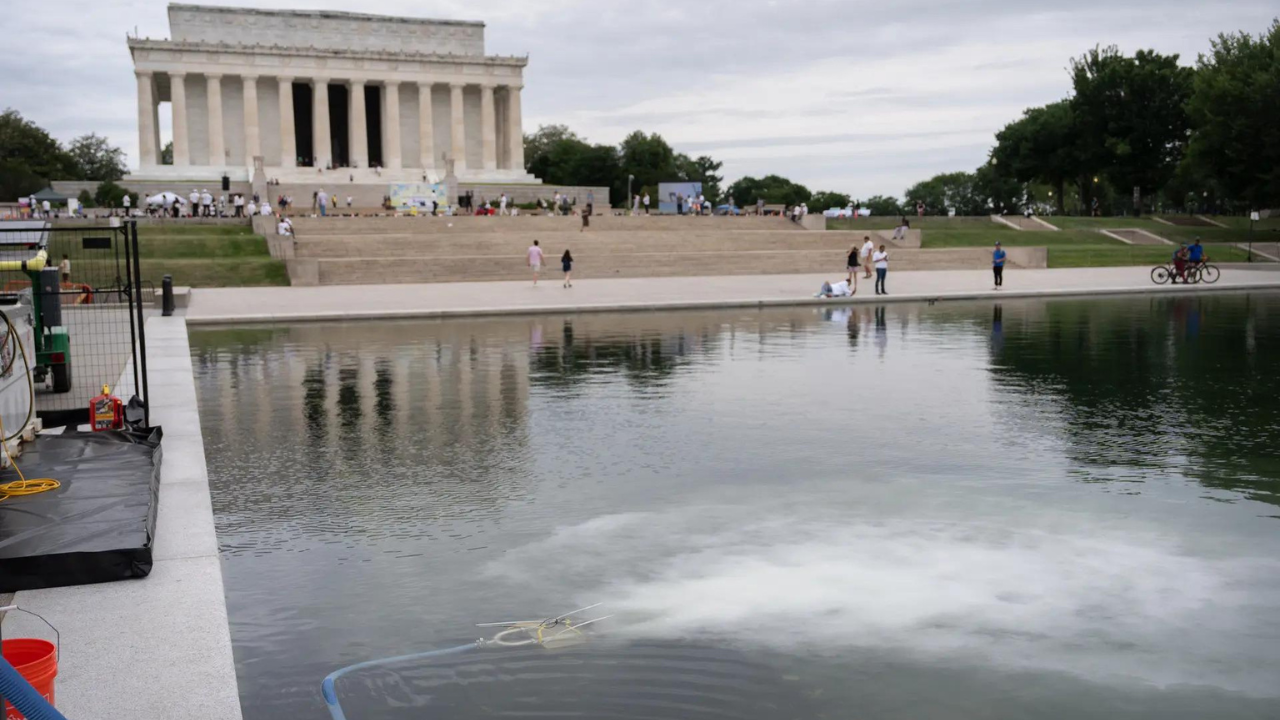
The mid-2026 celebration of the United States semiquincentennial arrives alongside a less celebratory milestone: the systemic degradation of the nation’s freshwater infrastructure. Decades of regulatory gaps, agricultural over-application, and underfunded municipal infrastructure have culminated in chronic, toxic cyanobacterial blooms across major water basins. These Harmful Algal Blooms (HABs) do not represent isolated ecological anomalies. They are the direct output of a predictable economic and biological cost function, where upstream nutrient waste is externalized into downstream public assets.
Resolving this crisis requires shifting the national approach from reactive mitigation to structural remediation. Understanding the crisis necessitates a cold, analytical examination of the underlying chemical inputs, regulatory failures, and economic damages that define modern American hydrology.
The Triad of Anthropogenic Eutrophication
The proliferation of cyanobacteria—primarily genera such as Microcystis, Anabaena, and Planktothrix—is governed by three distinct, compounding variables: phosphorus saturation, nitrogen asymmetry, and thermal acceleration.
Phosphorus Saturation and Geologic Legacies
Freshwater ecosystems are historically phosphorus-limited. Cyanobacterial proliferation triggers when ambient total phosphorus concentrations exceed 20 to 30 micrograms per liter. The primary driver is agricultural runoff, specifically the over-application of synthetic fertilizers and concentrated animal feeding operation (CAFO) manure.
A critical complicating factor is "legacy phosphorus." Decades of fertilizer application have saturated agricultural soils and riverbed sediments. Even if all topsoil fertilizer application ceased immediately, internal loading—the release of historic phosphorus stored in lake sediments under anoxic conditions—can sustain toxic algal blooms for decades.
Nitrogen Asymmetry and Toxin Production
While phosphorus dictates the overall biomass or volume of an algal bloom, nitrogen concentrations dictate its toxicity. When high levels of bioavailable nitrogen (nitrates and ammonium) enter a phosphorus-rich environment, non-nitrogen-fixing cyanobacteria rapidly outcompete green algae. Under high-nitrogen conditions, Microcystis upregulates the production of microcystins—potent hepatotoxins that damage liver tissue in humans and lethal doses in livestock and domestic animals.
Thermal Acceleration and Hydrological Stagnation
Cyanobacteria possess an optimal growth temperature significantly higher than benign green algae, typically above 25°C. Rising average water temperatures extend the seasonal window for blooms. This thermal variable is compounded by hydrological stagnation. Dams, reservoirs, and channelized rivers reduce flow velocity, allowing water columns to stratify. Cyanobacteria utilize gas vesicles to regulate their buoyancy, rising to the sunlit surface to form thick scum layers while shading out submerged aquatic vegetation, creating a feedback loop of ecological collapse.
The Macroeconomic Impact Matrix
The economic damage caused by widespread freshwater eutrophication extends far beyond local conservation budgets. It acts as a direct tax on municipal budgets, property markets, and local healthcare systems.
- Water Treatment Operational Overhead: Municipal water treatment plants drawing from impaired sources face exponential increases in operational expenditures. Removing cyanotoxins and taste-and-odor compounds (such as geosmin and 2-methylisoborneol) requires upgrading standard filtration systems to include granulated activated carbon (GAC), ozonation, or advanced oxidation processes. The chemical costs alone for powdered activated carbon can increase a municipality's daily treatment budget by orders of magnitude during peak bloom seasons.
- Real Estate Valuation Depreciation: Depressed property values correlate directly with water clarity and toxicity metrics. Hedonic pricing models demonstrate that a permanent transition from clear water to chronic algal scum reduces lakefront residential property values by 10% to 20%. This depreciation erodes local municipal tax bases, reducing the capital available for public school systems and civil infrastructure.
- The Tourism and Recreation Deficit: Commercial losses during seasonal closures of lakes, reservoirs, and coastal estuaries disrupt regional hospitality economies. Microcystin levels exceeding the Environmental Protection Agency (EPA) recreational advisory threshold of 8 micrograms per liter trigger immediate beach closures, rendering boating, fishing, and swimming unviable.
- Public Health and Veterinary Liabilities: Acute human exposure via ingestion or inhalation of aerosolized toxins during recreation results in gastroenteritis, dermal lesions, and acute liver injury. Chronic low-dose exposure through drinking water is linked to long-term hepatotoxicity and potential neurological risks. The veterinary costs associated with livestock and canine fatalities from direct exposure represent an underreported but persistent drag on rural economies.
Regulatory Arbitrage and Policy Limitations
The persistence of toxic blooms 54 years after the passage of the Clean Water Act of 1972 highlights a structural flaw in environmental governance: the legal bifurcation between point source and non-point source pollution.
The National Pollutant Discharge Elimination System (NPDES) effectively regulates point sources—discrete conveyances such as municipal wastewater treatment pipes and industrial discharge outlets. These facilities have made measurable progress in reducing nutrient outputs via modernized biological nutrient removal processes.
Non-point source pollution, which includes agricultural stormwater runoff, tile drainage systems, and urban sheet flow, remains largely exempt from federal enforceable mandates. Section 319 of the Clean Water Act relies almost exclusively on voluntary grant programs to incentivize Best Management Practices (BMPs) among agricultural producers. This voluntary framework fails because the financial incentives for high-yield, chemically intensive crop production far outweigh the subsidies provided for conservation buffers or cover crops.
The Total Maximum Daily Load (TMDL) framework represents the primary tool for addressing impaired waters. A TMDL calculates the maximum amount of a pollutant that a waterbody can receive while still meeting water quality standards. However, the implementation of TMDLs lacks federal enforcement teeth when applied to non-point sources. States are left to formulate Watershed Implementation Plans (WIPs), which frequently suffer from chronic underfunding, political resistance from agricultural lobbies, and a lack of granular monitoring data to track compliance.
Capital Allocation Bottlenecks in Infrastructure
Addressing the algal crisis requires a massive realignment of municipal infrastructure capital, which currently faces an enormous funding deficit.
[Total Estimated Infrastructure Need: $625+ Billion]
  ├── Municipal Stormwater Overflows (CSOs) ── Approx. $150 Billion
  ├── Advanced Wastewater Treatment Upgrades ── Approx. $200 Billion
  └── Agricultural Non-Point Remediation    ── Approx. $275+ Billion
The EPA’s Clean Water State Revolving Fund (CWSRF) provides low-interest loans for water quality infrastructure, but the demand outstrips available funds.
Urban areas face the challenge of Combined Sewer Overflows (CSOs). Legacy civil engineering designs route both domestic sewage and urban stormwater runoff through the same pipes to treatment facilities. During heavy precipitation events, the volume exceeds plant capacity, forcing operators to discharge untreated raw sewage directly into adjacent rivers and lakes. Separating these systems or constructing subterranean retention basins requires capital expenditures that small to mid-sized American cities cannot self-fund without entering severe debt distress.
Systemic Interventions and Market Realignment
Mitigating the nutrient influx requires transitioning from voluntary conservation models to enforceable, market-driven, and technologically verified frameworks.
Enforceable Non-Point Source Caps
Voluntary compliance has reached its structural limit. Regulatory agencies must establish binding nutrient application limits calibrated to regional soil saturation indexes. Implementing mandatory winter cover crops, targeted riparian buffer strips, and strict bans on applying fertilizer or manure to frozen or saturated ground would drastically reduce the initial export of dissolved reactive phosphorus.
Subsurface Tile Drainage Modification
Modern industrial agriculture relies on subterranean perforated pipes (tile drains) to quickly remove water from fields. These systems act as direct conduits, bypassing natural soil filtration and flushing dissolved phosphorus straight into ditch networks. Requiring managed drainage systems—where control structures retain water tables within fields during non-cropping seasons—allows for denitrification and sediment retention before water enters public networks.
Scalable Water Quality Trading Markets
Establishing localized point-to-non-point pollution credit trading systems can optimize capital efficiency. Wastewater treatment plants facing multi-million-dollar upgrades to shave off fractional milligrams of phosphorus per liter could instead purchase cheaper, quantified nutrient reduction credits from upstream agricultural producers who install bioreactors, wetlands, or two-stage ditches. This mechanism utilizes market forces to achieve the lowest cost per pound of nutrient reduction across an entire watershed.
Automated Real-Time Water Quality Monitoring
Deploying high-frequency, automated sensor networks equipped with fluorometric probes can measure phycocyanin—a pigment unique to cyanobacteria—alongside nitrate and turbidity levels in real-time. Integrating these data streams into public dashboards converts water safety from a reactive testing model to a predictive forecasting architecture, enabling treatment plants and recreational facilities to adapt before a bloom reaches critical density.
The stabilization of American water quality requires recognizing that freshwater assets can no longer absorb the externalized costs of industrial agriculture and obsolete municipal plumbing. Absent a structured, capitalized overhaul of nutrient management laws and urban stormwater infrastructure, the nation's primary economic and biological engines will remain structurally impaired by the very waters meant to sustain them.