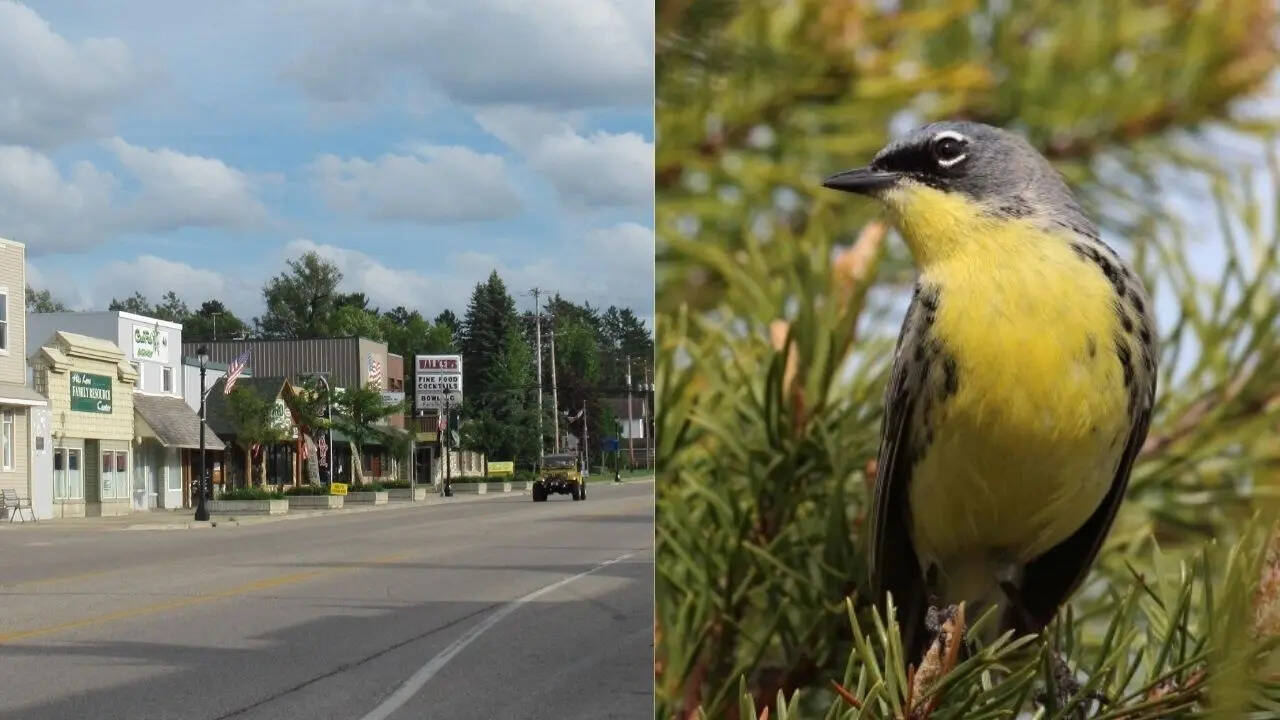
We love a good ecological fairy tale. A tiny, forgotten town rallies together, signs a few petitions, plants some specific shrubbery, and suddenly a near-extinct bird species is thriving. The media swoons. Local politicians take victory laps. The public gets a warm, fuzzy feeling that individual recycling and community-level enthusiasm can reverse the Anthropocene.
It is a beautiful narrative. It is also completely wrong.
When you look at the celebrated "miracle" in Michigan—where a single community allegedly saved an entire avian population—you are not looking at a sustainable blueprint for the planet. You are looking at ecological theater. By obsessing over hyper-local, feel-good success stories, we are actually blinding ourselves to the brutal realities of macro-conservation and inadvertently accelerating the loss of biodiversity.
Here is the truth nobody wants to print: saving a species requires cold, hard numbers, vast geopolitical coordination, and a willingness to make deeply unpopular trade-offs. Your local bird-watching club cannot scale.
The Math of Extinction Doesn't Care About Good Intentions
The lazy consensus in modern conservation journalism is that localized action is the foundation of global recovery. This is a fundamental misunderstanding of population genetics and habitat fragmentation.
When a small town creates an isolated sanctuary, they often create what biologists call a "sink habitat." It looks successful on the surface. Birds arrive, they nest, and tourists take photos. But without massive, contiguous corridors connecting these animals to wider gene pools, these micro-sanctuaries become genetic dead ends.
Consider the basic mechanics of population viability analysis. For a species to truly recover, it requires an effective population size large enough to resist inbreeding depression and stochastic environmental shocks—like a single bad winter or a localized disease outbreak. A tiny pocket of managed land in the Midwest cannot provide this.
I have spent years analyzing environmental data sets, and the pattern is always the same: we spend millions of dollars manicuring a few hundred acres for a headline-grabbing species, while the surrounding thousands of acres are quietly paved over. We are rearranging the deck chairs on the Titanic and celebrating because one specific chair looks exceptionally clean.
The Hidden Cost of Single-Species Obsession
The Michigan narrative champions the salvation of one specific bird. But true conservation is not about selecting a charismatic mascot and pouring all your resources into it. That is marketing, not ecology.
When we hyper-focus on a single species, we inevitably skew the local ecosystem.
- Resource Monopolization: Funding is a zero-sum game. Every dollar funneled into a highly visible, emotionally resonant bird species is a dollar stripped from soil microbes, crucial insect populations, or unphotogenic wetlands that actually stabilize the regional watershed.
- Apex Predator Imbalances: Artificially boosting the population of one specific prey animal without restoring the entire trophic cascade invites disaster. It throws off local predator-prey dynamics, leading to sudden collapses elsewhere in the food chain.
- The Island Effect: By protecting a tiny patch of land tailored exclusively for one creature, we create an ecological island. The moment that species outgrows its artificial boundary, it spills over into unprotected, hostile territory where it cannot survive.
Imagine a scenario where a corporation spends its entire annual budget fixing a single broken window on the ground floor while the roof is actively collapsing. That is the exact strategy we are cheering for in small-town conservation.
Dismantling the "People Also Ask" Delusions
If you look up how to save endangered species, the search results are flooded with soft, comfortable answers. Let us address those with some necessary bluntness.
Can small-scale community action stop the biodiversity crisis?
No. It cannot. Community action is excellent for civic pride and local litter cleanup, but it is utterly powerless against global supply chains, industrial agriculture, and systemic climate shifts. To pretend otherwise is dangerous. It gives citizens a false sense of accomplishment, letting them believe they have done their part while the systemic drivers of extinction continue completely unchecked.
What is the most effective way to protect migratory birds?
It isn't planting specific flowers in your backyard. Migratory birds do not respect municipal boundaries or state lines. They require sweeping, international treaties that protect multi-state flyways, massive industrial regulation on window manufacturing and wind turbine placement, and the aggressive halt of large-scale deforestation in entirely different hemispheres. If your conservation strategy stops at the county line, it is a failure by design.
The Hard, Uncomfortable Path to Real Conservation
If we are serious about stopping mass extinction, we have to abandon the feel-good micro-narratives and embrace a model that is heavily bureaucratic, incredibly expensive, and deeply disruptive to local economies.
True conservation means eminent domain. It means buying up millions of acres of private agricultural land and forcibly rewilding it to create unbroken continental corridors. It means telling a small town that they cannot expand their suburbs or build their new shopping center because a vital, ugly swamp needs to remain untouched.
It also means accepting major downsides. Large-scale rewilding projects often displace human communities, hurt local tax bases, and reintroduce predators that rural populations would rather do without. It is messy. It causes political warfare. It doesn't make for a heartwarming human-interest story on the nightly news.
But it works.
Look at the recovery of the European gray wolf or the massive territorial reserves in the Russian Far East for the Amur tiger. These were not achieved by community consensus and volunteer weekend shifts. They were achieved through heavy-handed state legislation, massive funding, and ironclad legal protections across vast geographic expanses.
Stop Celebrating the Exceptions
The Michigan miracle is an anomaly, a statistical blip wrapped in a heartwarming PR campaign. It cannot be replicated globally because the math simply does not track.
We need to stop using these tiny, isolated successes as an excuse to tolerate systemic failure. Every time we write a glowing profile about a town saving a bird, we lower the bar. We teach the public that conservation is easy, that it is a hobby you can do on weekends, and that it doesn't require any real sacrifice from our broader economic system.
The biosphere is bleeding out, and we are trying to fix it with designer band-aids applied by well-meaning volunteers. Stop looking at the tiny town that saved a bird. Look at the thousands of miles of destroyed habitat surrounding it. Demand the sweeping, uncomfortable, macro-level changes that actually matter, or get out of the way and admit that you care more about the story than the species.