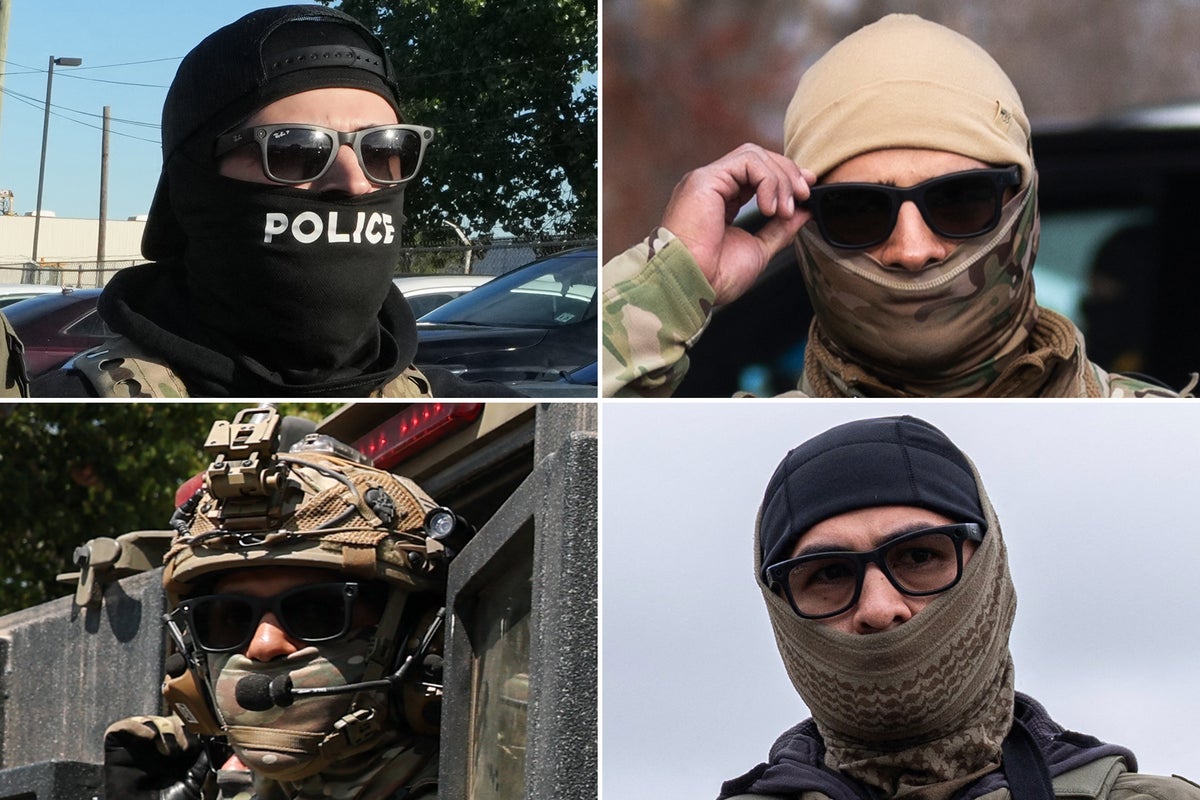
Privacy is dying a death of a thousand cuts, and the latest blade is resting on the bridge of a federal agent's nose. Recent reports confirm that U.S. immigration and border officials have started experimenting with Meta’s Ray-Ban smart glasses. It isn't just a hardware upgrade. It's a fundamental shift in how the government watches people in real-time without them ever knowing.
If you've seen these glasses, you know they look like standard Wayfarers. That’s the problem. When a Customs and Border Protection (CBP) officer wears a bulky body camera, you know you’re being recorded. It’s a visible signal of state surveillance. When that same officer wears stylish Italian-made frames that blend into a casual outfit, the line between "officer on duty" and "civilian" vanishes.
The tech inside these frames allows for hands-free photo and video capture. More importantly, they're built to integrate with AI that can identify objects, text, and potentially faces. For an agency like CBP, which already manages one of the largest biometric databases in the world, this is a match made in a civil liberties nightmare.
The Stealth Factor in Federal Surveillance
The biggest issue here isn't just the recording; it's the lack of transparency. Most people don't realize that Meta’s glasses use a tiny LED light to signal when they're recording. In bright daylight at a crowded border crossing, that little white light is basically invisible.
CBP has a history of adopting surveillance tech first and asking for permission—or creating privacy guidelines—much later. We saw this with drones. We saw it with license plate readers. Now, we’re seeing it with wearable AI. By moving the camera from the chest to the eye-line, the government gains a first-person view of every interaction.
This isn't just about catching criminals. It's about the data trail. Every video captured by these glasses doesn't just sit on a hard drive. It becomes part of an ecosystem. If these devices sync with government cloud
storage, that footage is subject to data mining. AI algorithms can scan the background of a video to identify people who weren't even the subject of the interaction. Your face could end up in a federal database just because you walked past an agent who was recording a different person.
Why Meta Can't Wash Its Hands of This
Meta claims these glasses are for "creators" and "everyday moments." They want you to think of them as a way to film your kid’s birthday party or your mountain bike trail. But once you sell a product to the mass market, you lose control over who buys the bulk orders.
The company has tried to distance itself from military or policing applications in its marketing, but the software is open enough for third-party "workarounds." We've already seen researchers at Harvard demonstrate how easy it is to link these glasses to public facial recognition databases like PimEyes. Within seconds, they could find a stranger’s name, address, and relatives just by looking at them.
When a border agent uses this, the power imbalance is staggering. You don't have the right to tell a federal agent to take off their glasses. You don't have the right to opt-out of their "field test."
The Facial Recognition Pipeline
While Meta says they don't natively put facial recognition in the glasses yet, the hardware is a perfect vessel for it. Think about the workflow:
- The agent captures high-definition 12MP photos.
- The glasses sync to a mobile device.
- That device runs an app connected to the Automated Biometric Identification System (IDENT).
- A match is returned in seconds.
This turns every agent into a walking biometric scanner. It removes the "friction" of surveillance. Usually, if the government wants to track you, they need a stationary camera or a deliberate act of stopping you for a photo. Now, they just need to look at you.
The Mission Creep No One Admits
History shows that "border only" tech never stays at the border. Surveillance tools follow a predictable path: they're tested on vulnerable populations (immigrants and travelers), then they're handed down to state and local police.
Today it’s a CBP agent at a port of entry. Tomorrow it’s a beat cop at a protest or a detective at a grocery store. This "mission creep" is how we ended up with Stingrays (cell site simulators) in local police departments across the country.
We should also talk about the "Always On" nature of the AI. Meta’s latest updates allow the glasses to "look" at things and remember them. You can ask the glasses, "Hey Meta, where did I see that car?" and it will search its visual history. Imagine a federal agency with that kind of searchable visual memory. "Hey Meta, show me everyone I saw wearing a red hat at the rally." That is a terrifying amount of power to hand to any government body, regardless of who is in charge.
Practical Steps to Protect Your Privacy
You can't always avoid being seen, but you can be aware of the environment. If you're traveling through a port of entry or an international airport, look at the eyewear. If you see the distinct circular marks on the corners of a pair of Ray-Bans, assume you are being recorded in high definition.
Don't expect the law to catch up anytime soon. Privacy laws in the U.S. are notoriously slow, and the "border search exception" gives federal agents broad powers that wouldn't stand in your backyard.
- Be mindful of your surroundings: Treat smart glasses like any other camera, but recognize they are harder to spot.
- Support transparency legislation: Groups like the ACLU and EFF are actively fighting for "meaningful consent" laws regarding biometric data.
- Demand clear policies: If you see these being used, ask if the agency has a public privacy impact assessment. They are often required by law to produce these, even if they don't want to show them to you.
The tech is here, and the government isn't going to give it back. Awareness is the only tool left before these glasses become as common as a badge and a gun. Assume the eyes looking at you are also recording you.