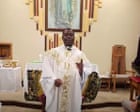
When a Texas courtroom heard that Father Anthony Odiong brushed off a sexual encounter with a vulnerable congregant by declaring "we are but men," it exposed a deeply flawed mindset. That phrase wasn't just a clumsy excuse muttered after getting caught. It represents a systematic deflection of responsibility that powerful figures have used for centuries to escape accountability.
The 57-year-old priest currently stands trial in Waco, Texas, facing five counts of first-degree and two counts of second-degree sexual assault. The case hinges on a stark abuse of power. Prosecutors argue Odiong systematically weaponized his religious authority to target, isolate, and sexually assault spiritually vulnerable women.
This isn't a story about consensual romance or simple human frailty. It's a textbook look at how clerical authority can be twisted into a tool for emotional and sexual exploitation.
The Anatomy of Clerical Exploitation
The trial details paint a grim picture of how Odiong allegedly operated. One of the primary accusers turned to the priest for spiritual direction during the painful aftermath of her divorce. This is a time when a congregant is exceptionally fragile, seeking healing and moral clarity. Instead of safety, she found a predator.
During the second day of the trial, the woman's son—who had previously served as an altar boy under Odiong—delivered damning testimony. While attending a gathering, the son noticed his mother and the priest were locked inside a bedroom. Hearing disturbing noises, he burst through the door and discovered a bottomless Odiong on the floor on top of his mother.
When confronted, Odiong didn't display remorse, shock, or panic. According to the witness, the priest responded with total nonchalance, uttering the phrase that now defines the trial: "We are but men."
The Myth of the Off Duty Priest
Defense attorneys Gerald Villarrial and Carolina Truesdale attempted a familiar strategy during cross-examination. They questioned whether a clergyman could engage in these behaviors while being "off-duty" from his official clerical role.
The prosecution countered this argument effectively by calling expert witness Jeffrey Kimes. He previously prosecuted more than 1,100 clergy sex abuse cases under canon law for the Vatican. Kimes destroyed the defense's premise with five words:
"We never stop being on duty."
In Texas, the legal system explicitly recognizes this reality. State law classifies it as sexual assault when a member of the clergy exploits a congregant's emotional dependency or spiritual vulnerability to engage in sexual conduct. The law understands that the power dynamic doesn't vanish just because a priest steps outside the church walls or attends a social gathering.
The power balance in spiritual direction is entirely lopsided. A spiritual directee bares her soul, confesses sins, and shares her deepest emotional wounds. The director holds the keys to divine forgiveness and grace in the eyes of the believer. You can't turn that influence off like a light switch.
Breaking the Statute of Limitations
One of the most significant aspects of this trial is how prosecutors Ryan Calvert and Liz Buice managed to bring these charges forward. Typically, older cases face strict statute of limitations barriers. However, Waco authorities bypassed this obstacle by establishing a broader pattern of predatory behavior.
Investigators identified as many as 10 women whom Odiong is suspected of preying upon over the years. Because of this extensive scale, Judge Thomas West permitted hearsay testimony from other accusers under a specific legal exception. This allowed the prosecution to demonstrate that Odiong's actions weren't isolated lapses in judgment, but rather a calculated, long-term pattern of behavior.
The defense tried to poke holes in the witnesses' memories, pointing out that the son struggled with underage drinking and substance abuse around the time of the incident. But the sheer volume of similar accounts from different women makes the "faulty memory" defense incredibly difficult to sustain. The prosecution intends to call multiple women to the stand, creating a mountain of corroborating evidence that points to systemic abuse.
Shifting the Shame Back Where It Belongs
The psychological impact on the victims in these scenarios is devastating. On the witness stand, the first accuser expressed deep humiliation, stating she felt deeply ashamed of how she allowed herself to be treated and completely missed the warning signs regarding Odiong's character.
This reaction is heartbreakingly common. Victims of clergy abuse often internalize the guilt, believing they somehow consented or failed to protect themselves. They forget that their capacity to consent was actively compromised by a trusted authority figure manipulating their faith.
When a priest vows celibacy, he makes a promise to his church and his community. When he breaks that vow by exploiting someone under his spiritual care, it's a profound betrayal of trust. The defense's reveal that Odiong even fathered a child with another woman who didn't file formal charges further shatters the illusion of a holy man who simply slipped up once.
True accountability means recognizing that "we are but men" is an unacceptable defense. When someone accepts the immense power, trust, and authority that comes with religious leadership, they lose the right to use human weakness as a get-out-of-jail-free card. The Waco trial continues to send a clear message to religious institutions everywhere: spiritual authority cannot be used as a shield against criminal behavior.