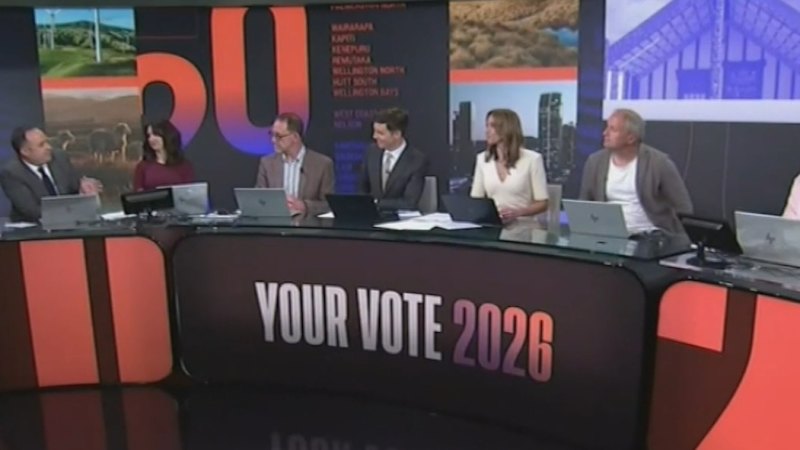
The closing of polling booths in a New Zealand general election does not produce a winner; it initiates a multi-stage mathematical and political negotiation governed by the Mixed-Member Proportional (MMP) electoral system. Standard media coverage treats election night as a binary contest between two major parties, National and Labour, overlooking the structural reality that single-party majorities are statistical anomalies under MMP. Understanding the post-poll transition requires analyzing the sequential vote-tabulation protocols, the threshold mechanics that determine parliamentary entry, and the game-theoretic constraints governing coalition negotiations during the caretaker period.
The Institutional Terminology Error
Media outlets frequently refer to New Zealand’s national vote as a "federal election." This is a constitutional inaccuracy. New Zealand is a unitary state, not a federation. Sovereignty is centralized in a single unicameral legislature—the House of Representatives—rather than divided between a central government and sub-national states or provinces. Referring to the event as a federal election misrepresents the concentration of executive power. When a government is formed in Wellington, it faces no constitutional upper house veto and no state-level jurisdictional friction, making the post-election coalition agreement the primary institutional check on executive authority.
The Architecture of Vote Tabulation
At 7:00 PM on election day, voting ceases and the Electoral Commission transitions from collection to sequential counting. The resulting data stream is divided into two distinct phases, creating a predictable variance between preliminary election-night results and final certified outcomes.
- Advance Voting Dominance: New Zealand allows extensive advance voting prior to election day. These ballots are processed and counted before 7:00 PM on election night, meaning the initial data releases heavily skew toward early voters. Historically, advance voters exhibit slightly different demographic and partisan profiles than election-day voters, often creating an early artificial lead for specific blocs that narrows as booths report in.
- Election-Day Ordinary Votes: Ballots cast at standard polling places on election day are counted manually by local returning officers. These figures trickle in between 7:00 PM and midnight, progressively stabilizing the preliminary party-vote percentages.
- The Special Vote Lag: Roughly 15% to 20% of all ballots cast are "special votes." This category includes overseas ballots, votes cast outside a voter’s enrolled electorate, and last-minute enrollments. Because each special vote requires manual verification against the master electoral roll to prevent duplicate voting, these ballots are excluded from election-night totals. They are processed over a two-to-three-week window following election day.
The statistical implication of the special vote lag is profound. Special votes historically lean toward progressive and left-leaning parties—specifically the Green Party and Labour—as overseas voters and transient younger demographics disproportionately utilize this mechanism. In tight elections where a single seat determines the parliamentary majority, the preliminary election-night tally represents an incomplete dataset. A center-right bloc holding a 61-seat majority on election night faces a high probability of losing one or two seats once special votes are incorporated, potentially inverting the balance of power.
MMP Threshold Mechanics and Seat Allocation
Under MMP, each voter casts two votes: an electorate vote for a local representative and a party vote for their preferred political party. The party vote is the primary determinant of legislative power, dictating the total share of seats each party receives in the 120-seat Parliament.
To qualify for proportional seat allocation, a party must clear one of two hurdles:
- The 5% Party Vote Threshold: Securing at least 5% of the nationwide party vote entitles a party to its proportional share of the 120 seats (a minimum of six seats).
- The Electorate Coat-Tailing Rule: Winning a single geographic electorate seat bypasses the 5% party vote threshold entirely. If a minor party wins one electorate seat and 2% of the party vote, it is still awarded its proportional share of seats (roughly two or three seats total) based on that 2% figure.
This dual-threshold mechanism creates asymmetric strategic incentives. A minor party polling at 4.8% without an electorate seat is entirely wiped out of Parliament, and its wasted votes are mathematically redistributed among the parties that cleared the threshold. This redistribution inflates the seat counts of the major parties, artificially lowering the actual vote percentage required to form a 61-seat majority. Conversely, if a minor party secures an electorate seat while polling at 1.5%, it triggers an "overhang" if it wins more electorate seats than its party vote entitles it to, temporarily expanding the size of Parliament beyond 120 seats and raising the mathematical threshold required for a governing majority.
The Game Theory of Coalition Formation
Because MMP is designed to prevent single-party dominance—with the 2020 election standing as the sole exception since the system's introduction in 1996—the close of polls merely shifts the arena from public campaigning to private bargaining. A party cannot govern without commanding the confidence of the House, requiring a minimum of 61 votes on confidence and supply motions.
Negotiations operate along a spectrum of institutional commitment:
- Formal Coalitions: Minor parties accept Cabinet positions inside the executive branch. This binds them to collective cabinet responsibility, requiring public support for all government decisions regardless of internal disagreement.
- Confidence and Supply Agreements: A minor party agrees to support the major party on budget bills and no-confidence motions in exchange for specific policy concessions or ministerial posts outside Cabinet. This allows the minor party to maintain legislative independence and criticize the government on non-agreed issues.
- Cross-Bench Abstention: A minor party agrees to abstain on confidence votes, effectively lowering the majority threshold required for the governing bloc without formally endorsing its legislative agenda.
The bargaining leverage of a minor party is non-linear. A minor party positioned strictly on the ideological flank—such as ACT on the right or the Greens on the left—possesses limited leverage because it cannot credibly threaten to form a coalition with the opposing major party. Its only credible threat is refusing to enter government, forcing a minority administration or a snap election, both of which carry severe electoral penalties for the minor party.
Maximum leverage belongs to the pivot party—historically New Zealand First—capable of negotiating with both National and Labour. By maintaining a credible exit option, a pivot party extracts disproportionate policy concessions and ministerial portfolios relative to its actual share of the party vote.
Caretaker Convention Constraints
Between the closing of the polls and the formal swearing-in of a new administration, the incumbent government operates under the Caretaker Convention. This constitutional norm dictates that an incumbent administration, lacking a fresh democratic mandate, must restrict its actions to routine administrative functions.
During this interregnum, the government is barred from making major policy decisions, signing significant international treaties, or making senior public-sector appointments. If a decision cannot be deferred without harming the national interest, the caretaker prime minister must consult with the opposition leaders to ensure bipartisan consensus before acting. This institutional freeze creates a temporary policy vacuum that can last anywhere from two weeks to over two months, depending on the complexity of the coalition negotiations and the delay caused by the special vote count.
Strategic Execution in the Post-Poll Window
Political actors and institutional observers must treat election-night figures as provisional baselines rather than final outcomes. When preliminary results show a governing bloc holding between 61 and 63 seats, political strategists should delay locking in rigid policy red lines until the Electoral Commission releases the special vote tallies. Major party negotiators must structure initial talks around procedural frameworks rather than final portfolio allocations during the first fourteen days, preserving flexibility to accommodate the predictable 1% to 2% leftward drift inherent in the special vote dataset.