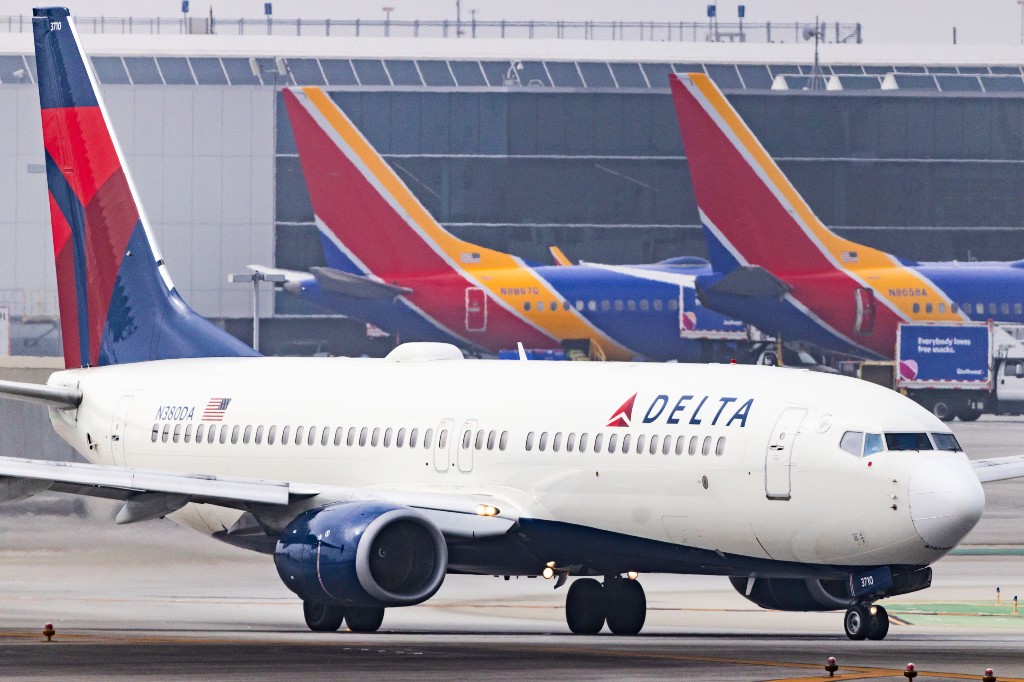
The terminal approach phase of a commercial flight represents the period of highest operational vulnerability, where flight crews face compressed decision-making windows and minimal altitude margins. When an aircraft encounters unauthorized consumer pyrotechnics within this critical zone—as observed during low-altitude airspace penetrations in major metropolitan hubs like Chicago—the incident transcends simple vandalism. It introduces a multi-layered risk vector that threatens the structural, optical, and operational integrity of the aircraft. Effectively mitigating this hazard requires a precise understanding of the physical impact mechanisms, localized airspace vulnerabilities, and systemic economic repercussions.
The Triad of Low-Altitude Vulnerability
Commercial aviation safety frameworks evaluate low-altitude projectile encounters through three distinct risk layers: structural penetration, optical disruption, and power-plant ingestion. Each layer operates on a different timeline and presents unique challenges to the flight crew.
                  [Low-Altitude Projectile Encounter]
                                   │
         ┌─────────────────────────┼─────────────────────────┐
         ▼                         ▼                         ▼
[Structural/Thermal]      [Optical Disruption]      [Propulsion Ingestion]
 - Skin penetration        - Flash blindness         - Compressor stalls
 - Control surface damage  - Glare & reflection      - Blade de-lamination
 - Composite delamination  - Spatial disorientation  - Thermal stress
1. Structural and Thermal Impact Dynamics
Consumer fireworks, specifically Class C (1.4G) and Class B (1.3G) display items, generate a combination of kinetic energy and localized thermal energy. When a commercial airliner traveling at an approach speed between 130 and 160 knots intersects the trajectory of a rising projectile, the relative velocity compounds the structural stress.
The kinetic energy transfer during an impact can be quantified using the standard relation:
$$E_k = \frac{1}{2} m v^2$$
Where:
- $m$ is the mass of the projectile.
- $v$ is the relative velocity between the aircraft and the projectile.
While a typical consumer firework mass remains low (ranging from 50 to 500 grams), the relative velocity ($v$) is high. At an approach speed of 150 knots (approximately 77 meters per second), even a stationary or slow-moving projectile yields significant impact energy upon contact with the airframe.
The structural vulnerability depends entirely on the point of impact. Modern commercial fuselages constructed from aluminum alloys or carbon-fiber reinforced polymers exhibit different failure modes under these conditions.
- Aluminum Alloys: Traditional skins absorb impact through plastic deformation. A high-velocity strike typically results in localized denting or skin puncturing. The thermal output of a pyrotechnical chemical mixture—often exceeding 1,000°C at the core—can weaken the temper of the aluminum alloy if contact is sustained, reducing its load-bearing capacity.
- Composite Materials: Carbon-fiber structures do not deform plastically. Instead, they absorb energy through delamination, where internal layers separate without showing immediate surface damage. A firework strike can introduce micro-cracks and resin degradation due to intense, concentrated thermal exposure, necessitating non-destructive testing (such as ultrasonic scanning) to detect subsurface structural compromises.
The leading edges of wings and stabilizers, which house critical high-lift devices (slats) and de-icing boots, represent high-consequence impact zones. Damage to these components alters the aerodynamic profile, directly increasing the stall speed during a phase of flight where airspeed margins are tight.
2. Optical Disruption and Cockpit Ergonomics
The human element remains the most vulnerable component during a low-altitude pyrotechnic encounter. Nighttime approaches rely heavily on stable visual cues and instrument cross-checks. A sudden, high-intensity chemical explosion near the flight deck windscreen induces immediate physiological and cognitive disruptions.
Flash blindness occurs when the photoreceptors in the human retina become saturated by an intense light source. The recovery time for night-adapted vision can extend from several seconds to minutes, depending on the proximity and intensity of the flash. During an instrument approach at 1,000 feet above ground level, an aircraft descends at roughly 700 to 800 feet per minute. A five-second window of visual impairment strips the flight crew of their ability to monitor instruments or execute a visual transition to the runway environment across approximately 60 feet of altitude loss.
Beyond total blindness, glare and reflection off the multiple layers of stretched acrylic and glass used in cockpit windscreens create spatial disorientation. The internal structure of these windscreens can cause a single external light source to refract into multiple ghost images. This optical distortion complicates the pilot's ability to accurately perceive the aircraft's attitude relative to the horizon or the runway environment, increasing the risk of a destabilized approach or a hard landing.
3. Propulsion Ingestion and Turbofan Mechanics
The ingestion of foreign object debris (FOD) into a high-bypass turbofan engine introduces extreme mechanical and thermal stress. If a firework enters the engine intake, it meets the fan blades rotating at several thousand RPM.
The primary hazard is not the structural mass of the projectile, but the chemical composition and secondary debris it introduces. The compressor stages of modern turbofans operate under strict aerodynamic tolerances. The ingestion of an explosive charge disrupts the smooth airflow through these stages, which can trigger a compressor stall. This breakdown of airflow causes a rapid reversal of high-pressure air through the compressor, characterized by loud bangs, severe engine vibrations, and a dramatic drop in thrust.
[Ingestion at Intake] ──> [Fan Blade Impact] ──> [Airflow Disruption] ──> [Compressor Stall]
                                                                                │
                                                                                ▼
                                                                     [Rapid Thrust Reduction]
Furthermore, the unburned black powder, metals (such as strontium, barium, and copper used for color coloration), and binding resins can melt onto the high-pressure turbine blades. The operating temperature inside the combustion chamber easily exceeds the melting point of these chemical residues. The molten material can block the cooling holes engineered into the turbine blades, leading to localized overheating, blade de-lamination, and ultimate catastrophic engine failure.
Spatial Analysis of the Chicago Airspace Bottleneck
The specific incident involving a Delta Air Lines aircraft on approach to Chicago highlights a recurring geographic and regulatory conflict. Chicago O'Hare International Airport (ORD) and Chicago Midway International Airport (MDW) are surrounded by densely populated residential zones where the unauthorized ignition of consumer fireworks peaks seasonally.
The arrival corridors for these airports require aircraft to maintain specific glide paths, typically a 3-degree descent angle. As aircraft descend through 3,000 feet down to the runway threshold, their flight paths intersect the vertical ceiling of consumer and semi-professional pyrotechnics, which can reach altitudes between 200 and 1,200 feet above ground level.
The underlying vulnerability stems from a regulatory disconnect. While federal aviation regulations strictly prohibit the interference with commercial aircraft and designate the airspace around major airports as Class B (requiring explicit air traffic control clearance), local enforcement of pyrotechnic bans fluctuates. The physical perimeter of an airport can be secured with fencing and patrols, but the extended approach paths stretch for miles over municipal territory. This makes it impossible to establish a physical buffer zone beneath the final approach paths.
Operational Mitigation and Failure Modes
Air traffic management systems and flight crews utilize structured procedures to handle low-altitude interference, though each defensive strategy carries distinct operational trade-offs.
Terminal Radar Approach Control (TRACON) Protocols
When a pilot reports pyrotechnic activity along an approach corridor, Air Traffic Control (ATC) initiates a series of standardized tracking and routing adjustments.
- Corridor Reassignment: If multiple aircraft report activity over a specific geographic coordinate, ATC attempts to shift subsequent arrivals to alternative runways or modify the arrival routing. The limitation of this strategy is the rigid alignment of fixed concrete runways. If wind conditions dictate the use of a specific runway configuration, ATC cannot easily change the approach direction without introducing tailwind components that might exceed aircraft certified limitations.
- Step-Down Approach Adjustments: ATC may instruct pilots to maintain a higher intermediate altitude longer before commencing their final descent. This tactical adjustment shortens the time the aircraft spends in the high-risk vertical zone (under 2,000 feet), but it increases the descent rate required later, elevating the risk of a non-stabilized approach.
Flight Crew Contingency Matrices
Flight crews are trained to prioritize airframe control above all external distractions. In the event of a close-proximity pyrotechnic detonation, the decision matrix splits based on altitude.
| Altitude Zone | Primary Action | Core Risk Vector |
|---|---|---|
| Above 1,000 feet AGL | Immediate Go-Around / Missed Approach | Fuel burn penalty, integration back into high-density traffic flow. |
| Below 1,000 feet AGL (Stabilized) | Continue to Land (if visual references maintained) | Exposure to subsequent projectiles during flare and rollout phases. |
| Below 1,000 feet AGL (Unstabilized/Blinded) | Immediate Maximum-Thrust Go-Around | Low-altitude configuration transitions, engine lag during power application. |
The decision to execute a go-around introduces its own system-wide operational friction. A single missed approach at a major hub disrupts the arrival sequencing for dozens of trailing aircraft, forcing ATC to implement holding patterns and increasing fuel consumption across the entire regional network.
The Strategic Path Forward
Addressing the threat of low-altitude pyrotechnic interference requires moving away from reactive local policing toward a integrated technological and systemic approach.
The first step involves integrating real-time acoustic and optical detection arrays—similar to systems used for urban gunfire localization—around critical arrival corridors. Linking these detection networks directly to TRACON displays would allow air traffic controllers to see automated alerts showing the exact location and altitude of unauthorized pyrotechnic displays. This data allows for preemptive, minor path corrections before an aircraft enters the hazard zone.
The second step requires updates to automated flight deck systems. Current Enhanced Flight Vision Systems (EFVS), which use infrared and synthetic vision technologies, can mitigate the impact of flash blindness by allowing pilots to fly the approach using head-up displays (HUD) that filter out sudden, high-intensity visible light spikes. Accelerating the deployment of EFVS across domestic commercial fleets provides an engineering solution that removes human visual vulnerability from the safety equation.
Relying on seasonal warnings and local law enforcement cannot guarantee the safety of commercial airspace. Long-term risk reduction depends on deploying automated detection systems and upgrading flight deck hardware to insulate low-altitude operations from ground-based disruptions.