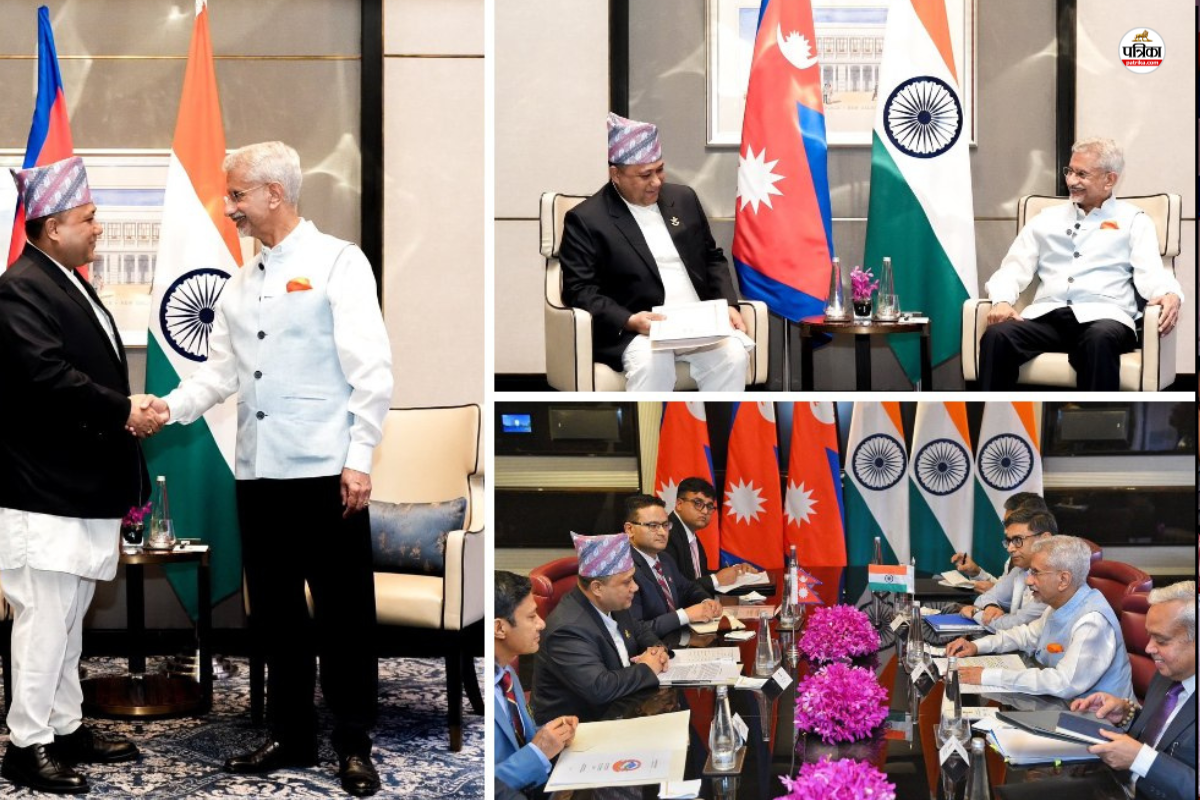
Bi-national diplomacy between India and Nepal frequently defaults to shared cultural rhetoric and historical affinities to mask underlying structural friction. When public statements invoke poetry about shared rivers or familial bonds, they obscure the cold, quantifiable realities of transboundary resource management. The resumption of high-level bilateral talks between Indian officials and Nepal’s Foreign Minister Shishir Khanal after a two-year hiatus marks a return to the negotiating table, but the true calculus governing these interactions is driven by energy asymmetric dependencies, hydrological mechanics, and geopolitical hedging.
To understand the trajectory of India-Nepal relations, analysts must look past the diplomatic theater and dissect the physical and economic frameworks that dictate bilateral cooperation.
The Hydrological Cost Function and Asymmetric Interdependence
The foundational architecture of India-Nepal relations is anchored in the geography of the Ganges Basin. Nepal possesses immense theoretical hydropower potential, estimated at over 83,000 megawatts (MW), with roughly 43,000 MW deemed economically viable. India, conversely, faces an exponential increase in peak electricity demand alongside a critical requirement to transition its energy mix away from coal to meet decarbonization targets.
This creates a textbook model of asymmetric interdependence structured around three distinct variables:
- Upstream Storage Capital: Nepal controls the high-altitude catchments. Headwaters originating in the Himalayas flow south into India, contributing over 40 percent of the annual flow of the Ganges river system, and up to 70 percent during the dry season. Upstream storage infrastructure built in Nepal represents the only viable mechanism for downstream flood mitigation in Bihar and Uttar Pradesh.
- Downstream Monopsony: India represents the only immediate, high-volume market capable of absorbing Nepal’s surplus generation. While Bangladesh is an eager secondary consumer, physical transmission must transit Indian territory, rendering New Delhi the structural gatekeeper of the regional energy market.
- The Capital Expenditure Bottleneck: Nepal lacks the domestic capital markets required to fund large-scale, multi-gigawatt run-of-the-river or reservoir-based hydro projects. Construction requires foreign direct investment (FDI), which introduces geopolitical competition into the hydrological equation.
The primary systemic friction point is that India’s willingness to import power is directly tied to the origin of the capital that built the generation facilities. Under India's Cross Border Trade of Electricity (CBTE) guidelines, New Delhi restricts the import of electricity generated from projects featuring investment from countries with which India does not have a bilateral power cooperation agreement—a thinly veiled exclusion zone aimed at Chinese state-owned enterprises operating in Nepal.
The Cross-Border Transmission Deficit
Diplomatic agreements frequently fail at the engineering level due to a misalignment between policy declarations and transmission capacity. The resumption of talks highlighted the need for infrastructure scale, yet the physical constraints of the current grid create a strict upper limit on what can actually be traded.
[Nepal Generation Assets] ---> [High-Voltage Cross-Border Lines] ---> [Indian National Grid]
                                              |
                              {Structural Bottleneck: 400kV Upgrades}
The Muzaffarpur-Dhalkebar 400 kV transmission line remains the primary high-capacity conduit for cross-border power exchange. While additional lines like the New Butwal-Gorakhpur corridor are under construction or in planning phases, the rate of transmission infrastructure deployment lags behind Nepal’s domestic generation capacity additions.
This infrastructure lag forces a costly operational cycle:
- During the monsoon season (June to September), Nepal’s run-of-the-river projects operate at peak capacity, creating an immediate energy surplus that risks spilling—and wasting capital—if Indian transmission capacity is constrained or if purchase approvals are delayed.
- During the winter dry season, river flows drop precipitously, causing Nepal's domestic generation to plunge by up to 70 percent. Nepal must then reverse the flow, importing electricity from India’s coal-heavy grid to prevent domestic blackouts.
The economic viability of Nepal’s energy sector depends entirely on smoothing this seasonal volatility through a friction-free, high-bandwidth grid connection to the Indian market. When political dialogue stalls for two years, the regulatory approvals for new transmission corridors stall with it, directly disincentivizing international infrastructure financiers from backing Nepalese projects.
Geopolitical Hedging and the Trilateral Energy Market
Nepal’s foreign policy mechanics operate on a strategy of balancing its two massive neighbors, India and China. However, geography imposes severe limitations on this strategy regarding resource exports. While China can build roads and railways through complex Himalayan passes, exporting electricity northward across the Tibetan plateau involves traversing thousands of kilometers of rugged terrain with extreme transmission losses before reaching major Chinese industrial centers.
Consequently, Kathmandu’s primary strategic play is not replacing India with China, but rather transforming the bilateral dynamic into a trilateral market involving Bangladesh.
+-------------------------------------------------------+
|              The Trilateral Power Flow                |
+-------------------------------------------------------+
|  [Nepal (Source)]                                     |
|         |                                             |
|         v (Hydroelectric Surplus)                     |
|  [India (Transit High-Voltage Corridor)]              |
|         |                                             |
|         v (Wheeling Fees & Regulatory Control)         |
|  [Bangladesh (Deficit Consumer)]                     |
+-------------------------------------------------------+
Bangladesh faces chronic power shortages and a high reliance on imported fossil fuels. For Nepal, selling power to Dhaka provides a diversified revenue stream and mitigates India's monopsony power. For India, permitting the transit of Nepalese power to Bangladesh via its national grid serves a broader geopolitical objective: strengthening the sub-regional BBIN (Bhutan, Bangladesh, India, Nepal) architecture while undercutting Chinese economic encirclement strategies.
The structural limitation of this trilateral framework is India's insistence on maintaining absolute control over the transmission wheeling mechanisms. India will not cede regulatory oversight over its domestic grid infrastructure. Therefore, any power purchase agreement signed between Kathmandu and Dhaka remains contingent on New Delhi’s real-time political and technical assent.
Operational Imperatives for Bilateral Stabilization
To transition from intermittent diplomatic resets to a sustainable economic equilibrium, the cross-border framework must be decoupled from shifting political majorities in both New Delhi and Kathmandu. The following operational adjustments are required to institutionalize the relationship:
Transition to Multi-Year Power Purchase Agreements
The current reliance on short-term or seasonal energy banking arrangements introduces high revenue volatility for project developers. Transitioning to long-term (25-year) Power Purchase Agreements (PPAs) with clear, formulaic tariff structures based on seasonal levelized costs of energy would provide the financial predictability required to attract institutional Western and non-aligned capital to the region.
Harmonization of Grid Codes and Regulatory Frameworks
Technical synchronization remains an overlooked impediment. The Indian and Nepalese grid operators must establish standardized protocols for frequency control, voltage stability, and automated demand-response mechanisms. Without deep technical integration, high-volume cross-border power flows risk triggering systemic instability across regional sub-stations.
Transparent Water-Sharing and Inundation Protocols
Hydropower cannot be analyzed separately from downstream agricultural imperatives. The dry-season flow regulated by upstream dams in Nepal is vital for India’s agricultural heartland. Conversely, the construction of embankments and roads on the Indian side of the border frequently alters natural drainage patterns, causing localized flooding in Nepal's Terai plains during the monsoon. A joint, data-driven hydrological command center utilizing real-time satellite imagery and sensor networks is required to automate flood warnings and optimize reservoir discharge rates based on empirical safety parameters rather than ad-hoc political communications.
The reliance on shared cultural lineage represents a weak foundation for statecraft. The future of the India-Nepal corridor will not be determined by declarations of brotherhood, but by the successful alignment of sovereign balance sheets, ironclad transmission economics, and joint climate risk mitigation. The resumption of talks is merely a prerequisite; the true measure of success lies in the execution of the next 500 megawatts of cross-border transmission capacity.