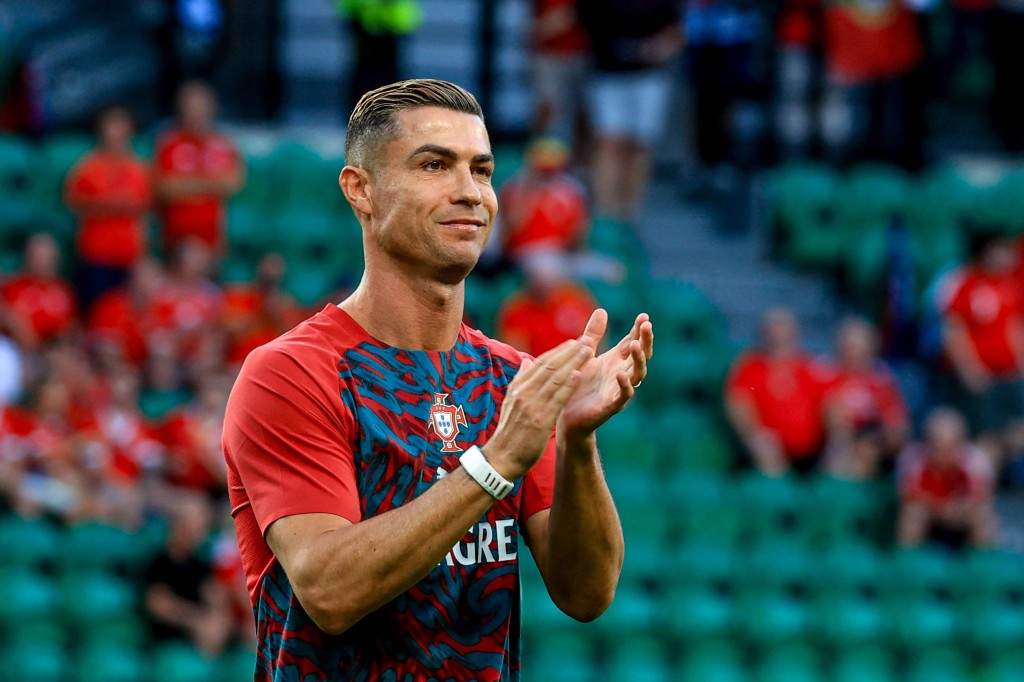
Evaluating the international retirement of Cristiano Ronaldo requires stripping away nostalgic sentiment and applying the cold calculus of high-performance sports economics, tactical geometry, and institutional succession. Most coverage treats the exit of a generational athlete as a singular biographical milestone. In reality, an international retirement of this magnitude represents a structural shock to a national federation's tactical architecture, commercial valuation, and talent pipeline. For Portugal, the departure of its all-time leading appearance-maker and goalscorer solves an acute tactical bottleneck while simultaneously creating an immediate commercial and psychological vacuum.
The Tactical Opportunity Cost of Legacy Selection
In elite international football, selection policy operates under severe constraints: compressed preparation windows, zero transfer market liquidity, and binary tournament elimination formats. Over the final phase of Ronaldo’s international tenure, the Portuguese national team—and by extension the Portuguese Football Federation (FPF)—confronted a classic resource-allocation dilemma known in operations management as the sunk-cost trap.
Because Ronaldo’s historical output established an unmatched baseline of goals and appearances, coaching staffs faced immense institutional and public pressure to build offensive schemes around his diminishing physical profile. Modern international football at the highest tier demands synchronized, high-intensity counter-pressing (gegenpressing) from the forward line to compress vertical pitch space. When a central striker lacks the explosive deceleration and repeat-sprint capacity required to initiate the first line of press, the defensive block fractures. Midfielders are forced to cover excess lateral and vertical meters, accelerating systemic fatigue by the 60th minute of knockout matches.
The tactical consequences manifested in three distinct operational bottlenecks:
- Vertical Compression Failure: Without a mobile focal point to stretch opposing defensive lines through off-ball diagonal runs, opponents safely pushed their defensive blocks 10 to 15 yards higher. This compressed the half-spaces where Portugal’s primary creative assets—players like Bruno Fernandes, Bernardo Silva, and Vitinha—operate most effectively.
- Predictable Attacking Vectors: Opposing defensive coordinators simplified their match preparation by isolating the penalty box. Rather than defending fluid positional rotations across the front three, defenders could focus on denying aerial service and blocking central shooting lanes, reducing Portugal's expected goals (xG) per possession sequence against low-block defenses.
- Set-Piece Monopolization: Direct free-kick and penalty duties remained centralized despite declining conversion probabilities from open-play dead-ball situations outside the penalty area. Reallocating these touches to higher-percentage specialists immediately raises the team's baseline expected goal differential over a tournament cycle.
By stepping aside, Ronaldo removes the political friction that prevented managers from fully executing positional fluidity. Portugal can now deploy a false-nine configuration or a high-pressing mobile striker, unlocking the rotational chemistry that defines top-tier club systems.
The Four Pillars of Transitional Instability
While tactical efficiency improves on paper, removing a centralizing figure introduces acute organizational risk. National teams do not operate in a vacuum; they function as high-pressure social systems where hierarchy dictates on-field decision-making during moments of crisis. The transition out of the Ronaldo era exposes Portugal to four distinct structural vulnerabilities.
The Gravity Vacuum
In basketball analytics, "gravity" measures how much a single player distorts an opposing defense simply by existing on the court. Even in his late thirties, Ronaldo commanded disproportionate defensive attention. Center-backs shadowed his movements inside the six-yard box, inadvertently creating pockets of space at the top of the penalty area for late-arriving midfielders. Removing that gravitational pull forces Portugal’s remaining attackers to generate their own separation through complex passing combinations rather than relying on individual reputation to pin defenders back.
Penalty Box Conversion Variance
High-volume shot generation means nothing without clinical execution in low-scoring knockout environments. Ronaldo’s primary enduring trait late in his career was elite spatial awareness inside the penalty area—specifically, his ability to detach from a marker's blindside during cross delivery. Portugal’s incoming generation of forwards excels in link-up play and ball progression, yet few possess the pure box-hunting instincts required to convert low-probability half-chances against deep, disciplined defenses. Expect a short-term spike in possession metrics paired with higher variance in actual goal conversion.
Psychological Anchoring in Knockout Scenarios
Tournament football is governed by extreme emotional volatility. Having a veteran who has navigated dozens of high-stakes elimination matches provides an invisible psychological floor for younger teammates. When a squad concedes an early goal in a quarterfinal, younger players instinctively look toward the established alpha for behavioral cues. Without Ronaldo on the pitch, the emotional burden shifts instantaneously to the secondary leadership tier—principally Ruben Dias, Bruno Fernandes, and Bernardo Silva. None of these players have previously operated without the protective shield of Ronaldo absorbing all media scrutiny after a poor team performance.
The Media Lightning Rod Effect
For nearly two decades, Ronaldo absorbed roughly 80% of the media oxygen surrounding the Portuguese national camp. Whether Portugal won or lost, the post-match narrative centered on his performance, body language, or milestone chasing. This allowed emerging talents like Rafael Leao, Goncalo Ramos, and Joao Neves to develop in relative psychological comfort. His exit removes that shield. Every missed penalty, tactical misstep, or group-stage draw will now fall squarely on the shoulders of the current core, testing their resilience under unfiltered domestic and international scrutiny.
Commercial Valuation and the FPF Revenue Function
To understand the true scale of this retirement, one must examine the balance sheet of the Portuguese Football Federation. Over the past twenty years, the FPF transformed from a mid-tier European federation into a global commercial powerhouse, largely indexed to a single human asset.
Federations generate revenue through three primary streams: broadcast rights distribution, corporate sponsorships, and friendly match appearance fees. Ronaldo acted as a massive multiplier across all three categories:
- Appearance Fee Arbitrage: In international friendlies, match promoters pay tiered fees based on guaranteed star participation. A Portugal fixture featuring Ronaldo commanded appearance fees comparable to Brazil or Argentina. Without him, the FPF’s negotiating power in non-competitive exhibition markets drops immediately, reducing liquid capital available for grassroots infrastructure and youth academy subsidies.
- Sponsor Renewal Friction: Global kit manufacturers and tier-one corporate partners structure long-term federation deals using tiered royalty projections tied to global jersey sales and digital impressions. While Portugal boasts a deep roster of recognizable club stars, none possess the cross-demographic, non-football consumer recognition that drives mass-market retail volume in North America, Asia, and the Middle East.
- Digital Engagement Compression: Social media metrics—engagement rates, video views, and global search volume—serve as the modern currency for commercial sponsorship renewals. The FPF’s digital channels experienced exponential growth fueled by Ronaldo’s personal following. The federation’s marketing apparatus must now pivot from a celebrity-driven broadcast model to a collective, narrative-driven brand strategy centered on team identity and tactical aesthetics.
Historical Precedents in Post-Superstar Restructuring
Evaluating how other elite footballing nations navigated the exit of a singular, era-defining icon provides a reliable baseline for predicting Portugal's trajectory. Two distinct historical models emerge: the Argentine Compression Model (pre-2021 structural adjustments around Lionel Messi) and the Swedish Post-Ibrahimovic Realignment.
When Zlatan Ibrahimovic initially retired from international duty with Sweden following Euro 2016, pundits predicted an immediate collapse in competitive viability. The exact opposite occurred. Stripped of the obligation to funnel every attacking transition through a dominant, stationary target man, Sweden reverted to a rigid, hyper-organized 4-4-2 collective. Work rate across all ten outfield players equalized, defensive compactness improved dramatically, and Sweden subsequently qualified for the 2018 World Cup—eliminating Italy in the process—and reached the quarterfinals. The lesson is clear: removing a dominant individual often forces a squad to rediscover collective tactical discipline.
Conversely, nations that fail to replace the departed icon’s leadership hierarchy suffer prolonged periods of underachievement despite superior raw talent. Following the exits of their "Golden Generation" anchors, several European sides fell victim to leadership fragmentation, where multiple club captains competed for tactical influence on the pitch without a clear pecking order. Portugal’s technical staff must prevent this exact fracture by establishing an unambiguous on-field chain of command before the next competitive qualifying cycle begins.
Limitations of the Post-Ronaldo Tactical Reset
Assuming that Ronaldo’s departure automatically guarantees tournament silverware is a classic analytical error. Removing a bottleneck exposes secondary constraints that were previously masked by the primary issue.
First, tactical fluidity does not cure structural defensive vulnerabilities. Portugal’s aggressive full-back positioning frequently leaves the central defensive pairing isolated against rapid counter-attacks. Regardless of who leads the forward line, transitioning from possession to defensive shape remains a systemic coaching challenge that personnel changes alone cannot resolve.
Second, international managers suffer from severe time scarcity. Implementing complex, synchronized pressing triggers—the very system that benefits most from Ronaldo’s absence—requires hundreds of hours of repetitive training ground drills. Club managers get daily contact; national team coaches get ten-day blocks separated by months of club competition. Consequently, Portugal’s theoretical tactical ceiling may rise, yet their practical execution will remain capped by the structural time constraints inherent to international football.
Operational Blueprint for the Portuguese Technical Staff
To capitalize on this transition and mitigate the predictable commercial and psychological downturns, the Portuguese Football Federation and its coaching staff must execute a disciplined three-phase operational pivot over the next twelve months.
- Formalize the Tactical Identity Immediately: Abandon hybrid systems designed to accommodate legacy profiles. Commit fully to a high-tempo, positional-play framework utilizing a mobile front three capable of interchanging positions across all five vertical corridors. Standardize pressing triggers based on the club systems of the core midfielders to minimize training ground friction.
- Restructure the Leadership Hierarchy: Publicly and privately anoint a single, undisputed on-field captain—ideally a central defensive organizer like Ruben Dias—supported by a defined three-man leadership council. Eliminate ambiguity regarding set-piece takers by assigning roles strictly via rolling twelve-month conversion data rather than seniority.
- Re-anchor Commercial Positioning Around Collective Brand Equity: The FPF commercial division must proactively renegotiate sponsorship KPIs away from individual star metrics before renewal cycles hit. Shift marketing capital toward docuseries-style behind-the-scenes access that builds parasocial equity around the squad’s younger, charismatic personalities, insulating the federation's revenue floor against the inevitable drop in casual global viewership.
Portugal now possesses one of the deepest, most technically proficient talent pools in world football. By treating Cristiano Ronaldo’s retirement not as an emotional wake, but as the removal of a structural constraint, the federation can transition from a legacy-dependent enterprise into a modern, agile competitive system.