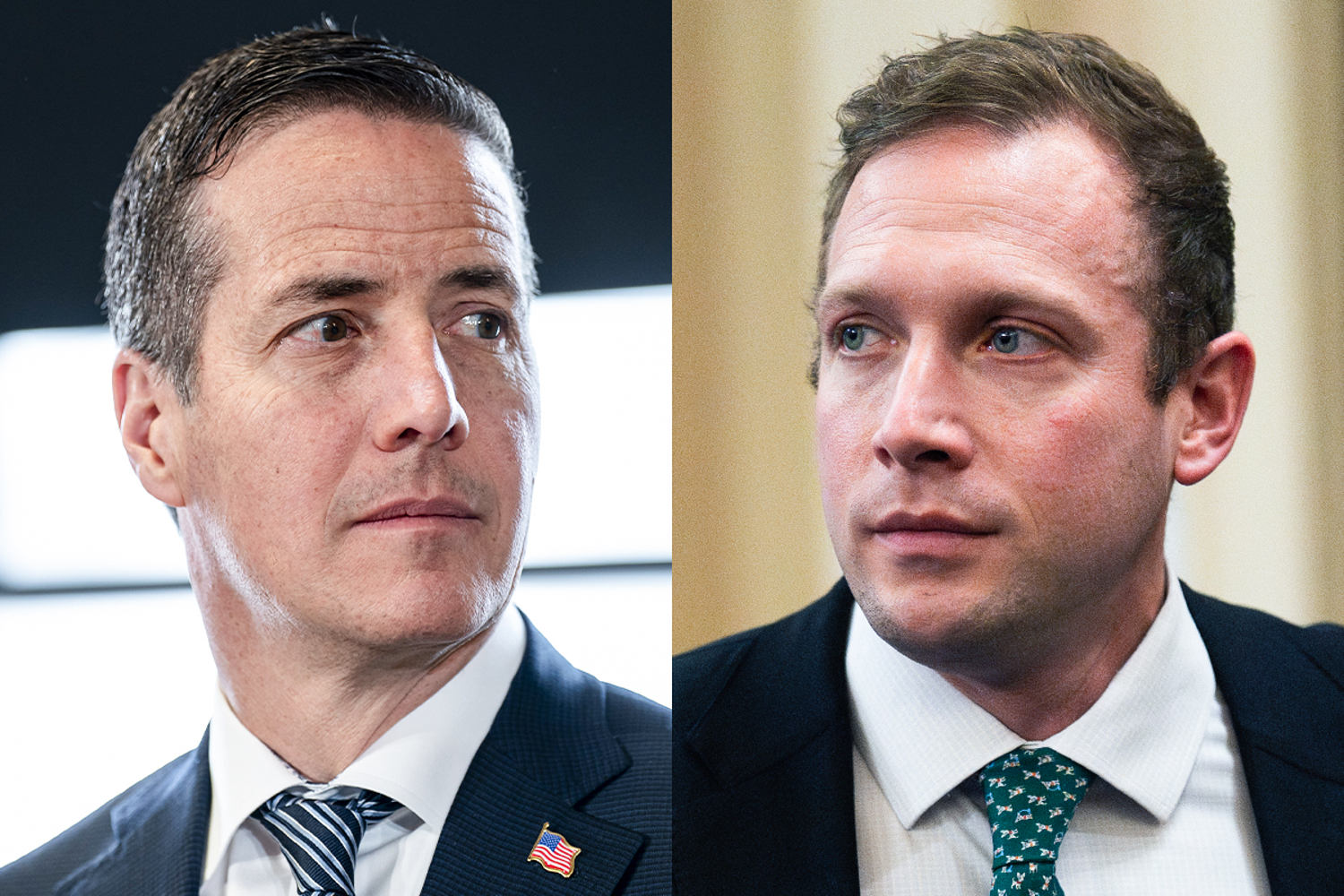
The intersection of private misconduct and public accountability creates an acute structural failure within legislative bodies. When personal conduct involves verified legal filings of severe domestic abuse, the mechanisms designed to vet federal officeholders routinely stall under the weight of partisan self-preservation. This tension broke into public view when United States Senator Bernie Moreno formally declared that his former son-in-law, Representative Max Miller, is unfit for congressional service. The declaration follows a succession of detailed legal accusations from Emily Moreno, alleging physical violence including weapon brandishing, scalding water incidents, and child endangerment. Evaluating this crisis requires examining the institutional thresholds of character, the communication strategies deployed by defensive incumbents, and the predictable breakdown of internal party discipline.
The Anatomy of the Public Defense Playbook
Faced with mounting legal exposure and a threatened reelection bid, incumbent officials facing character-based disqualification deploy a standardized counter-offensive. Representative Miller utilized a live-streamed broadcast to mount his defense, relying on inverted logic and temporal discrepancies to discredit the claims. The tactical framework of this defense rests on three distinct operational maneuvers: You might also find this connected article interesting: The Edge Of The Table Where History Turns.
- The Behavioral Incongruity Fallacy: Pointing to post-incident civility, such as shared meals or playground visits, to retroactively invalidate claims of abuse. This ignores established domestic violence research which demonstrates that appeasement and normalcy preservation are standard survival mechanisms for victims.
- The Attribution of Malice: Characterizing legal filings and protective orders as retaliatory weapons manufactured exclusively for custody leverage or political sabotage.
- The Evidentiary Diversion: Directing public attention toward external repositories, such as file-hosting links or selective document dumps, while bypassing formal judicial cross-examination.
This architecture is designed to appeal to low-information segments of an electorate by substituting volume for verification. Yet, when immediate family members with intimate operational knowledge of the subject—such as Senator Moreno—step outside traditional partisan omertà to label the behavior erratic and dangerous, the defensive architecture fractures.
Institutional Thresholds and the Cost of Inaction
Political parties operate as risk-mitigation engines. Candidate retention models prioritize vote margins and caucus numbers over behavioral hygiene, creating a high tolerance for individual misconduct until public visibility imposes an unbearable operational cost. The threshold where private conduct translates into an absolute disqualification from public office is theoretically anchored to basic standards of character, but practically bound to electoral calculus. As discussed in detailed reports by The Guardian, the results are worth noting.
When an allegation crosses from rumor into the domain of sworn affidavits, police reports, and restraining order requests, the liability curve steepens sharply. Institutional delay mechanisms typically involve strategic silence, as demonstrated by leadership groups waiting out the news cycle. However, familial testimony short-circuits this insulation. Senator Moreno noted that keeping the matter private became impossible once the behavioral pattern posed an active threat during custody execution.
The systemic risk of retaining an embattled official extends beyond reputational damage. Legislative efficiency requires a baseline of trust and focus. An officeholder consumed by protective orders, defamation countersuits, custody litigation, and public rebukes from legislative colleagues operates at a severe functional deficit. The opportunity cost of a compromised representative translates directly into lost constituent responsiveness and committee distraction.
The Structural Mechanics of Accountability Failures
Why do legislative bodies struggle to self-purge members facing credible accusations of violence? The answer lies in the incentive structures governing primary elections and committee assignments.
First, the fear of setting a precedent creates a race to the bottom. Lawmakers hesitate to establish ethical thresholds that could later be weaponized against political allies within their own caucus. Second, the decentralized nature of primary ballots means that local brand loyalty often outweighs national reputational harm. An incumbent can theoretically survive severe personal scandals if their localized donor base and activist networks remain insulated from the broader narrative.
The intervention by a senior senator from the same party alters this dynamic by removing the defense of partisan bias. When the critique originates from within the familial and political inner circle, the insulation fails. The debate shifts from a partisan dispute over media fairness to a stark referendum on institutional integrity.
Future legislative stability requires predefined metrics for character disqualification. Relying on ad hoc public statements and familial intervention is a reactive, fragile strategy. The establishment of objective behavioral benchmarks within congressional ethics rules remains the only structural remedy capable of preventing compromised actors from leveraging the protective inertia of party politics.