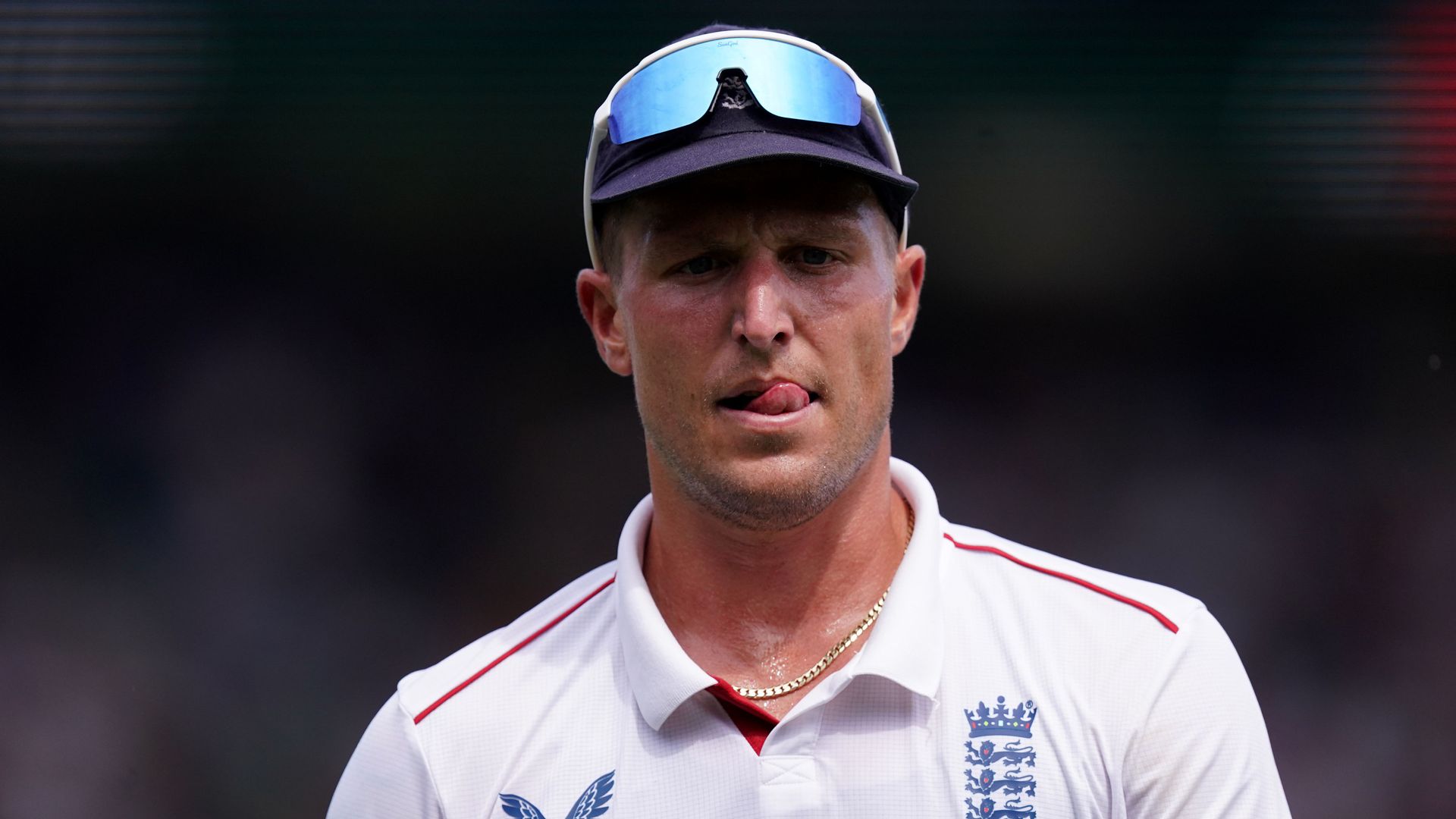
High-performance sporting environments operate under strict operational parameters where behavioral variance directly threatens competitive output. When an international fast bowler is filmed in handcuffs outside a provincial nightclub, the immediate public discourse focuses on individual moral failure. This narrative mistakes a systemic failure of risk management for a personal indiscretion. The decision by the England and Wales Cricket Board and the independent Cricket Regulator to stand down fast bowler Brydon Carse ahead of the second Test against Pakistan highlights a predictable friction point between professional autonomy and institutional control. Analyzing this event requires looking past the superficial details of a late-night altercation in Derby to examine the structural mechanics of team culture, behavioral risk functions, and the economics of squad availability.
Modern athletic organizations function as high-stakes corporate entities where brand equity and athletic output are deeply intertwined. Every centrally contracted player represents a significant capital investment. When external variables—such as alcohol consumption, unmonitored social environments, and late-night public interactions—intervene, they introduce high-variance disruptions into the preparation vector. The systemic issue facing elite cricket management is not the absence of rules, but the optimization curve between paternalistic oversight and adult accountability.
The Behavioral Risk Matrix in Elite Squads
To understand why elite athletes repeatedly trigger disciplinary reviews, one must construct a risk matrix based on three distinct variables: operational downtime, environmental exposure, and peer-group dynamics.
During competitive windows, athletes experience intense physiological stress followed by abrupt periods of decompression. The transition from high-intensity concentration to unstructured downtime creates an operational vacuum. When regional fixtures release players back to county teams, the protective bubble of the national setup dissolves. The player moves from a controlled ecosystem with standardized dietary, sleep, and behavioral protocols into an unmonitored local environment.
The mechanism of failure typically follows a precise sequence:
- A successful sporting outcome generates a collective psychological release and a social licence to celebrate.
- Unstructured social settings provide uncontrolled proximity to the general public, where parasocial interactions frequently turn volatile.
- Alcohol consumption lowers behavioral inhibition, narrowing risk assessment horizons and amplifying minor slights into physical confrontations.
- Digital surveillance infrastructure ensures that any localized friction is instantly recorded, broadcast, and monetized, triggering mandatory institutional responses.
In Carse's case, the sequence was initiated following a County Championship victory for Durham against Derbyshire. Celebrations turned contentious following an external interaction outside a venue, ending with a brief police detention before de-arrest. Though no criminal charges were filed, the threshold for institutional intervention was crossed the moment digital evidence of a national team member in handcuffs entered the public domain.
The Regulatory Cost Function
The response mechanism of governing bodies reveals an underlying compliance cost function. The establishment of the independent Cricket Regulator shifted disciplinary enforcement away from internal management, removing subjective bias but enforcing strict procedural rigidity. When a high-profile incident occurs, the governing body faces a binary choice: swift pre-emptive sanction or prolonged defense of player conduct.
Standing down a player while an investigation is pending acts as a damage-mitigation strategy. It isolates the broader squad from media distraction, maintains the moral authority of the leadership group, and satisfies external stakeholders that behavioral standards are non-negotiable. However, this creates a secondary cost: competitive degradation. Depleting fast-bowling reserves mid-series forces tactical compromises, reduces training intensity, and disrupts the marginal gains accumulated during preparation camps.
The governance approach under newly appointed leadership had recently trended toward deregulation—specifically, the relaxation of blanket curfews in favor of trusting players to act as mature professionals. This strategic pivot relies on an assumption of rational self-regulation. Yet, behavioral economics demonstrates that collective environments often succumb to diffusion of responsibility. When prominent figures are present during late-night incidents—as observed with former captains and senior seamers in recent months—the implicit signal to younger or fringe squad members is that proximity to elite status confers immunity or tolerance.
Systemic Vulnerabilities and Precedent
The recurrence of alcohol-linked controversies across successive tours and home series indicates a systemic vulnerability rather than isolated anomalies. Similar interventions earlier in the summer—affecting players such as Gus Atkinson and Ben Stokes—established a clear regulatory precedent. When rules or cultural expectations are recalibrated without strict enforcement mechanisms, boundary testing increases.
The economic reality of professional sport dictates that talent scarcity often clashes with behavioral compliance. Selectors require elite assets on the field to maximize win probabilities, yet governing bodies must protect the institutional brand from reputational contagion. When these two imperatives collide, the regulatory apparatus invariably prioritizes institutional protection over short-term athletic utility. Sonny Baker's introduction into the Test squad as bowling cover is a direct operational patch designed to absorb the shock of structural redundancy.
Managing high-performance human capital requires moving beyond reactive suspensions and toward predictive behavioral architecture. Organizations that fail to engineer controlled decompression pathways during transitional phases will continue to absorb the collateral damage of public-domain volatility. The strategic imperative for sports administration is to decouple personal downtime from unmonitored public exposure, establishing structural boundaries that protect both the athlete's autonomy and the organization's asset value without relying on ineffective bans or fragile gentleman's agreements.

.jpeg?width=1200&auto=webp&trim=181%2C0%2C181%2C0)