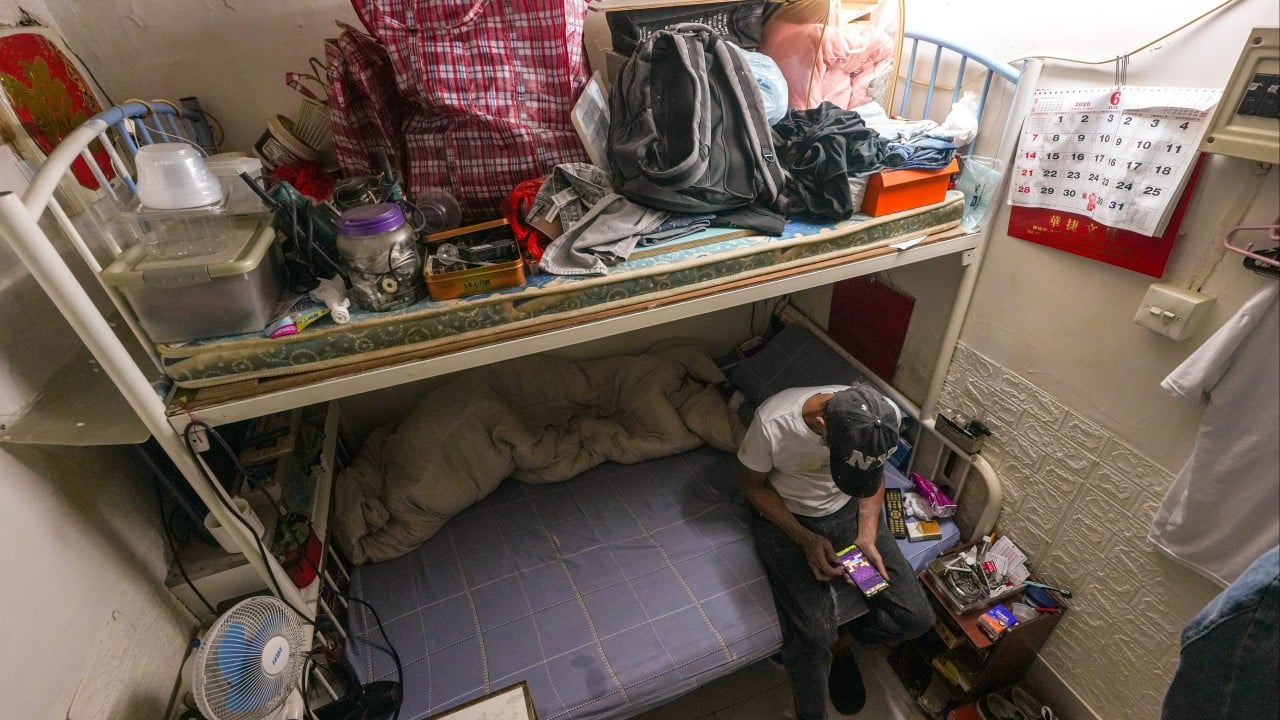
The ceiling has a voice. It cracks at three in the morning when the temperature drops, a dry, sharp sound like a dry twig snapping underfoot. Master Chan knows that sound intimately. He has lived beneath it for nine years, folded into a space so compact that his knees nearly touch the opposite wall if he stretches while sitting on his cot. His kitchen is a two-burner stove sharing counter space with his sink, his laundry hangs from brackets drilled directly into the concrete window frame, and his door opens inward because outward there is only a narrow, communal corridor where two people cannot pass side by side.
He is one of the thousands living inside the subdivided flats that form the hidden spine of the city. These are apartments sliced and quartered by landlords wielding drywall and ambition, turning single-family homes into hives of tiny, rentable cells. For decades, these spaces existed in the shadows of the housing market, born of desperation and sustained by necessity. They were places where the arithmetic of survival took precedence over building codes.
Then came the new numbers.
A regulatory shift arrived, drafted by administrators sitting in bright, expansive offices far removed from Master Chan’s three-morning ceiling cracks. The new rules were precise, cold, and absolute. Every subdivided flat—or "housing unit" as the legal briefs politely call them—must now meet strict minimum standards for floor area, ceiling height, fire safety, window ventilation, and structural integrity. A flat cannot simply be a box anymore. It must be a certified box. It must have windows that actually catch a breeze. It must have walls that do not crumble when a hammer taps them. It must offer enough room for a human being to lie down without touching two boundaries at once.
Logic demanded it. Decency required it. But reality proved far more stubborn.
When the deadline approached, the operators of these subdivided properties faced a sudden, terrifying choice. They could pour thousands of dollars into massive renovations—tearing down walls, rebuilding plumbing lines, reducing the total number of units per floor—or they could face the heavy hand of the law. They could comply, or they could fold.
Instead, a vast majority of them did something else entirely. They stepped forward and asked for time.
Statistics do not usually weep, but these do. Operators representing over sixty percent of the city's known subdivided flats officially applied for a three-year grace period. They did not reject the rules. They simply stopped at the threshold, palms outstretched, begging for tomorrow.
Consider what happens next in a room that measures sixty square feet.
If the state enforces compliance overnight, the math breaks down with catastrophic speed. The units that fail to meet the new standards must be shut down. The drywall partitions must come down. The tenants must pack their plastic bags and leave. But where do they go? The public housing waitlist stretches out like an endless highway with no visible exits. Private rents in the open market soar past the reach of cooks, security guards, and elderly retirees who collect cardboard from the alleys at dawn.
A sudden crackdown does not eradicate substandard housing; it eradicates the shelter of the people living inside it. It turns regulation into displacement.
This is the central tension of the grace period. It is not an administrative loophole designed to let bad actors off the hook. It is a trembling pause. It is a recognition that you cannot legislate poverty out of existence by simply locking the door from the outside.
Landlords are businessmen, yes, many of them hardened by years of extracting profit from the margins of society. Yet among them are also aging retirees who bought a single flat as their pension, dividing it up just to pay for their own medicine. When they file for the three-year extension, they are buying time to figure out how to rebuild without going bankrupt. They are looking at blueprints, calculating costs of concrete, steel, and fire-rated doors, realizing that the math does not balance.
And the tenants are watching.
Master Chan doesn't know the legal terminology for a statutory grace period. He doesn't know what a compliance threshold or a structural remediation order means in administrative jargon. He only knows that every time a government official walks down his hallway with a clipboard, his chest tightens. He knows that his rent is cheap, and he knows that cheap is the only vocabulary his bank account speaks.
If his landlord gets three years, Master Chan gets three more years of sleeping under his cracking ceiling. Three more years of boiling noodles over the sink. Three more years of stability, fragile though it may be.
That is the invisible stake in this bureaucratic game. Behind every percentage point in the official compliance reports lies a human calendar.
The grace period is a reprieve, but it is also a ticking clock. Three years passes like a dropped stone through water—fast, silent, and then gone, leaving only ripples. What happens when the grace period expires? Will the walls be wider? Will the ceilings be higher? Or will the city find itself standing in the exact same spot, staring at the exact same problem, having merely delayed the inevitable reckoning?
For now, the applications pile up on mahogany desks in municipal offices. Ink dries on forms stamped with urgent requests for extension.
Master Chan turns off his two-burner stove, wipes the counter with a damp rag, and listens to the evening traffic hum through the narrow gap of his single window. He looks at the walls that encircle his life—walls that are too thin, too close, too temporary. He does not know if they will be torn down tomorrow or three years from now. He only knows that tonight, the room holds him, and for now, that is enough to keep the dark at bay.