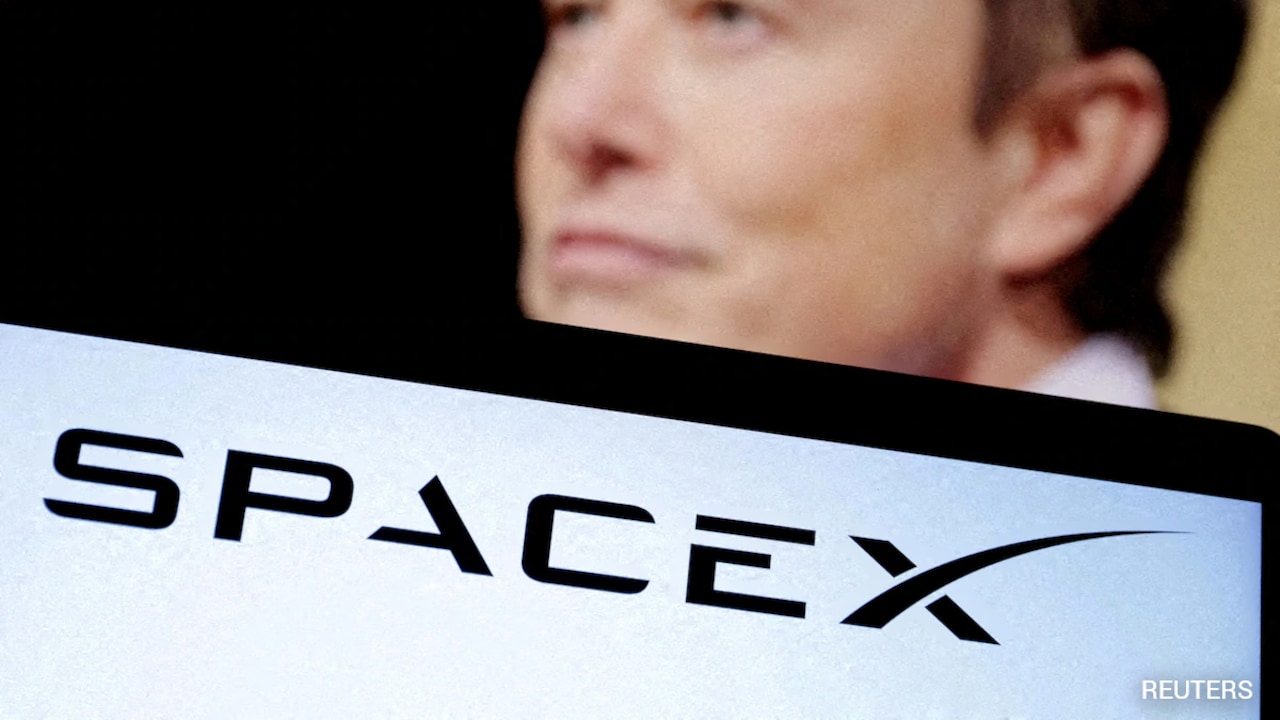
You’ve probably heard that SpaceX is finally going public. Elon Musk is rewriting the financial playbook again, setting a $135 share price for a mind-boggling $1.75 trillion market debut. The headlines are screaming about how this will turn Musk into the world’s first trillionaire.
But there’s a much bigger, quieter story playing out beneath the surface of this historic Nasdaq listing. If you enjoyed this piece, you should read: this related article.
When a company of this scale goes public under the ticker SPCX, it isn't just an event for retail traders and Wall Street hedge funds. It is a massive wealth-generation engine for early investors, board members, and highly connected political figures who quietly accumulated private shares over the last decade. Because Musk has closely aligned his business empire with the current Washington establishment, this colossal valuation spike means that a select group of wealthy officials and administration insiders are about to see their personal fortunes explode.
Understanding this IPO requires looking past the rocket launches. You need to look at how private power, federal contracts, and massive capital are colliding in 2026. For another angle on this story, refer to the latest coverage from Forbes.
The Trillion Dollar Collision of Space and Capital
Let's look at the raw numbers because they are genuinely staggering. SpaceX intends to raise up to $75 billion. That easily eclipses the previous global record set by Saudi Aramco back in 2019.
But if you look at the actual financials disclosed in the prospectus, the company is far from a safe, stable cash cow. SpaceX brought in $18.7 billion in revenue last year, heavily driven by Starlink. Yet, it lost a stunning $4.28 billion in the first three months of this year alone. Its accumulated deficit sits at a wild $41.3 billion.
Why is a company losing billions valued at nearly two trillion dollars? Because of artificial intelligence and deep government integration.
Musk merged SpaceX with xAI earlier this year, and the company is burning cash to build out solar-powered space data centers and AI infrastructure. It even secured a massive option to buy AI coding tool Cursor for $60 billion. Investors aren't buying a rocket company; they’re buying a sprawling national security, satellite intelligence, and AI monopoly.
How Washington Insiders Win Big on Private Shares
This brings us to the core mechanism of how public listings transfer wealth to the politically connected. For years, SpaceX remained private, meaning you couldn’t just open a brokerage account and buy a share. Instead, shares were restricted to institutions like Alphabet—which is looking at a massive 64x return on its early investment—and ultra-wealthy individuals via private tender offers.
Over the last few years, as Musk integrated himself deeply into political circles, a network of powerful figures, donors, and eventual administration officials managed to get allocations in these private secondary markets. When a company jumps from an $800 billion private valuation to a $1.75 trillion public valuation in less than six months, those private holdings double in value overnight.
For wealthy officials sitting in government chairs, this presents a massive conflict of interest—and an unprecedented windfall. They hold pre-split shares that are suddenly liquid. While regular federal employees face strict rules about owning individual stocks that conflict with their duties, top-tier political appointees frequently utilize diversified trusts or complex disclosure loopholes to maintain their stakes in private tech giants.
The Ethics of the Ultimate Government Contractor
The real tension lies in the sheer volume of taxpayer money flowing into SpaceX. The federal government fundamentally relies on this single company. NASA relies on Falcon and Starship rockets for its primary launch capabilities. The Pentagon relies on Starshield, the classified military version of Starlink, for satellite communications and battlefield intelligence.
When government officials oversee defense budgets, space policy, and regulatory approvals for satellite constellations, their personal financial ties to SpaceX matter immensely. If an official owns a piece of the company, every single government contract signed directly boosts their personal balance sheet.
Some critics warn that this creates a closed loop of accountability. The Department of Government Efficiency, heavily influenced by Musk himself, has spent the past year pushing to slash regulatory red tape. Conveniently, those exact regulatory rollbacks speed up SpaceX launches, bypass environmental reviews, and accelerate the very AI data center deployments that are driving the IPO valuation to the moon.
What This Means for Your Investment Strategy
If you're looking at this IPO thinking about buying in on day one, you need to understand the structural game being played. Musk is restructuring governance to maintain absolute authority, holding 82.4% of the voting power through Class B shares. He isn't selling a single share of his own. He's using public money to fund his cosmic ambitions while keeping the steering wheel entirely in his hands.
Don't buy into the hype blindly. The institutional insiders and political elites have already made their fortunes on the massive run-up from the private rounds. Buying at a $1.75 trillion valuation means you are paying top dollar for a company that is currently burning billions on unproven space-based AI technology.
If you want to navigate this market shift, your next steps are clear. Track the institutional lock-up periods to see when early insiders actually start cashing out their shares after the June 12 listing. Watch the defense procurement bills moving through Congress this summer. If the administration continues to funnel exclusive satellite and launch contracts to SpaceX while starving legacy defense contractors, the valuation might just hold. If regulatory scrutiny returns, that $41 billion accumulated deficit could come crashing down on retail investors' heads. Keep your eyes on the policy, because in 2026, policy is what dictates profit.