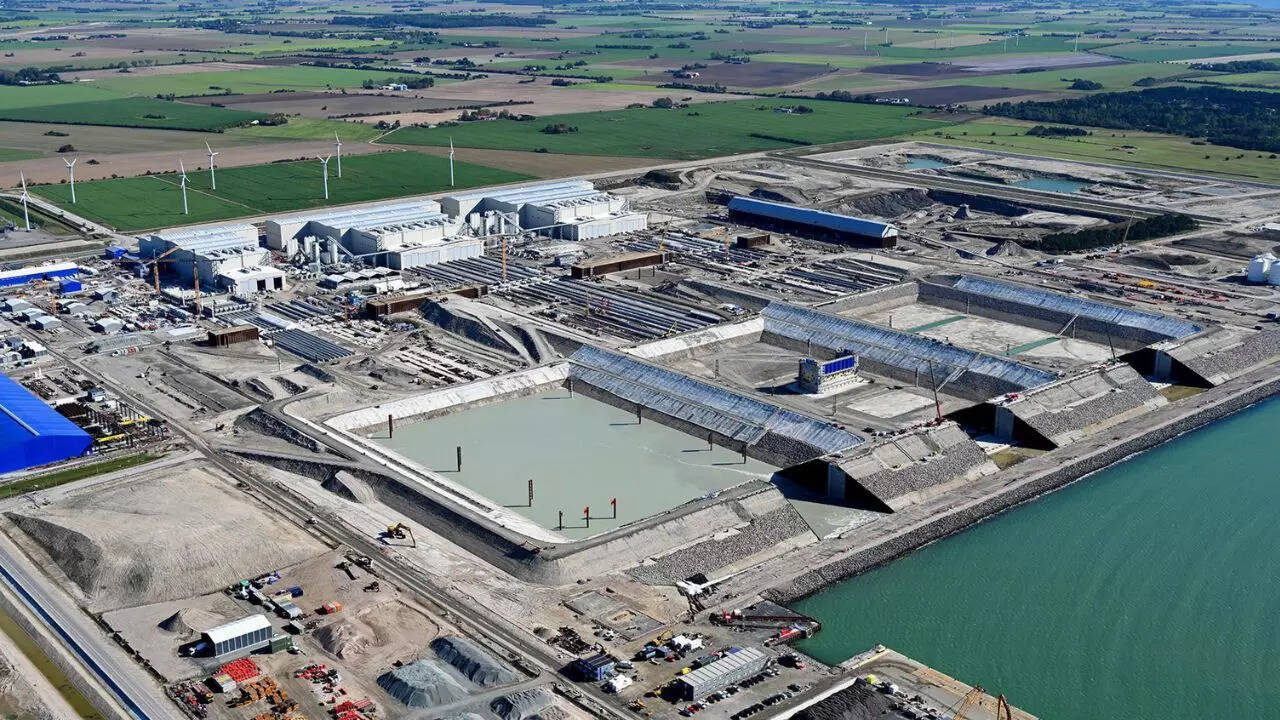
Imagine sinking 89 concrete blocks, each the size of a skyscraper turned on its side, into the bottom of the Baltic Sea. That's the Fehmarnbelt Fixed Link. It isn't just a big bridge or a standard tunnel. It’s a 11-mile trench filled with 73,000-ton segments that will soon let you drive from Denmark to Germany in ten minutes. For decades, the only way across this stretch of water was a 45-minute ferry ride or a massive detour. Now, Europe is rewriting its geography.
Most people don't realize how much of a logistical nightmare this project actually is. We aren't talking about boring through rock with a giant drill like the Channel Tunnel. This is an immersed tunnel. Engineers are pre-casting these monstrous sections on land, floating them out, and dropping them into a precisely dredged ditch on the seabed. It's basically the world's most expensive and dangerous set of LEGOs. Learn more on a similar issue: this related article.
Why the Fehmarnbelt Tunnel Changes Everything
The current transit between Hamburg and Copenhagen is slow. If you’re hauling freight, you’re either stuck waiting for a boat or burning fuel driving hundreds of extra miles around the Jutland Peninsula. The new link slashes rail travel time between the two cities from five hours to under three. That’s a massive win for the climate and for regional trade.
It's about more than just speed. The Fehmarnbelt Fixed Link creates a green corridor. By shifting freight from trucks to electric trains, the project aims to gut the carbon footprint of Northern European logistics. Critics often point to the environmental cost of the construction itself—all that concrete and dredging—but the long-term math favors the tunnel. You can't build the future without breaking some ground, or in this case, the seafloor. Further reporting by The Verge highlights similar perspectives on this issue.
The scale is hard to wrap your head around. Each of the 79 standard tunnel elements is 217 meters long. There are also 10 "special" elements with a basement floor for maintenance equipment. When you stand next to one of these things in the factory at Rødbyhavn, you feel tiny. Really tiny.
The Factory That Builds Giants
To make this happen, Femern A/S, the Danish state-owned company in charge, had to build one of the largest factories on the planet. They didn't just need a workspace; they needed a production line for concrete titans.
- Five separate production lines operate around the clock.
- Each segment is cast in sections to manage the heat generated by curing concrete.
- Once a block is finished, the ends are sealed with massive bulkheads to make it buoyant.
I've seen plenty of big builds, but the precision here is what actually matters. If a segment is off by a few centimeters, it won't seal. If it doesn't seal, the whole thing is a multibillion-dollar bathtub. They use a "shearing" process where the water pressure itself helps push the segments together to form a watertight gasket. It’s a simple physical principle scaled up to a terrifying degree.
Dealing with the Baltic Sea Bed
Dredging a 18-kilometer trench isn't exactly a walk in the park. The seabed between Denmark and Germany consists of various layers of sand, clay, and silt. Removing all that material without destroying the local ecosystem is a tightrope walk.
The project faced years of legal challenges from environmental groups in Germany. They were worried about the noise affecting porpoises and the sediment choking out seagrass. To fix this, the team uses "bubble curtains"—basically a wall of rising air bubbles—to dampen the sound of underwater work. It's a clever solution to a problem that nearly killed the project in its infancy.
Solving the 73,000 Ton Weight Problem
You might wonder how you move something that weighs as much as 14,000 elephants. You don't lift it. You float it.
After a segment is finished in the factory, the dry dock is flooded. The segment, sealed tight, bobbles like a cork. Tugs then tow it out to the exact GPS coordinates above the trench. From there, it's a slow, controlled descent. Engineers use high-precision ballast systems to take on water and sink the segment into place.
Once it's down there, they pump the water out of the space between the new segment and the previous one. The external water pressure—thousands of tons of it—slams the two pieces together. It’s a permanent, mechanical bond. Then they cover it with protective layers of stone and sand so anchors or shipwrecks don't smash into the concrete.
The Economic Reality of the Belt
This isn't a cheap hobby. The budget sits around 7 billion euros. Denmark is footing the bill, backed by EU grants and loans that will be paid back by tolls. Germany is mostly responsible for the upgraded road and rail connections on its side of the border.
Some folks in Germany are still skeptical. They see it as a Danish vanity project that brings noise to their quiet coastal towns. But look at the Scania region in Sweden and how the Øresund Bridge transformed Malmö. It turned a fading industrial city into a tech hub connected to Copenhagen. The Fehmarnbelt link will likely do the same for the "Fehmarnbelt Region," turning a collection of isolated towns into a unified economic powerhouse.
Safety Under the Sea
What happens if a car breaks down or a fire starts 40 meters below the waves? The design includes two double-lane tubes for cars and two separate tubes for electric trains. There’s also a dedicated service and emergency gallery.
The tunnel has a state-of-the-art ventilation system. It also features high-intensity lighting designed to keep drivers alert and reduce the "tunnel vision" effect that leads to accidents. Unlike the Eurotunnel, which is rail-only, this gives people the freedom of their own wheels while offering a high-speed rail alternative. It's the best of both worlds, honestly.
What This Means for Your Next Road Trip
By 2029, you’ll be able to drive from the Scandinavian Peninsula all the way to Central Europe without ever needing a ferry timetable. That’s a big deal. The "Bird's Flight Line"—the direct route between Copenhagen and Hamburg—becomes a reality.
If you're planning a trip through Europe in the next decade, keep an eye on this. The construction site at Rødbyhavn even has a viewing platform and a museum. It's worth a look if you're a fan of seeing humans beat the odds through sheer engineering will.
Don't expect the ferry to disappear immediately, though. Some people still love the 45-minute break for a coffee and a view of the sea. But for the rest of us? We’ll be in the tunnel.
To stay updated on the progress, check the official Femern A/S project site. You can see the live count of how many segments are currently submerged. If you're an engineer or just a hobbyist, looking into their concrete cooling techniques is a masterclass in material science. Start looking at the transit maps for 2030 now to see how your travel routes will shift. The map of Europe is shrinking, and this tunnel is the reason why.