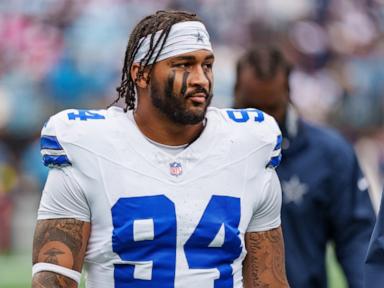
Modern football helmets and updated concussion protocols didn't save Marshawn Kneeland. The post-mortem brain tissue analysis of the former Dallas Cowboys defensive end revealed he was suffering from stage 1 chronic traumatic encephalopathy when he died by suicide at age 24. This diagnosis shatters the comfortable illusion that better technology and strict medical sidelines have made the sport safe. It's a wake-up call for everyone from NFL front offices to youth league parents.
Kneeland was found dead in November 2025 following a police pursuit in Frisco, Texas. He was in the middle of his second NFL season, a rising star who had done everything right according to the modern playbook of athlete safety. His family donated his brain to the Boston University CTE Center. The results released by the Concussion and CTE Foundation tell a chillingly familiar story about the cost of playing elite collision sports. Don't miss our previous article on this related article.
The Myth of Safe Football and the Marshawn Kneeland CTE Reality
We keep telling ourselves that the game has changed. Every year, we hear about new helmet designs, specialized padding, and independent neurologists standing on the sidelines ready to pull players out of the action. But the Marshawn Kneeland CTE findings expose the fundamental flaw in that logic.
Dr. Chris Nowinski, CEO of the Concussion and CTE Foundation, pointed out the stark truth following the announcement. Kneeland played his entire career under the protection of modern concussion protocols. He wore the best gear available. Yet, he still developed a progressive brain disease. If you want more about the history here, CBS Sports provides an excellent summary.
The issue isn't the hits that cause obvious concussions. The real culprit is the sheer volume of repeated head impacts. Every single snap involves a micro-collision for a defensive lineman. These sub-concussive hits don't trigger medical timeouts. They don't show up on injury reports. But they pile up, year after year, starting from childhood. Kneeland started playing tackle football at age 7. By the time he reached the NFL, his brain had endured nearly two decades of constant rattling.
What Stage 1 CTE Actually Means for a Young Athlete
People often associate CTE with older retired players who can't remember their keys or wander away from home. Stage 1 is different, but it's no less devastating. It strikes players in the prime of their lives.
Researchers at Boston University slice the disease into four distinct stages. Stage 1 is the starting point, where tiny spots of abnormal tau protein begin to build up in the frontal cortex of the brain. This area controls things like mood, impulse control, and decision-making.
Dr. Ann McKee, director of the Boston University CTE Center, noted that finding this disease in young athletes is no longer a surprise. Her team has found CTE in nearly half of the athletes they've examined who died before turning 30. It's a staggering statistic. Think about that next time you watch a college game or an NFL Sunday. Half of the young men who die early and leave their brains to science already have irreversible brain damage.
The family's statement highlighted that while the diagnosis doesn't excuse or fully explain the final tragic moments of his life, it provides crucial context. The disease causes subtle shifts. It triggers depression, sudden mood swings, and erratic behavior. For a 24-year-old trying to balance the immense pressure of the NFL with everyday life, an un-diagnosable brain disease is an unseen weight pushing them toward the edge.
Changing the Way We Protect Future Generations
If better helmets can't stop CTE, what can? The answer is uncomfortable for football purists because it requires changing how the game is practiced and played.
We need to drastically cut down the number of head impacts. That means eliminating tackle football for kids under 12, a recommendation backed by a 2018 study showing that early exposure to tackle football causes symptoms to appear much sooner in life. It also means forcing colleges and NFL teams to severely limit contact during practices throughout the entire calendar year.
If you are a parent or a coach, stop relying on the brand of your child's helmet to keep them safe. It won't. Pay attention to how often they hit their heads. Push local leagues to adopt flag football for younger age groups. For older players, monitor behavioral changes aggressively. Look for sudden isolation, uncharacteristic anger, or erratic decisions.
The Concussion and CTE Foundation runs a dedicated HelpLine at ConcussionAndCTE.org for families navigating these exact fears. If someone you know is struggling with mental health or suspected brain trauma effects, reach out immediately. You can also contact the National Suicide and Crisis Lifeline by calling or texting 988. Don't wait for a tragedy to start looking for answers.