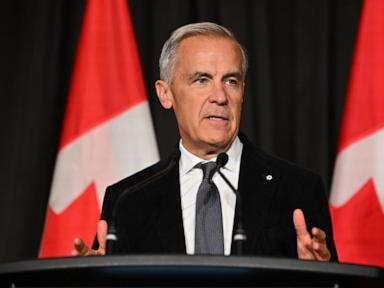
Donald Trump wants every factory, dollar, and tech startup moving south across the border. That is no secret. His administration has made it clear that American soil should be the default destination for global capital. But Canadian Prime Minister Mark Carney is playing a different game entirely, trying to convince international heavyweights that billions of dollars belong in the True North instead.
At the inaugural Canada Investment Summit in Toronto, Carney stood in front of global investors managing trillions of dollars and pitched a simple thesis. If capital wanted the United States, it would already be there. The fact that these financiers showed up in Toronto means Canada still holds cards that Washington cannot easily replicate.
The Real Reason Global Investors Are Listening
You cannot look at modern Canadian economic strategy without acknowledging the elephant in the room. Roughly three-quarters of Canadian exports historically head south. That reliance creates structural vulnerability whenever a protectionist wave hits Washington. Dominic Barton, former Canadian ambassador to China, noted that the current trade friction serves as a necessary jolt for the country.
Carney leans heavily into institutional stability and resource security. While the U.S. markets offer massive scale, they also come with heavy regulatory volatility and political turbulence. Carney is pitching a combination of clean energy, critical minerals, and a stable regulatory framework that appeals to risk-conscious institutional funds. When international funds manage upwards of 120 trillion dollars globally, capturing even a fraction of that outside traditional U.S. hubs changes the economic game.
Diversification Beyond the Border
Relying on a single trading partner is a bad business model for any nation, let alone a G7 economy. Carney knows this better than most, given his background in central banking. His administration has aggressively pushed trade missions and diplomatic tours from Manila to Europe, aiming to double non-U.S. exports over the next decade.
This push isn't just about rhetoric. Bilateral talks have seen friction, particularly after trade talks collapsed and rebooted through delicate phone diplomacy involving top aides like Stephen Miller and Jamieson Greer. Yet, Canada is refusing to play the role of a passive neighbor waiting for Washington's permission to grow. By courting European partners and expanding into Asian markets through summit appearances, Canada is hedging its bets against American protectionism.
Trust as an Economic Asset
Carney argued during the summit that Canada's greatest competitive advantage is intangible. You will not find trust on a corporate balance sheet. In a global economy fractured by trade wars, supply chain shocks, and shifting geopolitical alliances, predictability matters.
Investors want to know that contracts will be honored and regulations won't shift overnight based on a social media post. That predictable environment is what Carney sells when he travels from Toronto to European parliaments or Asian economic forums.
What Comes Next for Canadian Capital
The reality on the ground is that summits rarely produce immediate wire transfers. Real capital deployment takes twelve to eighteen months of due diligence. Skeptics point out that Canada still faces productivity lags, high domestic debt, and regulatory hurdles that slow down major infrastructure projects.
If Carney's bet pays off, Canada will successfully reposition itself not as an economic annex of the United States, but as an independent hub for global wealth. If it fails, the pull of the American market will simply prove too strong to resist. For now, the strategy is aggressive, outward-looking, and entirely unapologetic.