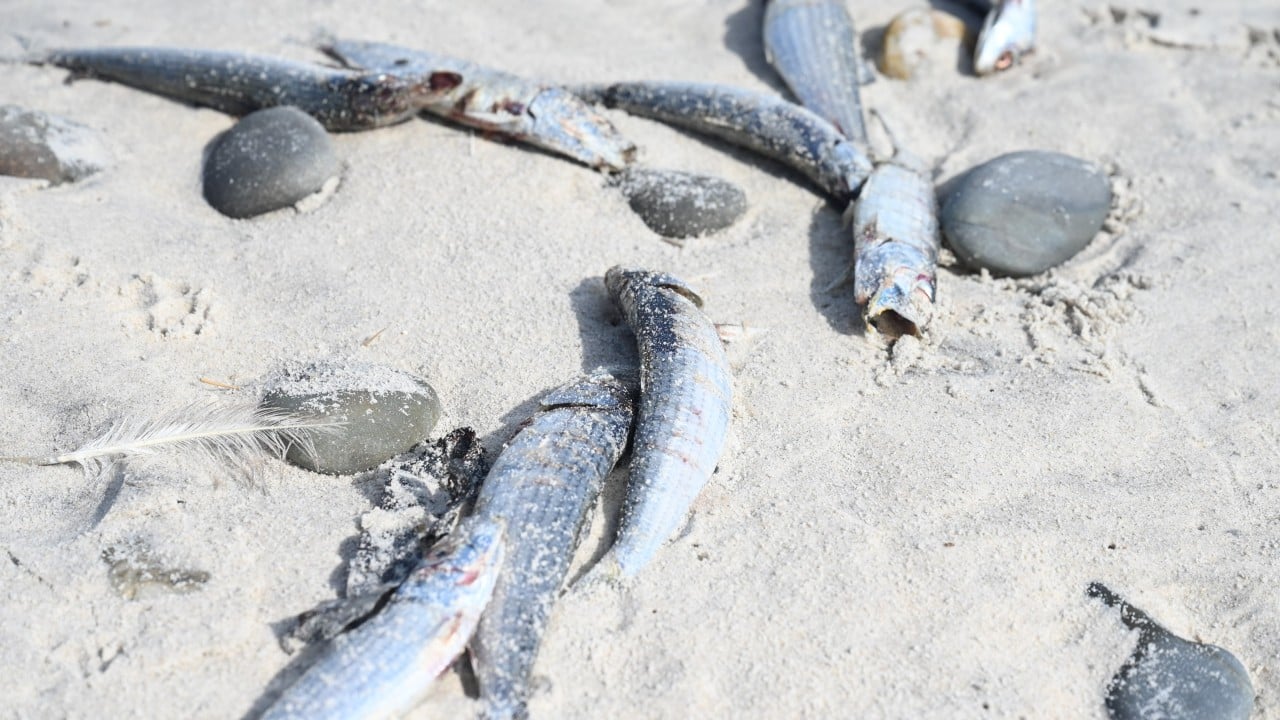
Massive accumulations of dead sardines washing ashore along the South African coastline from the Western Cape to Gqeberha have triggered an urgent diagnostic effort to isolate the primary driver of mortality. The appearance of thousands of pelagic fish on beaches, alongside offshore observations of floating biomass and operational disruptions at critical coastal infrastructure such as the Koeberg nuclear power plant, demands a structural deconstruction of the ecological and pathological vectors at play. Establishing whether the detection of the pilchard herpesvirus represents a primary pathogenic kill switch or a secondary opportunistic infection requires a systematic evaluation of environmental stressors, viral load mechanics, and marine hydrodynamic conditions.
The Diagnostic Ambiguity of Viral Detection
Laboratory sequencing of tissue samples retrieved from affected areas has confirmed the widespread presence of pilchard herpesvirus genetic material, matching historical genetic signatures documented during past mortality events in Australia by a margin of 99.7 percent. However, the presence of viral DNA within a sample does not automatically equate to single-cause etiology. Pathological verification depends on separating correlation from causation through systematic biomarker analysis.
The investigation rests on three distinct diagnostic variables:
- Viral Load Concentration: Initial testing of dead sardines revealed consistently high concentrations of viral material, whereas surviving or apparently healthy specimens collected from adjacent waters displayed lower or undetectable viral titers.
- Tissue Pathology: Active disease caused by herpesvirus typically induces severe gill inflammation, cellular hyperplasia, and structural thickening of the respiratory lamellae. Confirming mortality requires histological proof that this tissue degradation preceded death rather than occurring as a post-mortem artifact.
- Latent Reservoir Distribution: The identification of the virus in low quantities among asymptomatic populations indicates that the agent may exist endemically within the marine ecosystem, requiring an external environmental catalyst to trigger systemic collapse.
Environmental Amplifiers and Stressors
Pathogens rarely operate within a closed biological vacuum. The timing of the South African mortality event aligns with distinct physical oceanographic anomalies along the western and southern coasts, specifically intense coastal upwelling, abnormally cold nearshore water masses, and localized oxygen depletion zones within bays such as St Helena Bay.
These environmental shifts impose severe physiological costs on pelagic schooling species. Rapid drops in water temperature combined with hypoxic conditions compromise the immune response of the fish, shifting the balance from a stable host-pathogen equilibrium to acute systemic disease.
The mechanism of decline operates through a compounding cost function:
$$Total Mortality = f(Viral Load) \times g(Hypoxic Stress) \times h(Thermal Shock)$$
When environmental variables cross specific physiological thresholds, the energy required for osmoregulation and respiration outstrips metabolic intake. Under these conditions, a latent or low-level viral presence transitions rapidly into an aggressive pathology, characterized primarily by respiratory failure as gill tissues thicken and lose functional surface area.
Infrastructure and Commercial Impact Vectors
The biological crisis extends beyond marine ecology into industrial operations and food safety frameworks. The concentration of floating and stranded biomass near coastal installations creates immediate operational bottlenecks. Water intake systems designed for industrial cooling, such as those utilized by energy generation facilities near Cape Town, face structural clogging from dense aggregations of marine mortality, forcing operators to curtail power output to prevent mechanical damage.
Concurrently, the emergence of a high-visibility fish kill creates an immediate consumer confidence crisis, necessitating strict regulatory bifurcation between wild-stranded biomass and commercial supply chains.
The management of safety protocols depends on clear operational distinctions:
- Vector Isolation: Pathological assessments confirm that pilchard herpesvirus is host-specific to pilchards and sardines, presenting zero zoonotic transmission risk to humans or terrestrial mammals.
- Thermal Kill Standards: Commercially canned sardine products undergo mandatory high-temperature retort sterilization protocols capable of neutralizing viral and bacterial pathogens entirely, ensuring that industrial processing completely eradicates any biological risk present in raw stocks.
- Handling Prohibition: Regulatory authorities enforce strict bans on the collection, distribution, or consumption of beach-stranded fish due to rapid post-mortem bacterial decomposition rather than the presence of the virus itself. Internal putrefaction occurs swiftly in marine strandings, rendering unmanaged tissue hazardous due to secondary microbial proliferation.
Ecosystem Cascades and Population Modeling
The broader consequence of a widespread pelagic mortality event involves structural changes to the marine food web. Small pelagic species occupy a foundational trophic position, serving as primary energy transfer vectors for apex predators, including commercial fish stocks, marine mammals, and localized seabird colonies such as the African penguin.
Fisheries management models must recalibrate biomass estimates by incorporating real-time mortality deductions into recruitment and spawning stock biomass calculations. If the geographic extent of the mortality spans hundreds of kilometers from the West Coast through the Southern Coast, the demographic impact on specific age classes will dictate stock recovery timelines over subsequent seasons. Historical precedent from international events indicates that surviving populations eventually develop functional herd immunity, stabilizing over multi-year cycles as the ecosystem adapts to the persistent presence of the virus.
Integrate real-time histological pathology with high-resolution oceanographic tracking to decouple primary viral pathogenicity from environmental asphyxiation triggers, establishing continuous monitoring protocols across pelagic migration routes before setting annual total allowable catch limits.