Wind strips the skin from your face in Stanley. It is a persistent, howling thing that rolls off the South Atlantic, unchecked by any tree, sweeping across corrugated tin roofs and gray gravel streets until it smashes into the cold iron ribs of rusted shipwrecks rotting in the harbor.
To look at a globe from a comfortable room thousands of miles away, the Falkland Islands look like a careless scatter of breadcrumbs tossed off the southern tip of South America. A remote speck. An afterthought of empire.
Ask Elena, who runs a small guesthouse there, what the map means. She will tell you it means everything. Every sheep farm, every peat bog, every white-sand beach where penguins waddle past unexploded landmines left over from a war fought before her children were born. Her life is bound to a fragile promise of sovereignty written in ink and defended with blood four decades ago.
And then, a name echoes out of Washington, D.C.
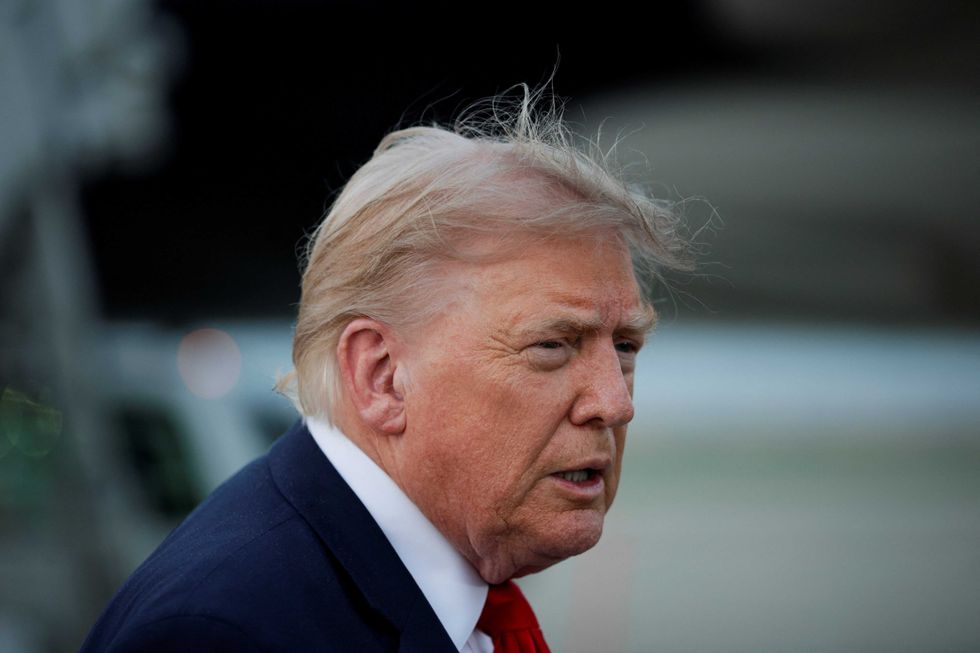
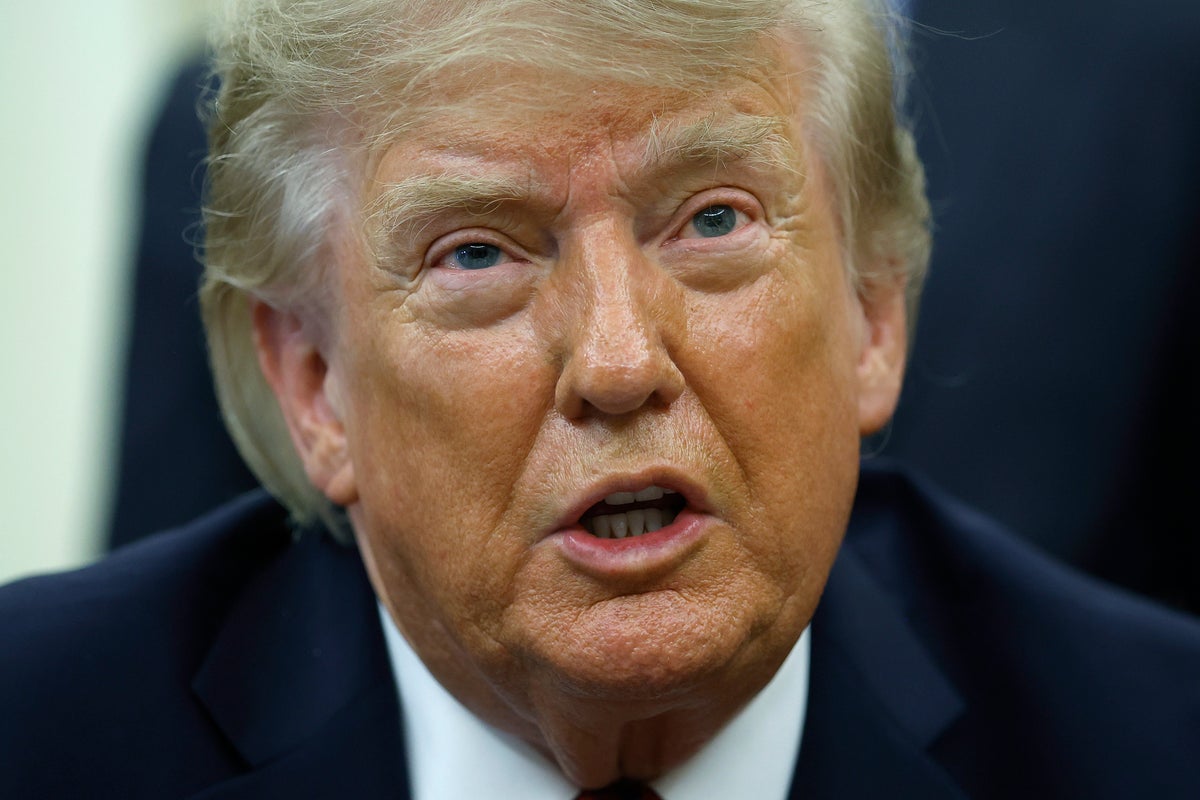
Donald Trump. A casual mention. A tossed-off sentence. He is reviewing the United States position on the Falkland Islands.
Silence descends on the islands. It is not the quiet of peace. It is the quiet of a house built on sand when the tide starts turning.
The Geography of Disquiet
Diplomacy rarely smells like salt and diesel. In standard diplomatic cables, the Falklands—or the Malvinas, depending entirely on which side of the water you stand—are a geopolitical chess piece. For decades, the official stance of the United States has been a careful, studied neutrality. Washington acknowledges British administration while avoiding a definitive stance on the underlying sovereignty dispute with Argentina. It is a diplomatic tightrope walk designed to keep two vital allies from tearing each other’s throats out.
When that tightrope begins to fray, the people below look up.
Imagine sitting in a kitchen in Buenos Aires, watching the evening news. The anchor speaks of national honor, of maps printed incorrectly in foreign textbooks, of stolen territory lingering in the shadow of the twentieth century. To a young student in Palermo Soho, the islands are a grievance that refuses to heal. A ghost limb that still aches when it rains.
Now, shift the lens two thousand miles south. Imagine standing on a sheep farm on East Falkland. The wind never stops. The phone rings. A neighbor tells you what was said on a television screen in North America.
Security is an invisible architecture. You only notice it when it vanishes.
The United States does not own the islands. It does not garrison troops there. Yet, American weight on the international scale acts as a gravitational pull. If Washington shifts its diplomatic posture—even by a fraction of a degree—the balance of power in the Southern Cone shivers. Argentina senses an opening. London stiffens its spine. And the three thousand people who call the wind-scoured rocks home realize how terribly small they are against the ambitions of giants.
History Written in Iron
To understand why a casual political review sends shockwaves through the South Atlantic, you have to look backward. History here is not a dusty textbook; it is a rusted helmet found half-buried in the heather.
In the spring of 1982—autumn in the southern hemisphere—a military junta in Argentina seized the islands. What followed was a seventy-four-day war that cost nearly a thousand lives. British task forces sailed eight thousand miles to retake the territory. Jet fighters screamed through the low clouds. Ships burned in San Carlos Water.
When the guns fell silent, the graves remained.
For the islanders, the trauma of invasion is woven into daily existence. Every vehicle has a story of who drove it during the blackout. Every family remembers the sound of aircraft engines in the dark. That history forged an absolute identity. The people here vote overwhelmingly to remain British. They value their sheep, their fisheries, their isolation, and their flag.
Yet, geography is an unyielding master. Argentina is right there, just a few hundred miles to the west. The mainland is where the fresh produce comes from, where the emergency medical flights sometimes head, where the historical claim never sleeps.
When a superpower hints at altering its diplomatic equilibrium, it validates one narrative while crushing another. It treats human lives as leverage.
The Calculus of Ambition
Why now? Why would an American political figure thousands of miles away poke at a dormant volcano in the South Atlantic?
Global politics is rarely about the place itself. It is about alignment. It is about wooing mineral-rich nations, balancing trade routes, and signaling strength to regional players. Argentina has economic weight, lithium reserves, and a shifting political landscape that Washington watches closely. If a friendly gesture toward Buenos Aires on a historical grievance costs the United States nothing on paper, the temptation for transactional diplomacy is high.
This is the central tragedy of modern geopolitics. High-stakes chess played by men who have never smelled the peat smoke of Darwin or felt the sting of a Patagonian gale.
Consider what happens next in the quiet parlors of the Foreign Office in London. Diplomats scramble. Emergency memos are drafted. Words are weighed like precious metals. Should we issue a statement? Does silence look weak? Does a protest look desperate?
Meanwhile, Elena is downstairs in her guesthouse, checking the oil heater. She looks out the window at the harbor. The gray water laps against the rusted hull of a stranded trawler. The wind howls. The sheep graze on the hillside, completely indifferent to the pronouncements of presidents and prime ministers.
They live in the crosshairs of a map that refuses to settle.
The Edge of the World
There is a profound loneliness to islands. They are bounded by water, isolated by weather, and vulnerable to the tides of history.
When outsiders toy with their status, they are not just debating lines on a cartographer’s parchment. They are playing with the security of children walking to school, the pensions of elderly farmers, and the psychological peace of a community that has fought twice for the right to simply exist where they were born.
The review will pass through the news cycles. Headlines will flare and fade. Algorithms will move on to the next crisis, the next election, the next flashpoint.
But the wind will still blow in Stanley.
Elena will still walk the gravel paths, pulling her woolen coat tight against the chill. She will look up at the vast, indifferent sky, listening for the sound of a change she never asked for, waiting to see which way the world decides to tilt the map today.