The fluorescent lights in the Rayburn House Office Building do not flatter anyone. They hum at a low, persistent sixty cycles per second, casting a flat, bureaucratic glare over mahogany tables, paper water cups, and the anxious faces of staffers clutching thick binders.
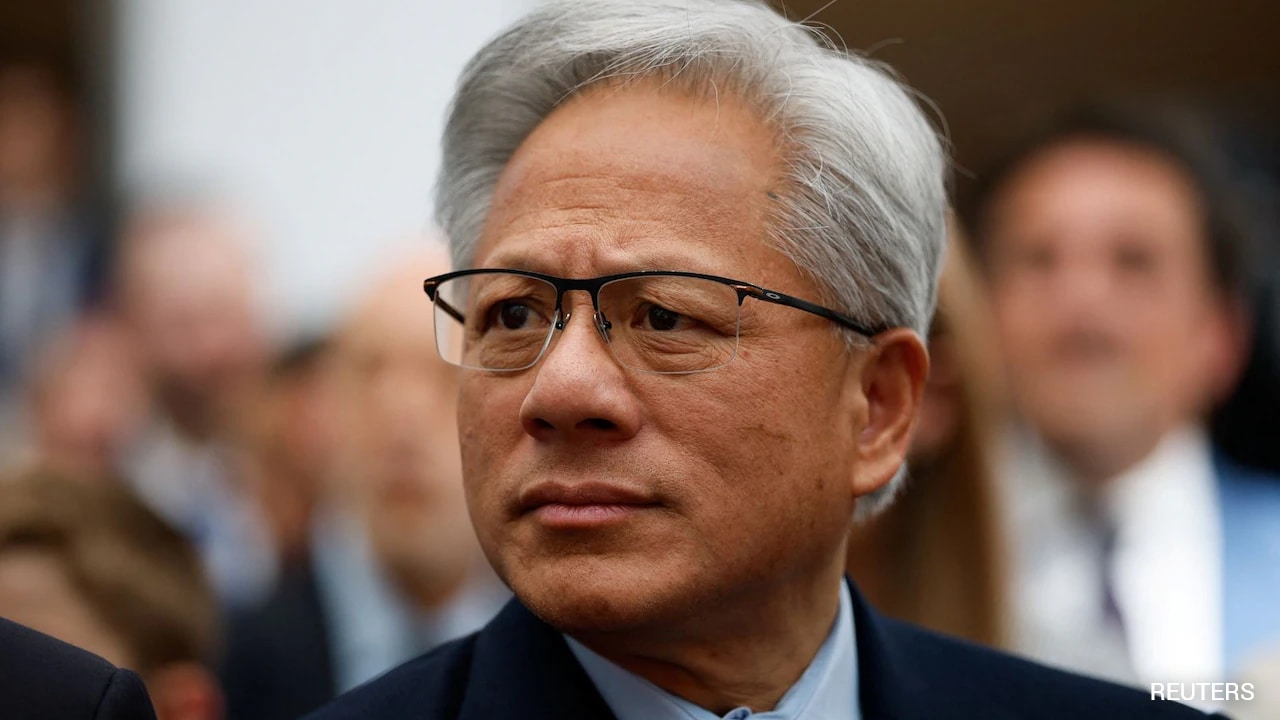
On December 1, a man in a black leather jacket—or perhaps, for this specific occasion, a dark charcoal suit—will walk into one of those rooms, raise his right hand, and swear to tell the truth. Also making headlines lately: Inside the Apple iCloud Outage Panic and Why Single-Account Architecture Fails.
His name is Jensen Huang. And the headline attached to his arrival contains a word that still feels slightly unreal to anyone who has watched the last decade of Silicon Valley history unfold.
Ex-CEO. Additional insights regarding the matter are detailed by Ars Technica.
Wait. Read that again.
For thirty-three years, Jensen Huang and Nvidia were practically the same organism. He co-founded the company in 1993 over pancakes at a Denny’s in East San Jose, sketching out a vision for graphics chips when most people still thought a computer monitor was just a glorified television screen. He survived near-bankruptcy in the late nineties. He bet the entire company on a parallel computing architecture called CUDA when Wall Street analysts openly mocked him for wasting money on a niche market nobody wanted. And then, when the artificial intelligence wave finally broke over the global economy, he rode it to a multi-trillion-dollar valuation, becoming a rock star in a leather jacket who could move global stock markets with a single keynote speech.
Now, he is the former chief executive. And United States lawmakers have circled December 1 on their calendars to put him under oath.
To a casual observer scrolling past a dry wire service headline, this looks like routine Washington theater. Another tech titan summoned to Capitol Hill. Another round of grandstanding senators asking clumsy questions about algorithms while cameras click in the back of the room.
Look closer.
Because what happens in that hearing room on December 1 is not really about corporate governance, or quarterly earnings, or even one man’s transition out of the corner office. It is a reckoning over who actually holds the keys to the twenty-first century—and whether the people elected to govern the free world still have any idea how to steer the machine they allowed to be built.
The Weight of the Empty Chair
To understand why Congress wants Jensen Huang in that chair right now, you have to picture someone who will not be in the room.
Let us imagine a woman named Elena. She is thirty-four, a senior electrical engineer working in a mid-sized semiconductor packaging facility outside Austin, Texas. Elena does not follow Washington gossip. She cares about thermal dissipation, wafer yields, and whether her six-year-old son’s school district will finally fund a robotics club next autumn.
Three years ago, Elena’s factory was running double shifts just to keep up with demand for the high-bandwidth memory interconnects that feed Nvidia’s flagship AI processors. Her overtime pay bought her family a modest house with a backyard. She felt, for the first time in her career, that she was standing at the exact center of the future.
Then came the export controls. Then came the retaliatory supply chain restrictions. Then came the quiet, terrifying realization among policymakers in Washington that a single company, led by a single visionary founder, had effectively become the central nervous system for global artificial intelligence—and by extension, modern military strategy, biomedical research, and economic power.
When a founder steps down from an empire like that, the transition is never just a human resources event. It is a geopolitical earthquake.
Lawmakers on the House and Senate committees overseeing commerce, intelligence, and national security have spent months wrestling with an uncomfortable truth. While Huang was sitting in the CEO chair, he was the ultimate point of accountability. If export-controlled chips somehow found their way through shell companies in Southeast Asia into restricted data centers abroad, Congress knew whose name to put on the subpoena. If hyperscale cloud providers were cornering the entire global supply of compute, leaving smaller American startups and university labs starved for processing power, Huang was the man who decided how the rations were divided.
Now that he has handed over the day-to-day reins, Washington faces a chilling question.
Did the architect leave behind a blueprint that anyone else can actually control?
The Anatomy of a Monopoly Nobody Planned
There is a comforting myth in American business that monopolies are always born in smoke-filled rooms, engineered by ruthless robber barons plotting to crush their rivals.
The reality of how Nvidia conquered the world is much stranger—and far harder to regulate.
Think of the early internet as a sprawling, chaotic highway system where millions of tiny cars—traditional central processing units, or CPUs—carried small packages from one address to another very quickly. They were brilliant at sequential tasks. Do step A, then step B, then step C.
In the mid-2000s, Huang looked at graphics processing units, the chips originally built to render shadows and explosions in video games, and saw something entirely different. Instead of one brilliant mathematician solving problems one by one, a GPU was an army of thousands of simpler workers solving millions of tiny geometry problems all at the exact same millisecond.
He decided to build a software layer that would let scientists and engineers use that army for non-gaming math.
For nearly a decade, Wall Street hated it. Nvidia’s stock languished. Investors begged Huang to cut spending on CUDA and focus on reliable, predictable markets. He refused. He kept pouring billions into the software ecosystem, giving away tools to university researchers, seeding labs with free hardware, and ensuring that an entire generation of computer scientists learned to think, code, and build exclusively in Nvidia’s native tongue.
It was the equivalent of paving every road in the country with a specialized asphalt that only one brand of tire could grip—and doing it twenty years before anyone else realized cars were going to replace horses.
By the time the rest of the tech industry woke up to deep learning and large language models, the game was already over. Competitors could build faster silicon. Tech giants could spend tens of billions of dollars designing their own custom chips in-house. None of it mattered if every AI researcher on earth had already written their life’s work in CUDA.
I remember sitting in a cramped server room in San Francisco back in 2019, watching a small team of four engineers train an early language model. The room smelled like ozone and burnt dust, and the roar of the cooling fans was so loud you had to shout to be heard over the racks. One of the engineers pointed at a blinking green status light on an Nvidia server blade and laughed. "We looked at switching to a cheaper alternative last month," he yelled over the din. "It would have taken us nine months just to rewrite the code. We’d be bankrupt before we finished."
That is the invisible moat Congress is trying to understand. You cannot break up a software habit with an antitrust decree. You cannot legislate away a twenty-year head start in developer muscle memory.
Why December 1 Matters More Than a Stock Ticker
When lawmakers announced the December 1 hearing date, the official framing sounded dry enough to put a caffeinated lobbyist to sleep. Committee members indicated they want to examine supply chain resilience, compliance with federal export restrictions, sovereign AI infrastructure deals, and the governance implications of leadership transitions at systemically critical technology firms.
Translate that from Washington-speak into plain English, and the stakes become visceral.
First, there is the question of leakage. Over the past several years, the United States government has built an increasingly complex wall of trade restrictions designed to prevent advanced AI accelerators from reaching strategic adversaries. Every time the Commerce Department tightened the rules, engineers in Santa Clara went back to the drawing board, tuning down interconnect speeds just enough to comply with the letter of the law while keeping lucrative international markets open.
Lawmakers want to know what really happened behind closed doors during those engineering sprints. Did the company actively cooperate with national security objectives, or did it treat federal export controls like a regulatory puzzle to be hacked for maximum quarterly revenue? With Huang no longer bound by the daily duty of defending a stock price on earnings calls, senators are betting he might speak with a candor that no sitting CEO could ever afford.
Second, there is the quiet panic over sovereign AI. During his final years at the helm, Huang traveled the globe like a head of state, meeting with prime ministers, monarchs, and presidents from Tokyo to Paris to Riyadh. His pitch was seductive: every nation needs its own sovereign artificial intelligence, trained on its own language and culture, running on its own domestic data centers—and powered, naturally, by full-stack Nvidia infrastructure.
To leaders in smaller nations, it sounded like liberation from American Big Tech dominance.
To lawmakers in Washington, it looked perilously close to a private citizen conducting independent foreign policy, deciding which countries get to enter the AI era and on what terms.
Third—and perhaps most unsettling—is the question of what happens next. When a founder who held absolute cultural and technical authority steps aside, vacuum forces begin to pull at the enterprise. Competitors smell blood. Hyperscale customers like Microsoft, Google, and Amazon accelerate their push toward custom silicon. Foreign governments dangle massive subsidies to lure talent away.
Congress is not just summoning Jensen Huang to audit the past. They are trying to read the weather forecast for an American industrial champion entering uncharted waters without its original pilot.
The Theater and the Truth
We should be honest with ourselves about what usually happens in these hearings.
Capitol Hill is notoriously bad at questioning technologists. Most of us still wince remembering senators asking Mark Zuckerberg how Facebook makes money if users don’t pay for it, or grilling TikTok’s CEO on whether the app connects to home Wi-Fi networks. There is a very real risk that December 1 devolves into five-minute soundbite sprints, where lawmakers lecture Huang for the benefit of evening cable news clips while barely scratching the surface of how modern compute clusters actually operate.
And Huang is no amateur. Over three decades, he has mastered the art of turning technical complexity into an inspiring, almost hypnotic narrative. He does not speak in defensive corporate boilerplate; he speaks like an enthusiastic physics professor who genuinely believes he is helping humanity solve cancer, climate modeling, and protein folding. Try cornering a man who answers a question about antitrust margins with a passionate monologue about accelerating drug discovery for children.
Yet something feels different about this moment.
The sheer scale of the economic and military dependency has stripped away the old romanticism of Silicon Valley. Ten years ago, Washington treated tech founders as eccentric geniuses who deserved to be left alone to disrupt stagnant industries. Today, those same founders sit atop infrastructure more vital to national survival than steel mills in 1942 or oil refineries in 1973.
When Elena, our hypothetical engineer in Austin, clocks into her shift on the morning of December 1, she will not be watching C-SPAN. She will be inspecting microscopic solder joints under high-magnification optics, ensuring that thousands of delicate pathways conduct electricity without a single flaw.
If one pathway fails, the entire chip is scrap.
Our democracy runs on a remarkably similar fragility. For thirty years, the United States outsourced the architecture of its technological future to brilliant, relentless builders who moved faster than laws could be written. We celebrated the speed. We cashed the pension fund returns. We marveled at the magic tricks on our screens without ever asking who owned the theater.
Now the builder has stepped off the stage, and the house lights are coming up.
On December 1, Jensen Huang will sit behind a small brass nameplate, lean into a gooseneck microphone, and answer the questions of a nation trying to catch its breath. He will explain the silicon. He will explain the software. He will explain the decades of relentless execution that brought the world to this precipice.
What he cannot explain—because no single human being can—is what we intend to do with the power he left sitting on the table.