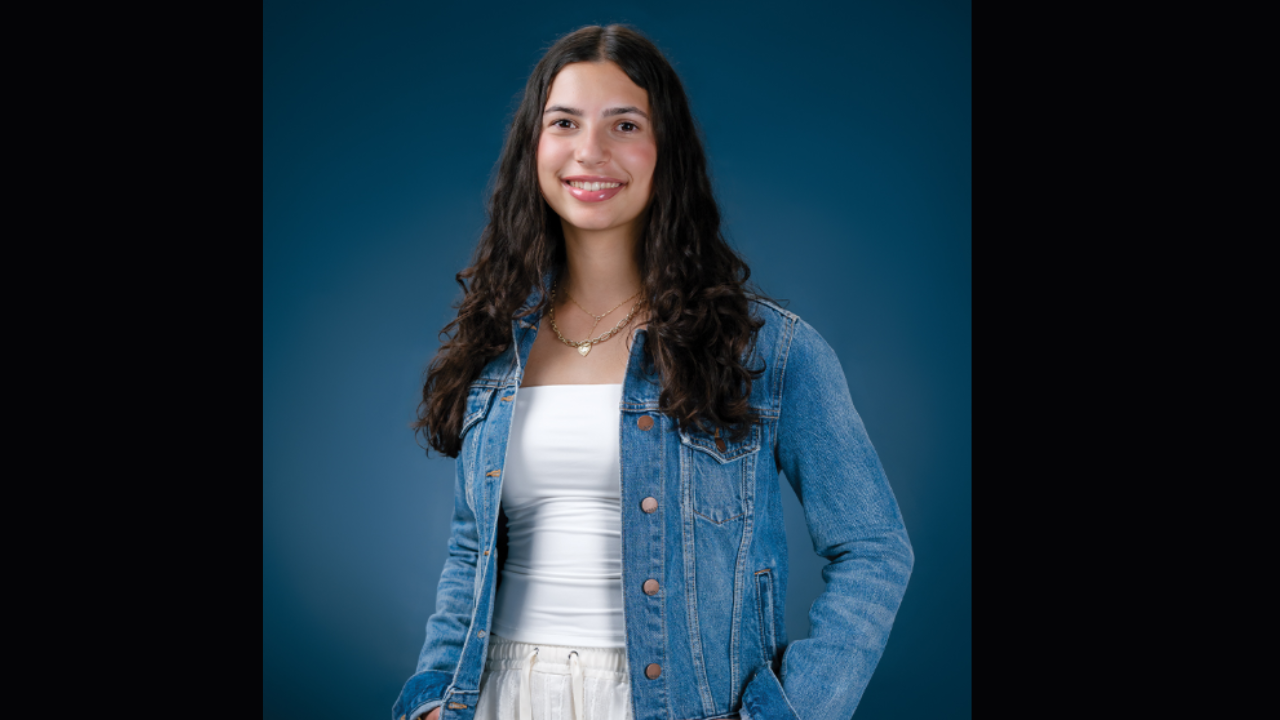
The desk lamp in Maya’s bedroom has a burned-out switch she hasn't bothered to fix, so she reads mostly by the cold, blue luminescence of her laptop screen. It is two o’clock on a Tuesday morning in October. She is eighteen, sleep-deprived, and staring at a university course catalog that looks less like an invitation to intellectual discovery and more like a high-stakes survival manual.
On one tab, she has a spreadsheet tracking starting salaries for computer science graduates. On another, an admissions forum where students two years her senior trade bitter notes about the automation of entry-level coding jobs. Algorithms now write the basic loops. Artificial intelligence parses the syntax before a human manager ever blinks.
Maya sits back, rubbing her eyes. She isn't asking herself what she loves anymore. She is asking herself what will still exist by the time she graduates.
Across the globe, thousands of young adults are sitting at identical desks, wrestling with the exact same invisible calculus. For decades, the implicit social contract of higher education was straightforward: pick a marketable major, accumulate the necessary credentials, secure the entry-level desk, and climb. The formula was rigid, predictable, and largely unquestioned.
Then the floor shifted.
When generative models stormed into the mainstream consciousness, they did not just change how people write essays or draft emails. They exposed the fragility of white-collar rote learning. Tasks that once required four years of specialized undergraduate training can now be approximated by a neural network in four seconds. Naturally, students noticed. Parents noticed. And university admissions boards are currently watching a quiet, seismic behavioral migration unfold across lecture halls and application portals.
Consider what happens next to the traditional tracking metrics of higher education.
Enrollment data reveals an unmistakable pivot. While computer science programs previously enjoyed an unchecked, astronomical surge—attracting every student who liked math and wanted a secure paycheck—growth is fracturing. In some institutions, introductory coding classes are swelling with students from non-tech majors trying to understand the tool, while specialized programming degrees face an anxious plateau. Simultaneously, departments teaching philosophy, history, creative writing, and human psychology—long dismissed by pragmatists as expensive hobbies—are experiencing a strange, paradoxical re-evaluation.
Why? Because when mechanical efficiency can be outsourced to silicon, what remains valuable is the human spark. The messy, unstructured, deeply idiosyncratic ability to ask the right question, rather than merely compute the correct answer.
To understand this shift, we have to look past the enrollment charts and examine the psychological reality of the modern student.
Take a hypothetical student named David. Two years ago, David entered college dead-set on data analytics. He was meticulous, patient, and good with numbers. By the end of his sophomore year, he spent an entire weekend building a predictive model for a class project, only to watch a free language model generate a superior version of his code with three conversational prompts typed on his phone.
The feeling wasn't anger. It was vertigo.
David describes that moment not as a defeat, but as an existential pivot. If the commodity he was paying tens of thousands of dollars to learn could be replicated by a server farm in Ohio before he finished his morning coffee, what was he actually buying? What was his labor worth?
This is the hidden crisis eating away at modern academia. It is not simply about job placement rates, though those anxiety-inducing metrics still dominate dinner table conversations. It is about purpose. Students are realizing that vocational specialization, when narrowly defined by technical execution, is a race against an opponent that never sleeps, never needs coffee, and drops its processing fees every six months.
The response from universities has been clumsy. Many institutions are rushing to bolt the words "AI-integrated" onto old syllabi like fresh coats of paint on a sinking ship. They promise students that they will learn how to prompt the machine, how to manage the algorithm, how to sit in the co-pilot seat of the future economy.
Yet, students are remarkably perceptive bullshit detectors. They know that if their entire curriculum consists of learning how to use tools that are evolving faster than the textbook can be printed, the degree will be obsolete before the ink on the diploma dries.
So, what are they choosing instead?
They are hedging their bets. We are seeing a quiet resurgence of hybrid thinkers. Engineering students are packing their schedules with ethics classes. Business majors are doubling down on anthropology, trying to understand the erratic, emotional, non-logical behavior of human consumers who refuse to act like spreadsheets. The boundaries between STEM and the humanities are blurring, not out of some utopian desire for well-rounded scholarship, but out of sheer, pragmatic desperation.
People want to become irreplaceable.
To be irreplaceable in an era of automated cognition requires leaning hard into the very traits we spent the last century trying to engineer out of our workforce. Empathy. Contextual judgment. Physical intuition. The capacity to sit in ambiguity without panicking. These are not skills that can be neatly packaged into a multiple-choice midterm or graded by an automated rubric. They are cultivated slowly, through long conversations, failed experiments, and the friction of human disagreement.
The irony is thick. For years, cultural critics warned that technology would turn us all into cold, unfeeling calculators. Instead, it is doing the exact opposite. It is forcing us to abandon our impersonally efficient habits and remember what it means to be fundamentally, awkwardly human.
When a machine can synthesize twenty academic papers in five seconds, the value of memorizing those papers drops to zero. But the value of knowing why those papers matter, of sensing the cultural undercurrent that inspired them, of arguing passionately about their flaws over lukewarm cafeteria coffee—that value skyrockets.
Maya closes her laptop. The room is quiet save for the low hum of the refrigerator down the hall.
She doesn't have all the answers. No eighteen-year-old does right now, regardless of what the university marketing brochures claim. The five-year career plan is dead, replaced by a winding, improvised trail through a shifting intellectual landscape. But as she looks down at her notebook—filled not with code snippets, but with messy marginalia about history, power, and human storytelling—she realizes something liberating.
She isn't competing with the machine anymore. She is studying everything the machine can never touch.