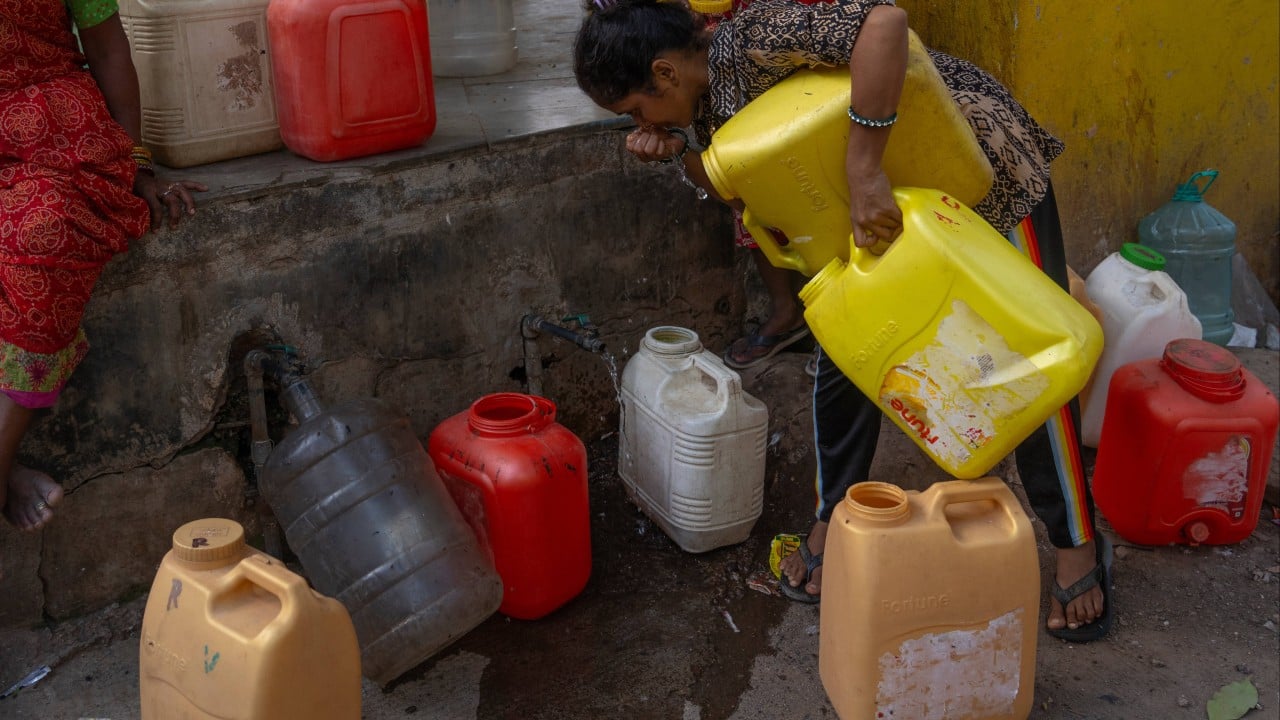
The systemic vulnerability of India’s agricultural sector is routinely masked by an over-reliance on aggregate, seasonal rainfall statistics. When the India Meteorological Department (IMD) or global meteorological agencies project a headline figure—such as the 2026 southwest monsoon tracking at 90% of its Long Period Average (LPA)—the market frequently misinterprets this as a mild, manageable slowdown. This analytical error ignores the underlying structural reality: the financial and physical viability of the kharif (summer-sown) harvest depends on a strict temporal alignment between atmospheric moisture and localized crop-sowing calendars. A macro-level average tells us nothing about micro-level water solvency.
The current 2026 weather cycle demonstrates that an early atmospheric onset can easily decay into structural scarcity. After arriving ahead of schedule on June 4, the monsoon encountered a severe upper-atmospheric blockage, stalling its advance across central, western, and northern India. This pause has widened localized rainfall deficits, depleted topsoil moisture during the critical planting window, and triggered a cascading water liability that links rural land management directly to urban retail inflation. Navigating this crisis requires moving past vague observations about "parched fields" to evaluate the specific mechanical bottlenecks now stressing the Indian economy.
The Tri-Axe Weakness: Atmospheric Drivers of the 2026 Monsoon Pause
The physical breakdown of the 2026 monsoon cannot be attributed to a single climate variable. While a developing El Niño in the equatorial Pacific introduces a hostile macroeconomic background—historically correlating with 20% of Indian drought events—the immediate operational failure is driven by three distinct, intersecting atmospheric anomalies.
- Cyclonic Deficit in the Bay of Bengal: The primary engine driving monsoon advancement inland is the consistent formation of low-pressure systems over the Bay of Bengal. These systems act as vacuum mechanisms, drawing moisture-laden maritime air across the eastern coast and funneling it into the central agricultural heartland. In the first half of June 2026, this cyclonic engine failed to materialize, leaving moisture stagnant over the ocean.
- Dry Northwesterly Intrusions: In the absence of strong tropical low-pressure systems, continental wind patterns dominated the subcontinental landmass. Hot, dry northwesterly winds from Central Asia suppressed incoming marine airflows, creating a high-pressure barrier that effectively trapped the monsoon's boundary line along peninsular India.
- MJO and Western Disturbance Decoupling: The Madden-Julian Oscillation (MJO)—an eastward-moving pulse of cloud and rainfall—offered zero structural support in the Indian Ocean during June. Concurrently, unseasonal Western Disturbances over northern India altered upper-tropospheric jet streams, preventing the traditional northward progression of the Arabian Sea arm of the monsoon.
This combination of factors fundamentally alters the risk profile for the upcoming harvest. It shifts the primary concern away from a simple, uniform reduction in total rainfall toward an acute breakdown in spatial and temporal distribution.
The Kharif Sowing Window and Acreage Elasticity
The financial stability of the rural economy operates on a highly rigid chronological timeline. Kharif crops, including rice, sugarcane, soybeans, cotton, and pulses, require specific soil moisture thresholds to ensure seed germination and early vegetative development. When the monsoon stalls for weeks at the start of this cycle, it exposes a critical economic variable: acreage elasticity.
Farmers facing a restricted sowing window do not simply wait for rain; they dynamically alter their land allocation based on real-time soil moisture calculations. If the rainfall deficit extends past early July, a predictable pivot occurs across rain-fed agricultural zones.
[June Rainfall Stalls]
       │
       ▼
[Topsoil Moisture Depletion]
       │
       ▼
[Narrowed Sowing Window]
       │
       ├──────────────────────────────────────────┐
       ▼                                          ▼
[Acreage Shrinkage: Long-Cycle Crops]     [Acreage Shift: Short-Cycle/Drought-Tolerant]
(Sugarcane, Rice, Cotton)                 (Pigeon Pea, Sorghum, Pearl Millet)
       │                                          │
       ▼                                          ▼
[Structural Yield Compression]            [Market Glut / Margin Compression]
This structural shift is already visible in high-value, long-cycle cash crops. For instance, Ministry of Agriculture data reveals that sugarcane coverage by mid-June 2026 sat at 54.08 lakh hectares—a sharp contraction of nearly 4.76 lakh hectares compared to the prior year's final acreage. Because sugarcane demands consistent, intensive irrigation across a prolonged vegetative cycle, farmers in key production belts like Maharashtra and Karnataka are actively withholding planting due to growing resource stress.
The secondary operational indicator of this acreage contraction is the immediate drop in fertilizer application. Because nutrient deployment tracks sowing progress with a near-total correlation, the current physical shortfalls and delayed purchases of urea and complex fertilizers serve as a leading market indicator. Farmers are prioritizing cash preservation over yield-enhancing inputs, guaranteeing a secondary drop in per-acre productivity even if late-season rainfall eventually recovers.
The Fallacy of the Reservoir Buffer
A common defense among market optimists is the healthy state of India's major surface water infrastructure. National monitoring shows that live storage across 166 monitored reservoirs stands at approximately 41% of capacity—well above the ten-year historical average for early summer. However, viewing this asset class as a universal buffer ignores a profound geographical and structural imbalance.
Surface reservoirs primarily serve irrigated agricultural basins, urban industrial centers, and downstream municipal grids. They offer minimal relief to the vast rain-fed agricultural belts of central and western India, which produce the bulk of the country’s pulses, oilseeds, and coarse grains. These regions rely entirely on direct, vertical precipitation to recharge the upper root zone of the soil.
Furthermore, using reservoir reserves during a summer deficit introduces a severe inter-temporal trade-off. If surface storage is drained heavily in June and July to substitute for missing rainfall, the system enters the autumn period without adequate replenishment. This creates an immediate asset bottleneck for the subsequent rabi (winter-sown) season, which depends entirely on residual reservoir volumes and groundwater recharge to sustain crops like wheat, mustard, and chickpeas. The buffer is not a solution; it is an accounting mechanism that borrows water from the future to cover a current account deficit.
Groundwater Depletion and Capital Expenditure Escalation
Where canal networks fail, groundwater extraction accelerates. The ongoing monsoon delay forces an immediate reliance on tube wells and deep borewells to sustain standing crops. This operational shift triggers an immediate escalation in the agricultural cost function.
In hard-rock aquifer zones, which characterize over three-fourths of western and peninsular India, shallow water tables have long been exhausted. Pumping water from depths exceeding 300 to 500 feet requires significant energy input. Because rural power grids are frequently rationed, farmers must increasingly invest in private diesel generation or capital-intensive solar pumping infrastructure.
This creates a severe margin squeeze. The cost of production per quintal rises sharply due to fuel and equipment expenditures, while potential crop yields remain capped or degraded by heat and moisture stress. For marginal farmers lacking the capital to drill deeper or purchase supplemental water, the result is an outright abandonment of the sowing cycle, driving up localized rural unemployment and increasing dependence on state-sponsored rural employment guarantee programs.
Macroeconomic Contagion: The Rural-Urban Transmission Mechanism
The economic fallout of a stalled monsoon does not stop at the farm gate. It transmits rapidly into the broader macroeconomic framework through two distinct pathways: supply-driven food inflation and a contraction in rural consumer demand.
The food sub-index of India’s Consumer Price Index (CPI) is highly sensitive to sudden supply shocks in short-shelf-life agricultural commodities. Onion-producing districts like Nashik in Maharashtra, which have recorded early summer rainfall as low as 16% of their long-term averages, serve as a clear case study. When localized drought hits specialized production hubs, wholesale market arrivals drop exponentially, causing sharp, volatile spikes in retail prices.
When these price shocks hit staples—such as edible oils, sugar, and protein-rich pulses—the Reserve Bank of India (RBI) faces a complex monetary policy environment. Because core inflation can be infected by sustained high food prices, the central bank is forced to maintain elevated interest rates to anchor inflationary expectations. This domestic monetary tightening restricts industrial credit and slows broader economic growth, demonstrating how an atmospheric blockage in June directly influences the cost of capital in October.
Concurrently, the contraction in rural net income cripples aggregate demand. The rural market consumes a massive percentage of India’s fast-moving consumer goods (FMCG), two-wheelers, and entry-level passenger vehicles. When farm incomes drop due to a combination of reduced net sown area and elevated pumping costs, rural discretionary spending stalls. FMCG volume growth, which had only recently begun to outpace urban demand, faces immediate compression, illustrating that corporate balance sheets in Mumbai and Bengaluru remain fundamentally exposed to the subcontinental moisture regime.
Strategic Operational Mandates for Risk Mitigation
To decouple economic performance from volatile weather patterns, agricultural policy must abandon reactive crisis management and shift toward a rigorous, asset-level adaptation framework.
- Dynamic MSP Recalibration for Crop Diversification: The current Minimum Support Price (MSP) architecture disproportionately incentivizes water-intensive crops like rice and sugarcane in semi-arid zones. The procurement framework must be structurally tilted to offer guaranteed premium pricing for climate-resilient alternatives, such as sorghum, pearl millet, and pigeon peas, aligning financial incentives directly with regional water availability.
- Systemic Sub-Surface Drainage Infrastructure: In regions suffering from high water tables or heavy alluvial structures—such as parts of Haryana and the Indo-Gangetic plain—delayed monsoons often alternate with sudden, extreme downpours that cause severe waterlogging and soil salinity. State agricultural budgets must prioritize deep sub-surface tile drainage systems capable of rapidly removing stagnant, saline water from the root zone, protecting soil chemistry during weather extremes.
- Accelerated Micro-Irrigation Deployment: Traditional flood irrigation must be systematically replaced by closed-loop drip and micro-sprinkler systems. By delivering water directly to the plant root zone, these technologies cut evaporation losses by up to 60%, drastically reducing the volume of water required per metric ton of crop yield and extending the lifespan of remaining reservoir and groundwater assets.
- Localized, Data-Driven Watershed Restoration: Decentralized water management requires a massive scaling of micro-infrastructure, including farm ponds, check dams, and targeted aquifer-injection wells. Restoring local watershed topography ensures that when precipitation does arrive, it is captured locally to recharge shallow aquifers rather than escaping as unutilized surface runoff.
The structural reality of 2026 confirms that the era of highly predictable, evenly distributed monsoons has ended. Relying on seasonal rainfall averages to guide economic policy is an obsolete strategy that invites systemic supply chain failure. Survival and growth now depend entirely on building physical and financial systems that treat water scarcity not as an occasional shock, but as a permanent baseline condition.
Evaluating India's Water Scarcity Risks
This video provides an essential historical and quantitative breakdown of how deficient monsoon cycles directly compress foodgrain production and alter India's wider agricultural economy.