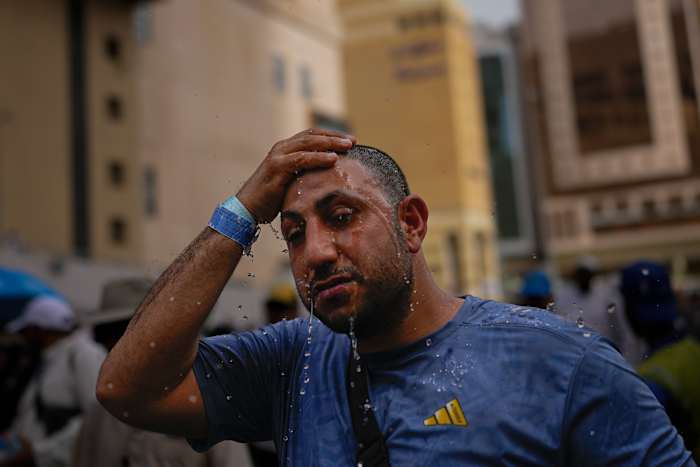
The convergence of a multi-theater Middle Eastern conflict, acute regional economic disparities, and a secular upward shift in baseline global temperatures has transformed the annual Hajj pilgrimage into a complex logistical and thermodynamic stress test. Mass religious gatherings operate under fixed geographic constraints and highly compressed operational timelines. When these events intersect with regional instability and hyper-arid microclimates, the safety margins of the underlying municipal and national infrastructures drop to zero. The 2024 Hajj cycle demonstrated that the survival viability of mass assembly no longer depends solely on crowd-control mechanics, but rather on the intersection of microeconomic realities, physiological thermal limits, and macro-geopolitical stability.
Evaluating this vulnerability requires moving past standard qualitative reporting. Instead, analyzing the system through structural engineering, thermodynamic risk management, and economic policy frameworks reveals the systemic bottlenecks currently straining the administration of the holy sites in Saudi Arabia. For a different perspective, see: this related article.
The Thermodynamic Limits of Human Assembly: The Wet-Bulb Constraint
The core operational risk of the Hajj is an adversarial relationship between human metabolic heat production and extreme ambient heat. During peak rituals, 1.8 million individuals occupy shared physical spaces, transforming the holy sites into a concentrated thermodynamic footprint.
The human body sheds heat through two primary mechanisms: sensible heat transfer (convection and conduction, which require a thermal gradient where skin temperature exceeds ambient air temperature) and latent heat transfer (the evaporation of sweat). When ambient temperatures surpass 50°C (122°F), as documented at the Grand Mosque in Mecca where peaks reached 51.8°C (125.2°F), sensible heat transfer reverses. The environment begins transferring heat into the body. Related coverage on the subject has been published by TIME.
Under these conditions, survival depends entirely on latent heat transfer. The mathematical expression of this cooling capacity is constrained by the relative humidity of the microclimate, dictating the "wet-bulb" temperature. The thermodynamic limit of human survivability is traditionally defined as a sustained wet-bulb temperature of 35°C (95°F), at which point the body cannot reject metabolic heat to the environment, causing core body temperatures to rise uncontrollably regardless of hydration levels.
This physiological bottleneck is worsened by the physical demands of the rituals:
- The Tawaf (Circumambulation): High-density walking around the Kaaba in an uncovered courtyard increases metabolic heat generation while restricting ambient airflow due to crowd packing.
- The Plain of Arafat: A multi-hour, standing spiritual vigil conducted during peak solar irradiance hours, maximizing direct radiant heat absorption.
- The Stoning of the Devil (Mina): A pedestrian transit framework requiring individuals to walk several kilometers through concrete corridors that act as thermal heat sinks, radiating stored solar energy back onto the pilgrims.
When the ambient environment limits latent cooling, the physiological consequence is an escalation from heat exhaustion to heat stroke. This transition occurs when core body temperatures exceed 40°C (104°F), causing proteins to denature, cellular membranes to fail, and multi-organ system breakdown to begin.
The Regulatory Bottleneck: The Microeconomics of Unregistered Pilgrimage
The 1,301 fatalities recorded during the 2024 Hajj cycle reveal a clear structural divide: the majority of casualties occurred among unregistered pilgrims. This data point highlights a breakdown in regulatory enforcement driven by microeconomic pressures, rather than a simple failure of state-provided medical care.
The Saudi Ministry of Hajj and Umrah operates a strict quota allocation system per country, managed via official travel visas and expensive operational permits. A clear economic imbalance underpins this framework:
$$Cost_{\text{Official Permit}} \gg Cost_{\text{Irregular Entry}}$$
For low-to-middle-income individuals in economically strained nations (such as Egypt, Jordan, and Pakistan), the market rate for an official Hajj package creates a significant financial barrier. This high cost drives a secondary market of irregular tourism agencies offering commercial or personal visit visas. These visas allow entry into the Kingdom but exclude holders from the official Hajj infrastructure.
This legal status division sets off a distinct chain of logistical cause and effect:
[Unregistered Status]
       │
       ▼
[Exclusion from Official Transportation Nodes]
       │
       ▼
[Forced Long-Distance Pedestrian Transit in Direct Sunlight]
       │
       ▼
[Exclusion from Climate-Controlled Tents/Hydration Hubs]
       │
       ▼
[Accelerated Dehydration & Heat Stroke]
Authorized pilgrims travel within a managed logistics network featuring climate-controlled bus transit, dedicated high-speed rail links, and access to a network of air-conditioned tents in Mina. Unregistered pilgrims, conversely, are blocked from these air-conditioned sanctuaries and transit systems.
To avoid municipal checkpoints, irregular pilgrims frequently march long distances exposed to direct sunlight, bypassing the primary hydration and medical triage points. This dynamic skews the mortality data, concentrating heat fatalities almost exclusively within the economically vulnerable, uninsured, and non-permitted demographics.
Geopolitical Stress Tests: Supply Chain Fractures and Blockades
The physical and thermodynamic risks of the Hajj are further compounded by regional conflict. Geopolitical instability disrupts macro-level logistics, creates systemic supply chain bottlenecks, and heightens security overhead.
The Transit Bottleneck and Border Fractures
The escalations in the Eastern Mediterranean and Red Sea basins have severed critical overland and commercial aviation corridors. The complete closure of the Rafah border crossing in mid-2024 offers a stark example of a political event functioning as an absolute logistics blockade. This closure completely halted the transit of the registered Palestinian demographic from the Gaza Strip, stranding thousands of pilgrims and disrupting long-planned regional transport arrangements.
Maritime Interdiction and Global Inflation Cascades
Simultaneously, asymmetric warfare targeting shipping lanes in the Bab al-Mandab Strait and the broader Red Sea has reshaped maritime logistics. The resulting shift in maritime container traffic away from Suez routes toward the Cape of Good Hope has altered the economics of regional supply chains:
- Fuel Surcharges: Jet fuel and diesel prices face upward volatility due to extended supply routes, directly increasing pilgrim transit costs.
- Sovereign Outlays: Resource-exporting nations (e.g., Indonesia) are forced to deploy capital to absorb these cost shocks, shielding pilgrims from immediate price spikes to keep their domestic quotas filled.
- Import Inflation: Nations facing structural foreign exchange shortages (e.g., India and Egypt) see local travel costs rise, pricing out lower-income brackets and pushing them toward risky, unvetted irregular travel channels.
Institutional Mitigation and Risk Management Infrastructure
Managing a mass gathering under these shifting environmental and political parameters requires an integrated mitigation architecture. Saudi municipal authorities rely on a multi-layered infrastructure mix to artificially depress ambient temperatures and manage crowd dynamics.
| Infrastructure Layer | Operational Mechanism | Systemic Limitation |
|---|---|---|
| High-Pressure Misting Arrays | Thermodynamic cooling via flash evaporation; lowers local air temperature by absorbing latent heat of vaporization. | Efficiency drops exponentially as local relative humidity rises; risks creating high-humidity micro-domes that suppress sweat evaporation. |
| Reflective Elastomeric Pavements | Application of high-albedo coatings to pedestrian walkways to reduce solar absorption and lower surface temperatures. | Mitigates ground radiant heat, but cannot shield pilgrims from direct downwelling solar irradiance during peak midday hours. |
| Permit Enforcement and Interdiction | Deployment of security forces at perimeter checkpoints to clear unpermitted individuals from transit zones. | Displaces irregular pilgrims into unmonitored desert bypasses, increasing pedestrian transit distances and heat stroke risk. |
The clear limitation across these interventions is that they address the symptoms of extreme heat rather than the underlying structural causes. Mechanical cooling can modify microclimates, but it cannot override basic thermodynamic boundaries when crowd density exceeds architectural capacity.
Strategic Recommendation
To ensure the long-term viability of the Hajj amidst rising global temperatures and ongoing regional instability, a fundamental shift in risk management is required. The current approach—relying on reactive medical care and localized cooling—is hitting its physical limits. Municipal planners and international sending bodies must shift to an anticipatory, capacity-constrained model.
First, the quota allocation framework must change from a fixed numeric model to a variable, climate-indexed calculation. This framework should adjust permissible crowd densities based on rolling three-month wet-bulb temperature forecasts for the Hijri months in question. When projected wet-bulb temperatures exceed 32°C during peak outdoor ritual windows, total authorized numbers must be systematically paired down, and rituals shifted strictly into low-irradiance evening and nocturnal hours.
Second, the economic loophole driving irregular pilgrimage must be closed through a unified, cross-border regulatory framework. Sending nations must implement strict licensing and criminal liability for unauthorized travel agencies that exploit visit visas. Concurrently, the host nation should decouple basic humanitarian infrastructure—such as access to shade, water, and emergency triage—from visa status.
Treating access to air-conditioned cooling networks as a matter of border enforcement rather than critical life safety creates predictable mass-casualty events. Managing the thermodynamics of massive crowd assemblies requires designing for the vulnerable unregistered baseline, rather than planning only for the insulated, permitted minority.
The analytical perspective provided in this assessment highlights the critical need for robust infrastructure and public health strategies during extreme weather events. For a detailed breakdown of the real-world operational challenges faced during the heat crisis, view this examination of the 2024 Hajj climate challenges, which details how extreme temperatures pushed conditions to human survival limits.