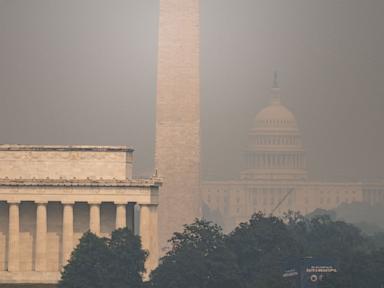
Large-scale wildfire smoke plumes operate as borderless economic and public health disruptors, transforming localized environmental crises into multi-state systemic liabilities. When extreme compounding climate factors ignite vast tracts of timber, the resulting particulate matter does not merely drift; it interacts with tropospheric transport mechanics to blanket major metropolitan areas thousands of miles from the ignition source. Managing this crisis requires moving past reactive air quality alerts and instead deconstructing the atmospheric, physiological, and financial vectors that dictate the true cost of a smoke event.
The Tri-Layered Architecture of Air Mass Contamination
To quantify the impact of a multi-state smoke event, one must evaluate the three distinct variables that govern how a localized fire becomes a continental hazard: emission volume, atmospheric transport efficiency, and ground-level subsidence.
[Ignition & Fuel Load] ──> High-Volume PM2.5 Production
                                │
                                ▼
[Pyrocumulonimbus Injection] ──> Tropospheric Transport (Jet Stream)
                                │
                                ▼
[High-Pressure Subsidence] ──> Ground-Level Compression & Human Exposure
1. Fuel Chemistry and Particulate Generation
The severity of a smoke plume depends heavily on the fuel source. Standard brushfires yield different particulate profiles than high-intensity crown fires burning through dense coniferous forests or peatlands. When fires burn at ultra-high temperatures, they generate massive volumes of fine particulate matter under 2.5 micrometers in diameter (PM2.5). This specific size threshold is critical; PM2.5 remains suspended in the atmosphere far longer than larger particles, resisting gravitational settling and traveling vast distances.
2. The Tropospheric Conveyor Belt
The transition from a regional fire to a multi-state crisis occurs when thermal buoyancy pushes smoke past the planetary boundary layer into the upper troposphere. Strong wildfire updrafts, sometimes forming pyrocumulonimbus clouds, act as vertical chimneys. Once the smoke reaches these higher altitudes, fast-moving synoptic-scale winds and jet stream currents capture the plume. This transport mechanism allows contaminants to cross mountain ranges and state lines unimpeded by topography.
3. High-Pressure Compression Dynamics
Smoke traveling aloft does not automatically harm ground-level populations. The critical point of failure occurs when the plume intersects with a high-pressure weather system or a thermal inversion layer over a distant region.
- Thermal Inversions: A layer of warm air traps cooler air—and the accompanying smoke—close to the ground, preventing vertical mixing.
- Subsidence: Sinking air within high-pressure systems forces the elevated smoke plume down into the breathing zone of populated valleys and coastal plains.
This interaction explains why states entirely unaffected by active fires suddenly experience extreme spikes in Air Quality Index (AQI) metrics.
The Physiological Cost Function: Microscopic Infiltration
The human respiratory system is poorly optimized for prolonged exposure to the chemical composition of wildfire smoke. Standard ambient dust is typically caught by the upper respiratory tract, but PM2.5 bypasses these natural defense mechanisms entirely.
Alveolar Penetration and Systemic Inflammation
Upon inhalation, PM2.5 penetrates deep into the lungs, reaching the alveoli where gas exchange occurs. Because these particles are so small, they transcend the pulmonary barrier and enter the bloodstream directly. The chemical composition of this particulate matter—often laden with polycyclic aromatic hydrocarbons (PAHs), benzene, and heavy metals from vaporized soil and structures—triggers an immediate immune response.
The body’s alveolar macrophages attempt to engulf the foreign matter, causing localized cellular stress. This localized reaction quickly scales into systemic inflammation, increasing blood viscosity and accelerating arterial plaque instability. The immediate statistical result of this physiological chain reaction is a predictable, lagged spike in emergency department admissions for acute myocardial infarction, ischemic stroke, and respiratory failure, occurring within 48 to 72 hours of initial exposure.
       PM2.5 Inhalation
              │
              ▼
    Deep Alveolar Delivery
              │
              ▼
  Trans-Barrier Blood Entry
              │
              ▼
   Systemic Immune Response
              │
              ▼
Increased Blood Viscosity & Cellular Stress
              │
              ▼
Lagged Emergency Medical Admissions (48-72h)
The Vulnerability Multiplier
The impact of a smoke event is non-linear across a population. Vulnerability operates as a function of pre-existing physiological baselines and socio-economic infrastructure. Individuals with asthma, chronic obstructive pulmonary disease (COPD), or compromised cardiovascular systems experience immediate functional declines.
Concurrently, pediatric populations experience higher relative doses of toxicity due to their faster metabolic rates and higher ventilation-to-body-mass ratios. When an air mass covers a dozen states, the aggregate strain on regional healthcare infrastructure shifts from localized resource constraints to a widespread systemic bottleneck.
Quantifying Second-Order Economic Friction
While direct medical expenditures represent the most visible cost of a wildfire smoke crisis, the hidden friction imposed on regional economies is much larger and harder to recover from.
Labor Productivity Degradation
The primary economic drag of a multi-state smoke event is the immediate reduction in labor capacity, particularly across sectors dependent on outdoor operations.
┌────────────────────────────────────────────────────────┐
│               TOTAL ECONOMIC FRICTION                  │
└───────────────────────────┬────────────────────────────┘
                            │
         ┌──────────────────┴──────────────────┐
         ▼                                     ▼
┌─────────────────────────────────┐   ┌─────────────────────────────────┐
│     DIRECT SECTOR LOSSES        │   │    INDIRECT SYSTEMIC COSTS      │
├─────────────────────────────────┤   ├─────────────────────────────────┤
│ • Agriculture Yield Reduction   │   │ • HVAC Depreciation Rates       │
│ • Construction Stoppages        │   │ • Grid Inefficiencies (Solar)   │
│ • Logistics & Aviation Delays   │   │ • Consumer Foot-Traffic Slumps  │
└─────────────────────────────────┘   └─────────────────────────────────┘
- Agriculture: Harvesting schedules face mandatory delays to protect field workers from acute toxicity, threatening crop yields and supply chain stability.
- Construction and Infrastructure: Civil engineering projects experience work stoppages as ambient air conditions breach regulatory safety thresholds, triggering contract penalties and project overruns.
- Logistics and Aviation: Low visibility at major transit hubs introduces compounding delays across regional supply chains, forcing cargo rerouting and increasing fuel consumption.
For indoor labor pools, the economic drag shifts to cognitive fatigue and increased absenteeism. Commercial buildings without advanced, multi-stage mechanical filtration systems pull outdoor PM2.5 directly into offices, lowering cognitive performance and processing speeds across knowledge-intensive industries.
Consumer Behavior and Supply Chain Realignment
Widespread smoke events act as a temporary regional economic freeze. Foot traffic in retail districts drops sharply as populations isolate indoors. This shift directly penalizes hospitality, service, and recreational businesses. While digital commerce offsets a portion of this decline, the net result is a contraction in velocity of money across affected zip codes.
Simultaneously, energy grids face dual-ended stress: decreased output from utility-scale solar arrays due to atmospheric particulate shading, occurring exactly when residential cooling and air purification demands peak.
Operational Mitigations and Strategic Playbook
Relying on standard N95 distribution networks and public service announcements is an inadequate defense against chronic, multi-state atmospheric contamination. Mitigating this risk requires a structural overhaul of building infrastructure and regional supply chain management.
Architectural Hardening and Filtration Audits
Commercial real estate operators and public infrastructure managers must shift from passive ventilation strategies to active pressure management. Buildings must maintain positive internal air pressure to prevent the unconditioned infiltration of outdoor air through structural gaps and doorways.
- MERV 13 Integration as a Minimum Baseline: Minimum Efficiency Reporting Value (MERV) 13 filters are required to capture significant percentages of PM2.5. Facilities must audit their HVAC systems to ensure fans can handle the increased static pressure drop associated with denser filtration media without burning out.
- Gas-Phase Filtration: Particulate filters do not stop volatile organic compounds (VOCs) or carbon monoxide. High-risk facilities require secondary activated carbon systems to neutralize gaseous toxins during extreme events.
- Automated Dampener Thresholds: Integrating outdoor optical air quality sensors directly into Building Automation Systems (BAS) allows facilities to automatically restrict outdoor air intake the moment ambient PM2.5 levels breach safe thresholds, switching systems to 100% internal recirculation.
Supply Chain Risk Diversification
Enterprise logistics must treat multi-state smoke plumes with the same gravity as severe winter storms or regional flooding. Supply chain models must build in geographic redundancies that account for seasonal smoke corridors.
This requires maintaining buffer inventories outside the primary target zones of historical summer plumes and establishing pre-arranged contract overrides with regional freight alternatives that can bypass affected transport corridors without incurring catastrophic spot-market premiums.