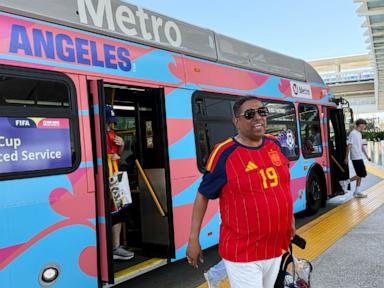
Los Angeles is trying to sell the world a fairy tale.
The narrative making the rounds praises the city's plan to use the World Cup as a testing ground for a "car-free" Olympics. The mainstream consensus is dripping with optimism, pointing at billions of dollars injected into the LA Metro system, new bus lanes, and temporary transit networks as proof that America’s most gridlocked metropolis is about to undergo a green miracle.
It is a fantasy.
As someone who has analyzed urban transit infrastructure and municipal budgeting for over a decade, I have watched cities pour billions into mega-event optics while ignoring the structural realities of their geography. LA is not Paris. It is not Tokyo. Moving millions of spectators across a sprawling, decentralized basin without cars requires more than a few hundred extra buses and a prayer.
The current plan will not revolutionize LA transit. It will paralyze the city, burn through public funds, and leave residents stranded long after the closing ceremonies.
The Regional Sprawl Problem
The fundamental flaw in the "car-free" thesis is a failure of basic geometry.
When Paris hosted the Games, venues were concentrated. A dense, pre-existing subway system handled the load because the urban core was built for pedestrians. Los Angeles is an amalgamation of independent hubs spread across over 4,000 square miles. Venues span from the Rose Bowl in Pasadena to SoFi Stadium in Inglewood, stretching all the way down to the Honda Center in Anaheim.
To call an event decentralized is an understatement. It is fragmented.
The current strategy relies on creating a "bus rapid transit" network by seizing existing freeway lanes and dedicating them to Olympic shuttles. Consider the math. Taking away lanes on the I-405 or the I-10 does not magically force commuters onto trains. It squeezes existing, non-Olympic traffic into fewer bottlenecks.
The Mirage of the World Cup Test Run
The idea that the World Cup serves as a viable stress test for the Olympics is highly flawed. The World Cup brings crowds to a single stadium on specific days. The Olympics demand simultaneous, high-capacity transport to dozens of venues for over two weeks straight.
- World Cup Metrics: Single-point congestion, predictable peaks, localized impact.
- Olympic Metrics: Multi-point systemic strain, overlapping schedules, city-wide gridlock.
You cannot test a systemic overhaul with an isolated sporting event. Believing a smooth World Cup means a successful Olympics is like thinking you can run a marathon because you successfully walked up a flight of stairs.
The Human Infrastructure Deficit
Transit systems are not just rails and rubber; they are staffed by human beings. Right now, transit agencies across the country face severe operator shortages.
LA Metro has struggled for years with operator retention, safety concerns, and scheduling burnout. To execute the proposed Olympic plan, the city needs to borrow thousands of buses and drivers from neighboring municipalities.
Imagine a scenario where bus drivers from central California or neighboring states are suddenly dropped into the complex, high-stress corridors of Southern California. They do not know the routes, the shortcuts, or the specific bottlenecks. Navigating an articulated bus through unfamiliar, packed streets during a global event is a recipe for operational chaos.
Furthermore, this temporary surge capacity does nothing for the city's long-term transit health. Once the spectators leave, the borrowed fleet returns home. The local transit system returns to its baseline: underfunded, understaffed, and underutilized by the actual residents of Los Angeles.
Follow the Real Money
The financial defense of these upgrades usually points to accelerated infrastructure timelines. Proponents argue that even if the event is chaotic, the city gets to keep the shiny new transit lines.
Look closer at the actual project list. The major rail extensions—like the D Line subway extension or the K Line updates—were already planned, funded, and delayed long before the Olympic bid succeeded. The pressure to meet a hard global deadline forces agencies to cut corners, rush procurement, and pay massive overtime premiums to contractors.
Project Cost Escalation Formula:
Base Estimate + (Global Deadline Pressure * Supply Chain Bottlenecks) = Structural Deficit
We are not seeing a triumph of efficient urban planning. We are seeing a masterclass in panic-spending. Money is being diverted from fixing basic, everyday bus frequencies in lower-income neighborhoods to build flashy, temporary links for tourists.
Dismantling the People Also Ask Premise
When people ask, "Can LA pull off a car-free Olympics?" they are asking the wrong question. The real question is: "Should an entire city's transit strategy be dictated by a two-week corporate sporting event?"
The answer is a resounding no.
True transit equity means building reliable, safe networks for the people who clean the hotels, cook the food, and live in the communities year-round. Designing a temporary network that prioritizes moving affluent tourists from West LA to Inglewood ignores the daily migration patterns of LA’s actual workforce.
If you want to fix LA traffic, you do not ban cars for two weeks while hosting a massive party. You implement permanent congestion pricing, build high-density housing near existing rail stations, and make the current bus network fast, frequent, and safe.
Stop buying into the mega-event PR machine. The car-free Olympics is a temporary marketing stunt built on top of a permanent transit crisis.