The rain in Manchester always feels a little heavier when you are looking south toward London.
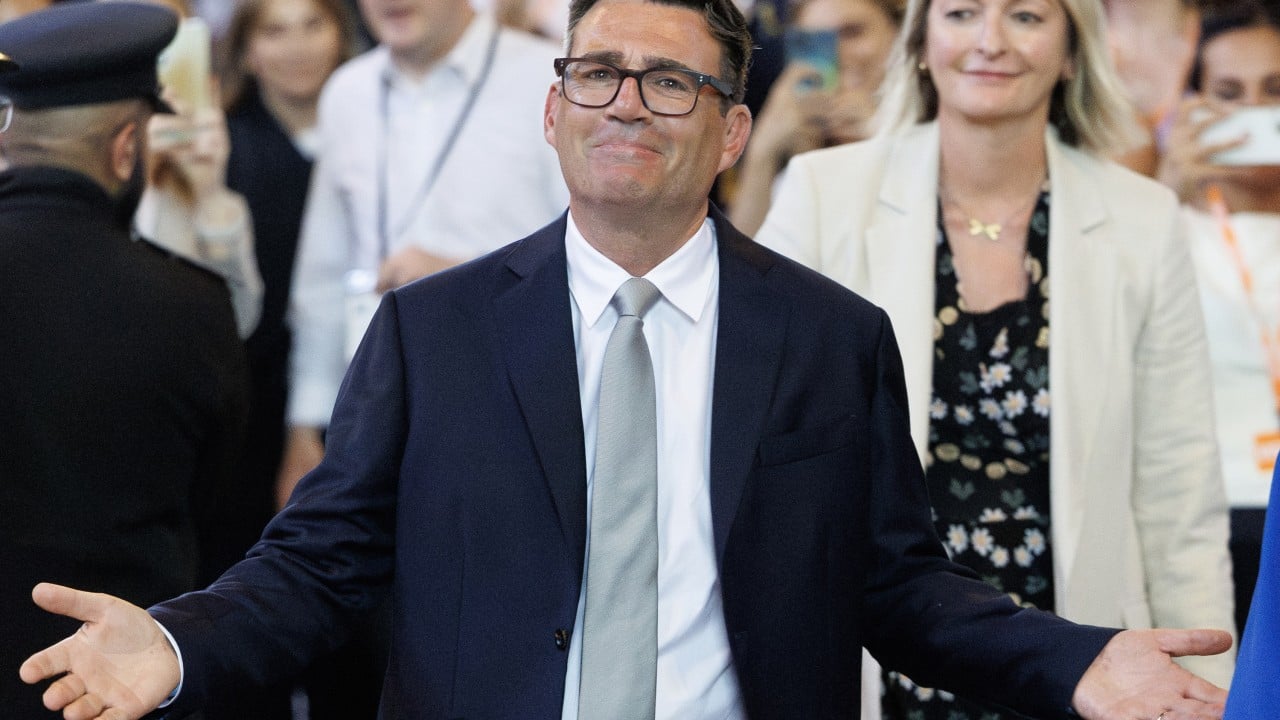
From the windows of the Greater Manchester Combined Authority building, the view does not stretch to Westminster. But the ambition does. Andy Burnham sits in that geographic and psychological distance, a politician who has perfected the art of the exile. He is the "King of the North," a title given first in jest but now worn as armor. Every time he defends local bus routes or spars with central government over funding, he is subtly building a counter-narrative to the man currently holding the keys to Downing Street.
Downing Street is a cold place. Keir Starmer knows this. The British premiership looks like a prize, but it functions like a trap. Under the hood of the UK constitution, the mechanisms to remove a Prime Minister are not grand, slow-moving historical gears. They are swift, quiet, and brutal.
Understanding how a sitting British Prime Minister falls requires looking past the public speeches. It means looking at the arithmetic of discontent.
The Rules of the Guillotine
A British Prime Minister does not face an open impeachment trial. They face their own friends.
For Keir Starmer, the threat does not originate from the opposition benches across the dispatch box. It breathes down his neck from behind. The Labour Party’s internal rulebook dictates that a leadership challenge can be triggered if a sufficient number of Members of Parliament lose faith in their leader. Specifically, it requires a motion of no confidence to be submitted, typically backed by a significant percentage of the parliamentary party—currently a threshold of 20% of Labour MPs is required to trigger a formal challenge if the party is in government.
Think of it as a quiet ledger. Day by day, MPs disgruntled by policy shifts, falling poll numbers, or local constituency anger quietly add their names to the mental list of the dissatisfied.
When that ledger tops the required number, the trapdoor opens.
The vote itself is a secret ballot. This is where the human element turns predatory. Men and women who smiled at the Prime Minister in the corridors of the House of Commons just hours before walk into a wood-paneled room, pick up a slip of paper, and quietly cross out a career. If Starmer loses that vote, he is done. The party triggers a leadership election, and the country watches a coup disguised as administrative paperwork.
It happened to Margaret Thatcher. It happened to Theresa May. It happened to Boris Johnson. The British system does not tolerate a leader who becomes a electoral liability.
But a vacancy is only half the story. The real drama is the vacuum that follows.
The Northern Exile
This brings us back to Manchester. Back to Burnham.
Andy Burnham is unique because he is a ghost in the machine. He is not an MP. He gave up his Westminster seat in 2017 to become the Mayor of Greater Manchester. By doing so, he stepped outside the immediate blast radius of parliamentary infighting, but he also stepped off the playing field required to take the top job.
Under current Labour Party rules, you cannot lead the parliamentary party unless you sit in the House of Commons.
This creates a logistical nightmare for any "Burnham for PM" campaign. If Starmer were to fall tomorrow, Burnham cannot simply put his name on the ballot. He would need a friendly Labour MP in a safe seat to suddenly resign. He would need to win that snap by-election. He would need to do all of this while the leadership contest is actively happening around him. It is a high-wire act over a burning house.
Yet, his name dominates the conversation. Why? Because he represents the emotional alternative to Starmerism.
Where Starmer is precise, legalistic, and often perceived as sterile, Burnham operates on raw empathy and regional grievance. He speaks for the communities that feel abandoned by the London elite. He has spent years framing himself as the protector of the working class against Westminster indifference. When he speaks, people hear a passion that Starmer’s curated scripts deliberately avoid.
The stakes are invisible but massive. It is a battle for the soul of the party: the managerial, cautious centrist versus the populist, emotionally available regionalist.
The Quiet Contenders
If Burnham is the romantic choice, the realistic challengers are already sitting in the Cabinet, watching Starmer’s body language for signs of weakness. They do not have to worry about finding a seat. They are already in the room.
Consider Rachel Reeves. As Chancellor, she holds the purse strings of the nation. She understands the mathematical reality of power. If Starmer’s project fails because the economy stagnates, she faces a choice: sink with the ship or position herself as the steady hand needed to steer it out of the storm. Her narrative would be one of competence, a promise to reassure the markets while keeping the party steady.
Then there is Wes Streeting. The Health Secretary is young, highly articulate, and a formidable media communicator. He represents the modernizing wing of the party. He does not carry the baggage of older factional wars. If the party decides that Starmer’s sin was a lack of vision, Streeting will be ready with a polished, forward-looking manifesto designed to capture the aspirations of a younger electorate.
They are not plotting openly. To plot openly in British politics is to invite your own execution. Instead, they are building networks. They are helping backbenchers with local campaigns. They are buying drinks in the Commons bars. They are making sure that when the ledger fills up, their names are the ones whispered in the dark.
The Weight of the Crown
Sitting in Downing Street, the noise of the outside world is muffled by thick brick walls and centuries of tradition. But the silence inside is worse. It forces you to wonder who is truly loyal.
Starmer’s vulnerability is not a secret. Every unpopular budget, every compromised policy, and every dip in the public approval ratings chips away at his authority. The British electorate is notoriously fickle, and the parliamentary party is hyper-sensitive to the scent of political death.
The system is designed to be ruthless. It prioritizes the survival of the party over the survival of the individual. The moment an incumbent leader becomes a shield that no longer protects their MPs from the wrath of the voters, the machinery of removal begins to turn.
Burnham knows this. Reeves knows this. Streeting knows this.
They watch the man at the dispatch box, measuring the slump of his shoulders, counting the gray hairs, calculating the exact moment when the burden becomes too heavy to bear. They know that the walk to Number 10 is long, but the exit is just a short, sharp fall.
The rain continues to fall over Manchester, washing clean the streets, while in London, the ink on the ledger slowly begins to dry.