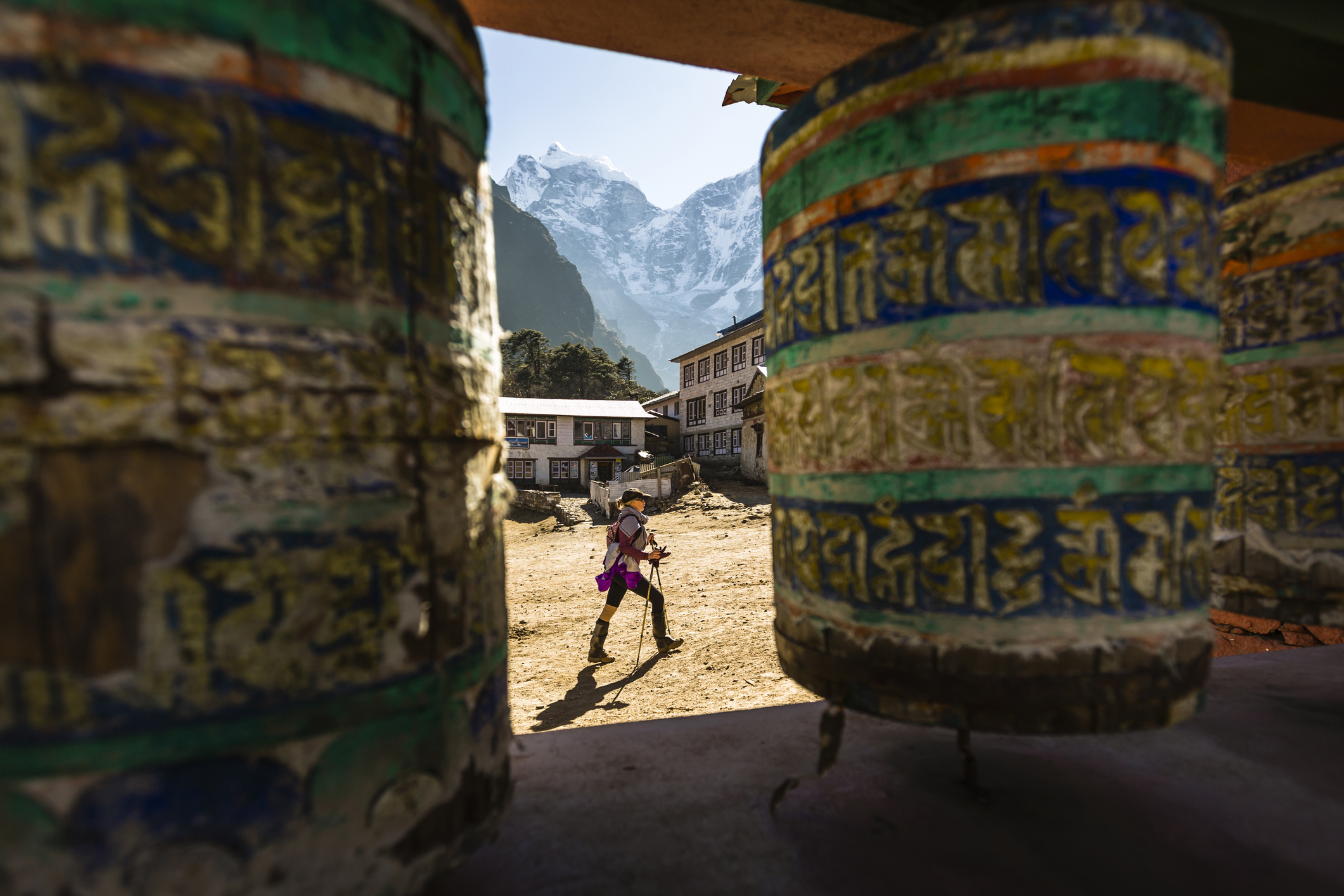
The air at 14,000 feet doesn't just feel thin. It feels sharp. It is a place where oxygen is a luxury and silence is a heavy, physical presence, broken only by the crunch of boots on frozen scree. For decades, the Line of Actual Control—the jagged, invisible ribbon separating the world’s two most populous nations—was a place of uneasy stillness. Then came the summer of 2020. The silence broke.
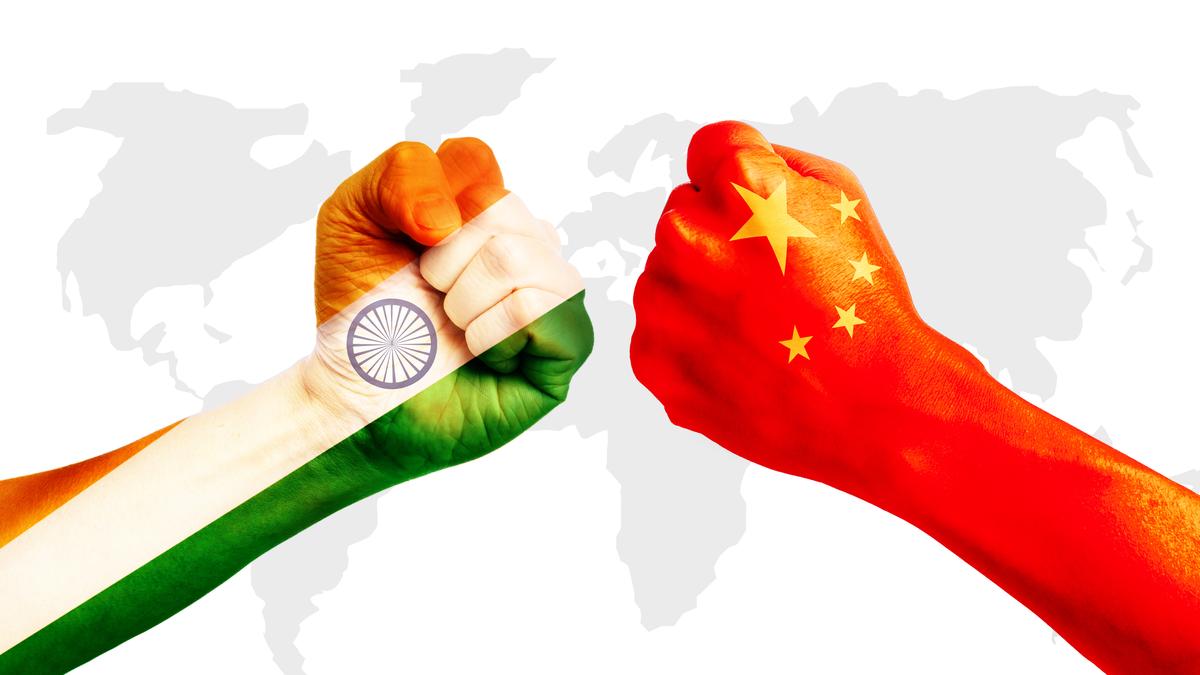
Since that violent collision in the Galwan Valley, the relationship between India and China hasn’t just been cold. It has been subterranean. We are talking about nearly three billion people represented by two governments that stopped looking each other in the eye. But recently, a shift occurred. It wasn't a loud, triumphant declaration. It was a murmur from Beijing: a statement that China’s policy toward improving relations with India remains "unchanged."
To a casual observer, "unchanged" sounds like stagnation. In the coded language of high-stakes diplomacy, it is a signal. It is an olive branch wrapped in a thick layer of cautious iron.
The Butcher, the Baker, and the Border Guard
To understand why a dry press briefing in Beijing matters to someone in a bustling market in Mumbai or a tech hub in Shenzhen, you have to look past the troop deployments.
Consider a hypothetical merchant named Arjun. For ten years, Arjun’s business in Delhi thrived on specialized electronic components sourced from Guangzhou. He didn’t care about geopolitics; he cared about lead times and tariff codes. When the border flared, his world contracted. Visas for his technicians were denied. Apps he used to communicate with suppliers were banned. The "Great Wall" wasn't just a historical landmark anymore; it was a digital and bureaucratic barrier that sat right on his desk.
Arjun represents the invisible stakes. When two giants turn their backs on one another, the friction is felt by the smallest gears in the machine.
China’s recent signaling suggests an awareness that this friction is becoming too expensive to ignore. Mao Ning, the Chinese Foreign Ministry spokesperson, recently reiterated that Beijing views a healthy relationship as serving the "common interests" of both nations. This isn't out of the goodness of anyone’s heart. It is math. Hard, cold, economic math.
The Gravity of Two Suns
The world is used to a unipolar or bipolar order, but the reality of the 21st century is that India and China are two suns in the same neighborhood. If they move in sync, the orbital pull of Asia is irresistible. If they collide, the debris hits everyone.
Beijing’s insistence that their policy remains "consistent" is a way of saying they are ready to talk about the future without necessarily apologizing for the past. It’s a delicate dance. India has been firm: there is no "business as usual" while soldiers are still staring at each other through binoculars across the Ladakh range. China, meanwhile, wants to decouple the border dispute from the balance sheet. They want the trade to flow even if the mountain passes remain disputed.
Think of it as a strained marriage where one partner wants to talk about the mortgage while the other refuses to speak until someone says sorry for a fight that happened four years ago.
Why Now?
Why is China emphasizing this "unchanged" stance at this specific moment?
Global trade routes are shifting. The "China Plus One" strategy—where Western companies look to diversify their manufacturing into places like India or Vietnam—is no longer a theory. It is happening. China sees the landscape changing. They see India’s infrastructure growing, its middle class expanding, and its geopolitical leverage with the West tightening.
Beijing knows that a hostile India is a permanent strategic headache. A neutral, or even a begrudgingly cooperative India, is a partner in a "multipolar world."
There is also the matter of the BRICS summit and other multilateral stages. It is awkward to sit at a table and discuss a new global financial order when you won't even grant your neighbor’s journalists a visa. The "unchanged" policy is a signal to the world that China is the "reasonable" actor, waiting for a reciprocal nod from New Delhi.
The Ghost in the Room
We often treat countries as monoliths, but they are driven by the collective anxieties of their leaders. For China, the anxiety is encirclement. They look at the "Quad"—the partnership between the U.S., Japan, Australia, and India—and see a noose.
To loosen that noose, they need to convince India that its best interests lie in a "Himalayan Century," not a "Pacific Century" dominated by American interests.
But trust is a non-renewable resource. Once it’s burned, you can’t just buy more. The events of 2020 didn't just move a border line; they moved the psyche of an entire generation of Indian policymakers. They realized that interdependence wasn't a shield; it was a vulnerability.
This is the central tension of our time. Can two nations who share thousands of miles of disputed, desolate mountain peaks find a way to share a prosperous future?
The Weight of a Handshake
History isn't just made of treaties. It’s made of gestures.
In the late 1980s, Rajiv Gandhi traveled to Beijing to meet Deng Xiaoping. They shared a handshake that lasted three full minutes. It was a silent, televised signal to their billion-plus citizens that the era of conflict was over and the era of development had begun.
We are currently waiting for the next three-minute handshake.
The recent statements from Beijing are the sound of the engine idling. The car is in neutral. The driver is saying the destination hasn't changed. But in New Delhi, the view through the windshield is still foggy. The Indian government has made it clear that "peace and tranquility" on the border is the prerequisite for everything else. You cannot hold a hand that is balled into a fist.
The Invisible Bridge
While the diplomats argue over centimeters of rock and ice, the "invisible bridge" continues to operate. Despite the bans, despite the rhetoric, China remains one of India’s largest trading partners. The solar panels that power Indian villages, the active pharmaceutical ingredients (APIs) that go into Indian-made generic drugs, the machinery in Indian factories—so much of it still bears the "Made in China" stamp.
This is the paradox. We are witnessing a "de-risking" in real-time, but the roots are deep. Pulling them out too quickly might kill the garden.
The Chinese statement about an "unchanged" policy is an acknowledgment of this reality. They are saying: We know we need each other. Let’s stop pretending we don’t. But there is a difference between needing someone and trusting them.
The Silent Valley
Imagine a young soldier stationed at the Depsang Plains. He is nineteen. He spends his days looking through a long-range lens at a soldier his own age on the other side. They both have mothers who worry, favorite foods they miss, and a profound, bone-deep cold that never leaves their marrow.
These two young men are the physical manifestation of the "policy." If Beijing says the policy is unchanged, but those two soldiers are still told to stand there with their fingers near triggers, has anything actually moved?
Words are light. Armor is heavy.
The world is watching this slow-motion reconnection because the stakes couldn't be higher. If India and China find a way to coexist, the center of gravity for the entire planet shifts East permanently. If they fail, we are looking at a century defined by a fractured Asia, where resources that should go toward education and climate change are instead poured into bunkers and mountain-grade artillery.
The murmur from Beijing is a start. It is a flickering light in a very long, very dark tunnel. It tells us that the door isn't locked, even if it’s currently shut tight.
Somewhere in the high altitudes of the Himalayas, the wind is blowing. It carries the scent of snow and the distant sound of engines. Whether those engines are bringing trade or tanks is the question that will define the next fifty years of human history. The "unchanged" policy suggests a preference for the former, but in the thin air of the borderlands, everyone is still holding their breath.
The silence remains, but for the first time in a long time, it feels like someone is about to speak.