The fluorescent lights on the seventh floor of the J. Edgar Hoover Building do not flicker, yet anyone who has ever walked that corridor knows the air feels perpetually charged, like the silence right before a summer squall breaks over the Potomac.
For decades, that floor was supposed to be a fortress against the noise of Pennsylvania Avenue. A thick glass wall, metaphorical if not literal, separated the people who carried badges from the people who held political office. You did not cross it lightly. When you did, you left fingerprints that never quite washed off.
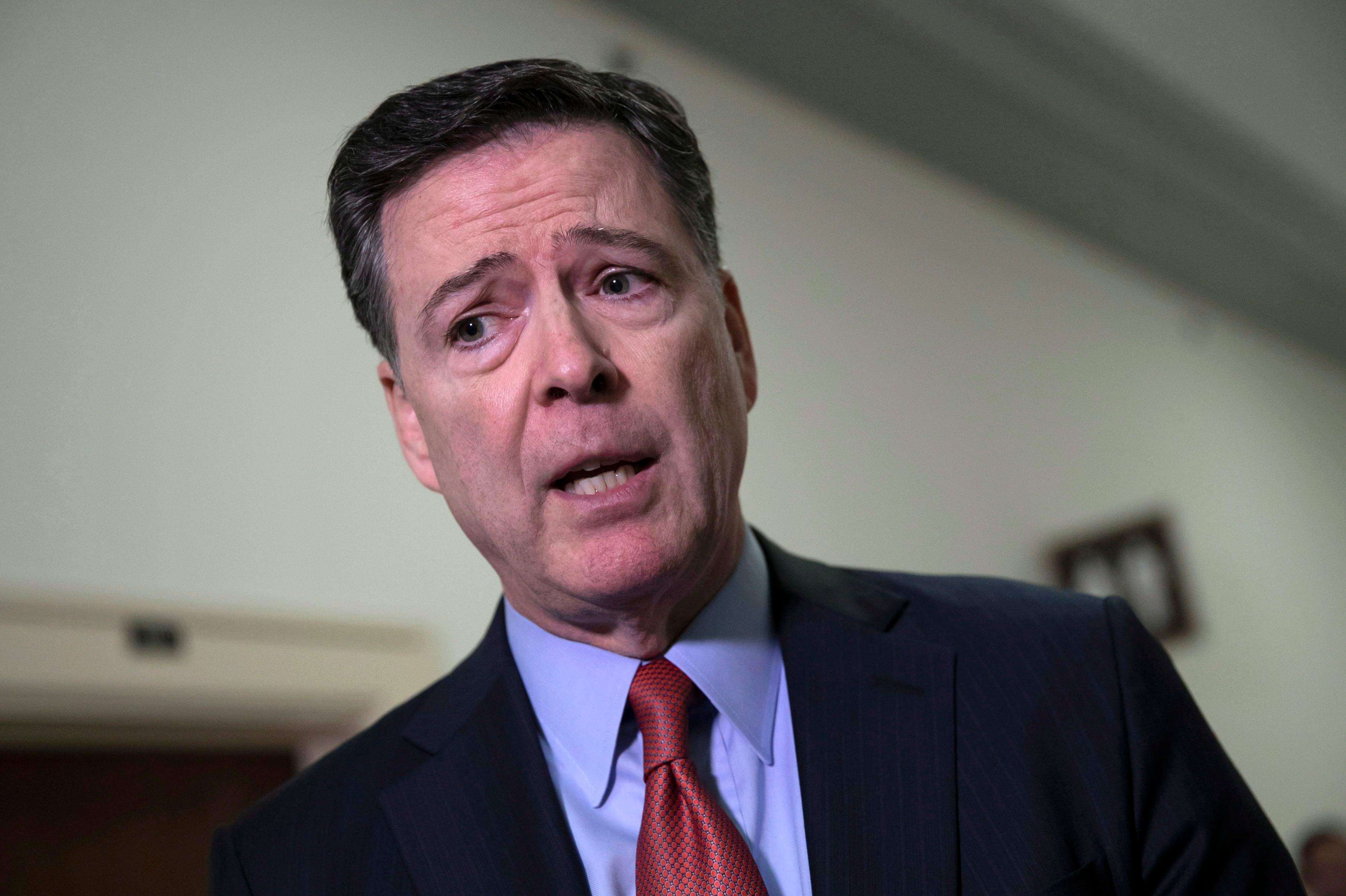
In May 2017, James Comey learned just how permanent those prints could be. Fired via a television chyron while addressing agents in Los Angeles, the former FBI Director became the central figure in a political storm that refused to blow over. Now, years later, the storm is circling back. According to multiple news reports and public statements from allies and officials within the Trump administration, Comey once again faces the prospect of federal investigation and potential prosecution—a development that forces an uncomfortable, urgent question onto the American table.
What happens when the machinery of justice turns inward on its former architect?
The Weight of a Signature
To understand why this moment feels so heavy, you have to step away from cable news panels and look at the mundane reality of how federal law actually works.
Imagine a hypothetical veteran prosecutor—let us call her Elena—sitting in a windowless office in Alexandria, Virginia, late on a Tuesday night. In front of her sits a stack of binders containing redacted memos, Inspector General reports, and transcripts of congressional testimony dating back to 2016 and 2017. Elena is not a television pundit. She does not care about campaign slogans. She cares about elements of a crime, statutes of limitations, and whether twelve ordinary citizens in a jury box will believe beyond a reasonable doubt that a former top law enforcement official intentionally broke the law.
This is the invisible arena where the renewed scrutiny of James Comey actually lives.
Publicly, the rhetoric surrounding Comey has been thunderous. Supporters of President Donald Trump have long argued, as detailed in congressional hearings and conservative media commentary, that Comey weaponized the FBI’s investigative powers during the 2016 election cycle and its aftermath. They point to the handling of the Hillary Clinton email investigation, the controversial Foreign Intelligence Surveillance Act (FISA) warrant applications targeting former Trump campaign aide Carter Page, and Comey’s decision to share contemporaneous memos of his private dinners with the President to prompt the appointment of a special counsel.
Critics of the administration, meanwhile, see something entirely different in the renewed push for prosecution. Legal scholars, former Justice Department officials, and Democratic lawmakers quoted across outlets like The New York Times and The Washington Post warn that reopening closed chapters against a vocal critic of the President crosses a sacred Rubicon—transforming the Department of Justice from an independent arbiter of law into an instrument of political retribution.
Both arguments carry immense emotional weight. One speaks to the fear of an unaccountable bureaucracy operating above the law; the other speaks to the terror of a presidency using handcuffs to settle scores.
Two Memories of the Same Room
History rarely offers clean villains and spotless heroes, and the record surrounding James Comey is stubbornly allergic to simplicity.
Consider the timeline that brought us here. In 2019, Justice Department Inspector General Michael Horowitz—an official widely respected across party lines for his meticulousness—released two exhaustive reports examining Comey’s actions. The findings were neither a total exoneration nor the sweeping criminal indictment his fiercest detractors demanded.
On the matter of Comey’s memos, Horowitz concluded that the former director violated FBI policies by retaining copies of unclassified memos in a personal safe and sharing one with a friend to pass to a reporter, setting a dangerous example for the bureau's workforce. Yet, when the Inspector General referred those findings to the Trump-era Justice Department under Attorney General William Barr, career prosecutors declined to bring charges. They determined the evidence did not support a criminal prosecution under federal statutes governing the handling of classified or government records.
Months later, Horowitz released a second, far more blistering report on the Russia investigation, known as Crossfire Hurricane. He found significant errors and omissions in the FISA applications used to surveil Carter Page, concluding that the FBI failed to meet its obligation to be scrupulously accurate with the court. Even then, Horowitz stated he found no documentary or testimonial evidence that political bias tainted the opening of the investigation itself.
Subsequently, Special Counsel John Durham spent four years investigating the origins of the Russia probe. While Durham secured a guilty plea from an FBI lawyer for altering an email and brought two other trials that ended in acquittals, he never charged James Comey.
Pause and let that sink in.
Multiple investigations, spanning years and led by officials appointed during the first Trump presidency, examined Comey’s conduct under a microscope and stopped short of indictment. Why, then, is the specter of prosecution rising again?
The Clock and the Code
Here is where the legal reality collides with political theater.
In the federal system, time is not an abstract concept; it is a hard wall. Most non-capital federal offenses—including making false statements to Congress under 18 U.S.C. § 1001, mishandling government records, or obstruction—carry a five-year statute of limitations.
Think about the calendar. Comey was fired in May 2017. His final congressional testimonies regarding the 2016 investigations took place largely between 2017 and 2020. By any standard legal arithmetic, the five-year window for almost every action Comey took as FBI Director has already slammed shut.
Legal analysts interviewed by major news organizations have repeatedly pointed out this fundamental hurdle. To bring a viable criminal case today, prosecutors cannot simply dust off old grievances from 2016. They would have to identify either a statute with a longer limitation period, an ongoing conspiracy that extended into recent years, or a newly discovered offense—such as alleged false statements made during more recent depositions or public disclosures—that resets the legal clock.
Even if a prosecutor cleared that procedural mountain, another barrier stands waiting: the Sixth Amendment right to a fair trial and the doctrine of vindictive or selective prosecution.
Defense attorneys in any hypothetical case against Comey would immediately subpoena years of public statements, campaign speeches, and social media posts calling for his imprisonment. In federal court, proving selective prosecution is notoriously difficult, requiring evidence that others similarly situated were not prosecuted and that the decision was motivated by an impermissible purpose. Yet rarely in American history has a defendant had such an extensive public record to cite before a federal judge.
The Architecture of Trust
I remember standing outside the federal courthouse in Washington, D.C., during a high-profile political trial a few winters ago. The wind cut straight through wool coats, and reporters huddled around smartphones, refreshing dockets every thirty seconds. Inside the courtroom, away from the cameras, the atmosphere was startlingly quiet. A judge in a black robe asked dry, technical questions about discovery deadlines and evidentiary rules.
That contrast—the deafening roar outside the marble steps versus the fragile, procedural stillness inside—captures what is truly at stake when a former FBI director is threatened with prosecution.
Think of the justice system like a suspension bridge. The cables holding it up are not made of steel; they are made of collective belief. Citizens obey court orders, witnesses tell the truth under oath, and jurors sacrifice weeks of their lives because they trust that the bridge holds everyone equally, regardless of who sits in the Oval Office.
When that belief cracks, the damage does not stay confined to Washington.
If an ordinary citizen in Ohio or Texas watches the federal government pursue a former FBI director years after career prosecutors declined the case, two opposite but equally corrosive lessons take root. Half the country concludes that powerful insiders are finally being forced to answer for past abuses that regular people would never survive. The other half concludes that the law is no longer a shield, just a club wielded by whoever currently holds power.
Neither outcome leaves the bridge stronger.
Living in the Gray
It is tempting to demand certainty when the stakes feel this high. We want to know whether James Comey is a principled public servant who made imperfect calls under impossible pressure, or an arrogant official who bent the rules because he believed his own judgment superseded institutional norms. We want to know whether the current administration’s focus on him is a righteous pursuit of accountability or a textbook exercise in political payback.
The truth is messier, and admitting that discomfort is the only honest way to look at it.
Comey himself has never shied away from the spotlight, publishing memoirs, giving interviews, and openly criticizing Donald Trump’s fitness for office. In doing so, he stepped willingly out of the quiet tradition of former bureau directors and into the arena of modern political combat. Yet stepping into the arena does not strip a citizen of constitutional protections, nor does it turn policy mistakes into federal felonies.
At the same time, dismissing every criticism of the FBI’s 2016 conduct as mere partisan noise ignores documented failures that shook public confidence in federal surveillance powers. Pretending those errors did not happen only deepens the cynicism that fuels calls for retribution today.
Back in that hypothetical prosecutor’s office in Alexandria, Elena eventually closes the last binder. Outside her window, the tail lights on the George Washington Parkway blur into long red ribbons against the dark. She knows that signing an indictment is the easiest thing in the world to demand from a podium, and the hardest thing in the world to defend in front of twelve strangers sworn to uphold the law.
The glass wall on the seventh floor was built to keep politics out of justice, and justice out of politics. Once it shatters, everyone on both sides has to walk across the broken pieces.